

0
The assessment within the government was that a temporary optics setback was preferable to the possibility of violent clashes in the capital, prolonged disruption of public life, and the risk of the agitation evolving into a wider national movement.
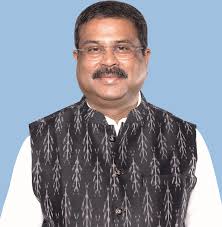
Dharmendra Pradhan resigned as Union Education Minister on Saturday after weeks of student protests over alleged examination irregularities, with multiple senior government sources revealing that the Narendra Modi government accepted his resignation only after concluding it was the more prudent option than ordering security forces to clear the protest sites in the national capital, an operation that officials believed had become increasingly inevitable if the agitation continued.
In his letter addressed to young people, whom he described as his “young friends” Dharmendra Pradhan wrote, “Considering the situation at Jantar Mantar and across the country—with the aim of preventing anti-national forces from exploiting it, preserving national unity, ensuring that not a single Indian student’s future gets entangled in legal complexities, and allowing our children to devote their time to studies and focus on building their careers—I have submitted my resignation to the Honourable Prime Minister.” The additional charge of the Education Ministry has been given to Pralhad Joshi, Minister of Consumer Affairs, Food and Public Distribution as well as Minister of New and Renewable Energy.
The Cockroach Janata Party ended its agitation after its main demand was met by the government.
REFORMS FIRST
The government weighed two sharply different courses of action as student protests over alleged examination irregularities intensified in the national capital before concluding that accepting the resignation of Union Education Minister Dharmendra Pradhan was the lower-risk option, according to multiple senior government sources familiar with the deliberations.
Officials familiar with the discussions said the leadership examined whether security forces should be used to clear the principal protest sites in Delhi or whether the political cost of seeking Pradhan’s resignation should be absorbed to prevent the agitation from expanding into a wider law-and-order challenge with unpredictable political consequences.
The resignation, however, was never intended to be an immediate or stand-alone concession. According to the sources, the consensus within the government was that any political decision had to be preceded by visible institutional action so that the Centre could demonstrate it was addressing the structural causes of the crisis rather than merely responding to pressure from the streets.
With that objective, the government deliberately sequenced a series of administrative, institutional and legislative measures before taking the final political call. Prime Minister Narendra Modi personally intervened in the crisis, announced the setting up of fast-track courts for paper leak cases, directed a comprehensive restructuring of the National Testing Agency (NTA), initiated the removal of officials held responsible for systemic failures, accelerated the transition of major entrance examinations, including NEET-UG, towards a computer-based testing framework, and decided to further strengthen the legal framework governing public examinations.
The Centre is scheduled to introduce The Public Examinations (Prevention of Unfair Means) Amendment Bill, 2026 in Parliament on Monday. The proposed legislation seeks to substantially strengthen the existing law by increasing the minimum punishment for paper leaks and other unfair means from three years to five years, with imprisonment extending up to 10 years and fines of up to Rs 50 lakh. For organised paper leak rackets, the minimum punishment has been proposed to be increased to seven years, along with fines of up to Rs 10 crore.
The Bill also empowers the Central Government to constitute Special Task Forces to investigate paper leak cases, mandates completion of investigations within two months, requires day-to-day trial proceedings to be concluded within three months of the filing of the chargesheet, and provides that appeals, wherever preferred, should be decided within three months, as far as possible.
Officials said sequencing these institutional, administrative and legislative measures before Pradhan’s resignation was considered critical because an immediate resignation, without accompanying reforms, would have enabled the opposition to project the government as having capitulated solely under public pressure. By first announcing structural reforms, the leadership intended to present the minister’s departure as one element of a broader overhaul of the examination system rather than as an isolated political concession.
Senior officials acknowledged that accepting the resignation would hand the opposition a short-term political narrative. However, according to the sources, the assessment within the government was that a temporary optics setback was preferable to the possibility of violent clashes in the capital, prolonged disruption of public life, and the risk of the agitation evolving into a wider national movement.
OPERATIONAL PERSPECTIVE
From an operational perspective, officials said the option of clearing the protest sites through security forces remained available throughout the crisis. According to security officials familiar with the contingency planning, more than 50 companies of central forces had been positioned to reinforce local law enforcement, and the principal protest site could have been cleared within a short period had the political leadership authorised such an operation.
The option, however, was rejected after the leadership concluded that the protesters were Indian students and young citizens whose grievances should not be addressed through force.
According to officials familiar with the security assessment, the government concluded that even a calibrated and tightly controlled police operation carried an unavoidable risk of serious injuries. Security planners assessed that while some protesters would disperse in the face of a large police deployment, a significant section would likely refuse to leave despite repeated warnings and appeals. In such circumstances, officials said, security personnel would inevitably have to use physical force to remove those resisting eviction.
Senior officials said the assessment presented to the political leadership was that once a physical confrontation began, maintaining complete control over the application of force would become increasingly difficult. Even with explicit instructions to exercise maximum restraint, the close proximity between police personnel and protesters meant injuries could not be ruled out. According to the sources, one of the government’s principal concerns was that even a single fatality or life-threatening head injury could fundamentally alter the trajectory of the agitation, triggering widespread public outrage, fresh demonstrations across multiple states and placing the government under significantly greater political and administrative pressure than the existing protests.
Officials said this assessment became one of the decisive factors behind the leadership’s decision to avoid police intervention and instead pursue a political resolution aimed at defusing the situation before it escalated into a much larger national law-and-order challenge.
Security officials also acknowledged that the administration initially underestimated the speed with which the movement would gather momentum. According to officials familiar with the assessment, permitting a large and sustained gathering in the heart of the capital without tighter crowd-management measures enabled the protests to acquire critical mass.
Officials said the initial approach was guided by the principle that citizens should be allowed to assemble peacefully and express their grievances. However, as the crowds grew, the administration concluded that the visibility of the protest itself was attracting participants who were not directly connected with the examination controversy, allowing the movement to expand far beyond its original base.
According to the sources, officials subsequently concluded that earlier restrictions on crowd size, tighter control over entry into the protest venue and stricter regulation of access routes into the capital could have prevented the agitation from reaching a scale where it became a major political challenge.
Multiple sources said intelligence inputs further indicated that several external organisations, including prominent farmer groups, were preparing to extend logistical and organisational support to the student movement. Officials said there was growing concern within the government that, if the agitation continued unchecked, it could evolve into a broader coalition bringing together multiple pressure groups on a common platform.
ORGANISERS WERE LOSING CONTROL OF THE PROTEST
Another factor influencing the government’s assessment, according to officials familiar with the intelligence inputs, was the belief that the protest was gradually becoming increasingly decentralised and difficult for its organisers to control.
Feedback indicated that the Citizens for Justice Party (CJP), which had emerged as the principal face of the agitation, was no longer exercising effective control over the gathering.
Intelligence inputs suggested that a growing number of participants were no longer remaining around the main protest stage but had dispersed into smaller groups across the protest site and adjoining areas. According to the assessment, the gathering had begun attracting people from diverse social and economic backgrounds, many carrying grievances unrelated to the examination issue, while others had joined simply because the protest had become a high-profile public event.
Senior officials said this evolution of the protest significantly altered the government’s risk assessment. Once a movement reaches a stage where its organisers are no longer able to exercise effective control over participants, the possibility of spontaneous incidents, confrontation or rapid escalation increases considerably, officials said. According to the sources, the leadership concluded that allowing the situation to continue carried the risk of the agitation slipping beyond the control of both the organisers and the administration.
CONFRONTATION LIKELIHOOD REDUCED
Senior officials said another concern discussed during the internal deliberations was that the demands of the agitation could progressively expand beyond the resignation of the Education Minister. According to the sources, advisers warned that if the protests retained their momentum, they could eventually translate into demands targeting other senior members of the Union Cabinet and, ultimately, the Prime Minister, significantly raising the political stakes for the government.
Officials said the explicit backing extended by opposition parties across the political spectrum was also viewed as a factor that could sustain a prolonged confrontation in the capital. Against that backdrop, accepting Pradhan’s resignation, but only after announcing the institutional, administrative and legislative reforms, was ultimately seen as the most effective means of depriving the agitation of its principal political objective before a wider coalition could fully consolidate around it.
The assessment within the government was that once the protesters’ principal demand had been met, the mobilisation would naturally lose momentum, reducing the likelihood of confrontation while allowing students to return to their campuses and normal academic activity.
INTERNAL REVIEW
The developments have also triggered an internal review within the government over the handling of the agitation in its early stages. According to officials familiar with the discussions, questions are being examined over whether the scale and trajectory of the mobilisation were adequately anticipated while permitting demonstrators to assemble at Jantar Mantar and during subsequent periodic security assessments.
The review, sources said, is expected to involve the Ministry of Home Affairs and agencies responsible for intelligence and security assessments. Officials are examining whether earlier administrative crowd-management measures could have prevented the agitation from acquiring the momentum that eventually compelled a political response.
According to senior officials, the exercise is intended not merely to review the handling of the present agitation but also to draw institutional lessons for future governments. The objective, they said, is to ensure that democratic protest continues to be facilitated while preventing prolonged street mobilisation from overwhelming established constitutional and administrative processes. Officials said the broader concern is to develop mechanisms that preserve the balance between the democratic right to protest and decision-making through constitutional institutions headed by elected governments, irrespective of which party is in power.
The decision has nevertheless generated debate within sections of the ruling establishment. Some party functionaries privately believe that conceding to a movement centred on the resignation of a Cabinet minister risks creating a precedent that could encourage future protest campaigns to seek similar political outcomes through sustained street mobilisation.
Others, however, maintain that under the circumstances the leadership chose the course that carried the lowest overall risk. According to senior officials, accepting Pradhan’s resignation after first implementing institutional reforms minimised the likelihood of violence, avoided the possibility of casualties among young protesters and defused what the government believed had the potential to develop into a far larger political and law-and-order crisis.

Comments are closed.