
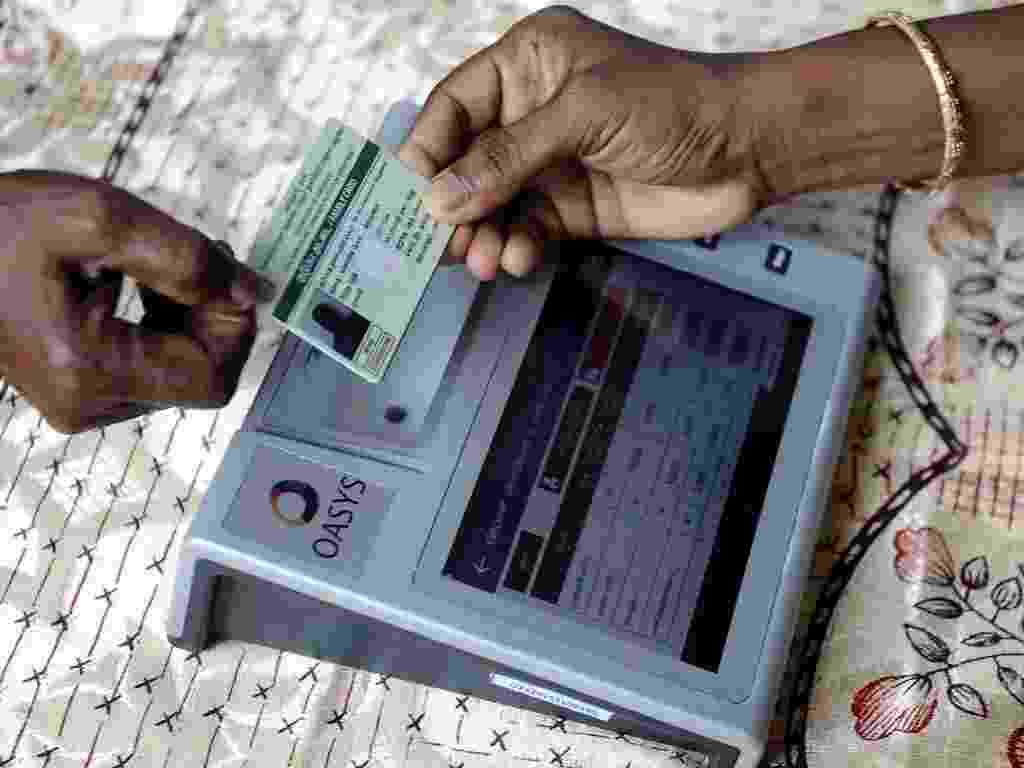
Digital Overhaul: Delhi to Roll Out Smart Ration Cards with QR Codes and Facial Verification to Modernize PDS:

The Delhi government is preparing to undertake a large-scale digital overhaul of its Public Distribution System (PDS) to increase transparency and reduce leakages. Under the upcoming Smart-PDS (Scheme for Modernisation and Reforms through Technology in Public Distribution System) initiative, the traditional physical paper tokens will be fully modernised into dynamic, tech-enabled credentials. The state administration is integrating encrypted QR codes and automated facial recognition to fully digitise distribution, eliminate duplicate entries, structural graft, and illegal black-marketing of subsidised essential foodgrains.
Real-Time Tracking Infrastructure and Simplified Bureaucracy
The incoming system completely overhauls the citizen service portal by transitioning everyday administrative interactions online. Beneficiaries will no longer need to physically visit local administrative offices or endure long waiting hours to complete minor alterations. Through an integrated central database application, cardholders can monitor distribution chains from the comfort of their homes.
End-to-End Tracking: Cardholders can monitor exactly when their monthly quotas are officially authorised from state reserve godowns, track delivery progress to their assigned Fair Price Shop (FPS), and verify precise standard distribution timelines via automated mobile updates.
Virtual Operations: Essential data changes, including registering newborn family additions, removing names, updating verification certificates, and monitoring the processing pipeline for completely fresh card requests, will shift entirely to digital workflows.
Integrated QR System: Simply scanning the card’s dedicated QR code instantly pulls up historical transaction profiles, current legal balances, and specific allocation metrics.
Facial Recognition Tackles Legacy Fingerprint Verification Blurs
A key technical highlight of the Smart-PDS platform is the rollout of facial recognition authentication directly at distribution points. Historically, a significant portion of elderly beneficiaries, manual labourers, and industrial workers frequently suffered distribution denials due to fading or damaged epidermal ridges, resulting in regular e-PoS (Electronic Point of Sale) fingerprint mismatches.
By using smart facial scans as a second verification step alongside baseline biometrics, the system lets genuine dependents quickly claim their legally mandated food items without technical issues. Priority household cardholders will continue to receive their baseline 5 kg of foodgrains per person every month, whereas Antyodaya Anna Yojana (AAY) families maintain their 35 kg baseline allocation per family.
Rigorous Core Beta-Testing for Global Interoperability
About 1.7 million registered ration card holders in the national capital will directly move to this optimised framework. Additionally, because the software fully interfaces with the central “One Nation, One Ration Card” grid, interstate migrant workers can seamlessly execute cross-border allocations at local shops.
To guarantee that the public-facing ecosystem remains secure, accessible, and bug-free before a full-scale public release, the Food Supplies and Consumer Affairs Department has formally established a dedicated 16-member User Acceptance Testing (UAT) Committee. This special body—comprising Assistant Commissioners representing all 13 administrative districts of Delhi, departmental heads, and engineering specialists—is conducting in-depth simulation audits of the newly created “Ration Card Management System” (RCMS) mobile app to resolve user experience anomalies before the official citywide launch.

Comments are closed.