
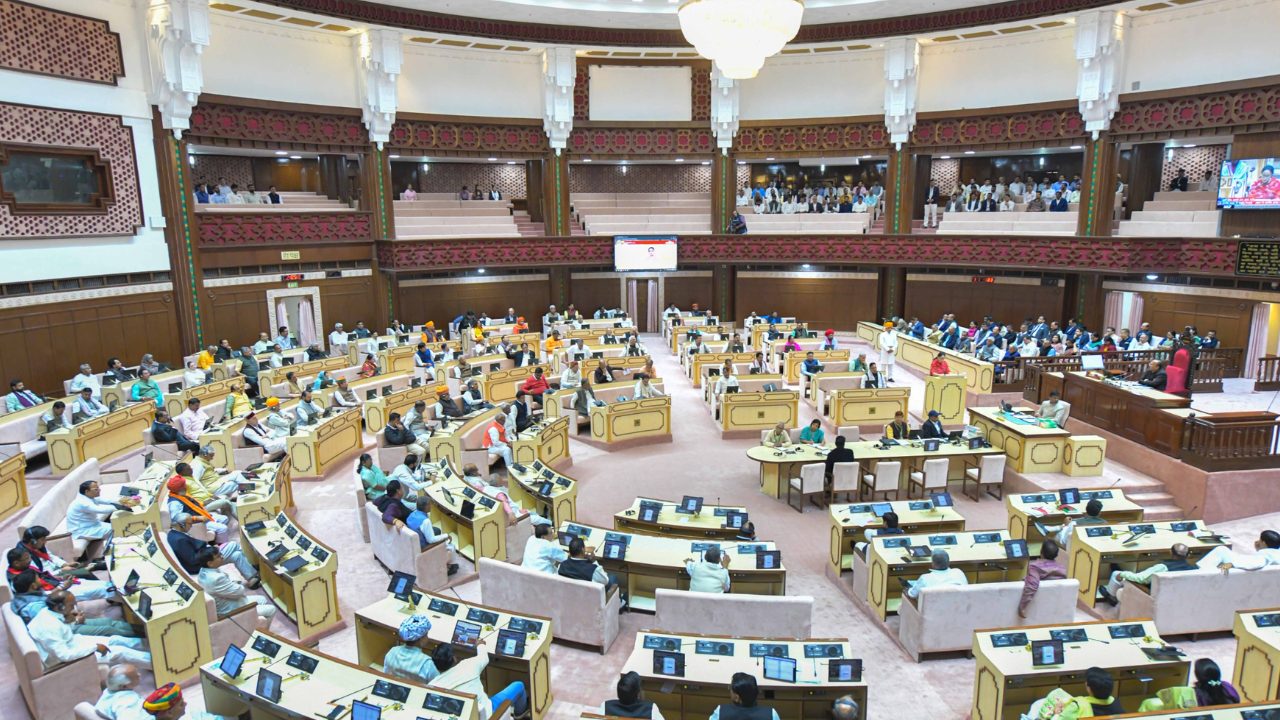
Disturbed Area Bill 2026 passed in Rajasthan Assembly, SDM’s permission required on transfer of property in riot affected areas.

A major legislative step has been taken towards increasing administrative surveillance on property transactions in riot-affected and stressed areas in Rajasthan. The Assembly passed the Disturbed Area Bill-2026 after discussion on Friday. The government says that its purpose is to protect such people who are forced to sell their house, shop or other immovable property under pressure.
The official name of this law is The Rajasthan Prohibition of Transfer of Immovable Property and Provision for Protection of Tenants from Eviction from Premises in Disturbed Areas Bill, 2026. The name is long, but its focus is clear – to implement special procedures for property transfers in declared disturbed areas and to protect tenants from eviction.
Under what circumstances will the area be declared a disturbed area?
According to the provisions of the bill, if there is a situation of riots in any area, colony or ward, increase in community tension, or if there is a possibility of peace and order being affected due to population imbalance, then the government will be able to declare that area as a disturbed area. The law also includes that a sharp increase in the population of a particular community or a change in the demographic structure of the area can also be considered as the basis for this declaration.
This means that the administration will get a legal basis to intervene not only after violence, but also in the background of tension. The government argues that this will enable timely control and prevent disputes arising through property transfer in sensitive areas.
Prior permission from SDM/ADM for buying and selling of property
Now sale, purchase or registration of any immovable property in the declared disturbed area will not be possible without the permission of the ADM or SDM. If a transaction is made without approval, it may be declared invalid.
The law also gives the responsibility to the administration to ensure that the property is not sold at a price lower than the market rate. It will also be seen that the deal was not done under any pressure, threat or unequal circumstances. According to the state government, this is the point through which incidents of forced abandonment of property can be stopped.
In such cases, the SDM will have to take a decision within three months after receiving the application. This period can be extended if needed. This deadline is being seen as a mechanism to add accountability to the administrative process, so that files do not remain pending for long.
Non-bailable and cognizable offense on violation
The penal provisions in the bill have been kept stringent. Violation of the law is considered a cognizable and non-bailable offence. If proven guilty, he can be sentenced to three to five years’ imprisonment and a fine of up to Rs 1 lakh.
This outline of the punishment shows that the government is considering this provision not just as a procedural rule, but as a serious issue related to law and order and civil security. Especially in areas where property transfer has been a cause of controversy amidst community tension.
Exception to banks and financial institutions
An important exemption has also been given in the bill. If the property is mortgaged to a bank or financial institution, the restrictions of this law will not apply. In such cases, banks and NBFCs will be allowed to auction mortgaged properties.
This exception means that financial transactions related to loan recovery will continue under the normal banking framework and the disturbed area tag will not automatically stop those processes.
“If there are no riots, there will be no need to declare any area as a disturbed area.”- Law Minister Jogaram Patel
In the Assembly, Law Minister Jogaram Patel said that this bill has been brought with the aim of protecting vulnerable people from selling their property under duress. He also said that there are some areas in the state where it is difficult for outsiders to enter and the number of such areas is increasing. The government argues that the new law is meant to stop this trend.
With the bill being passed, the focus will now be on its implementation – on what basis which areas are declared disturbed areas, how transparent the permission process is, and how the timelines are followed. At present it is clear that Rajasthan has directly linked the property market in sensitive areas with the administrative permission system.

Comments are closed.