
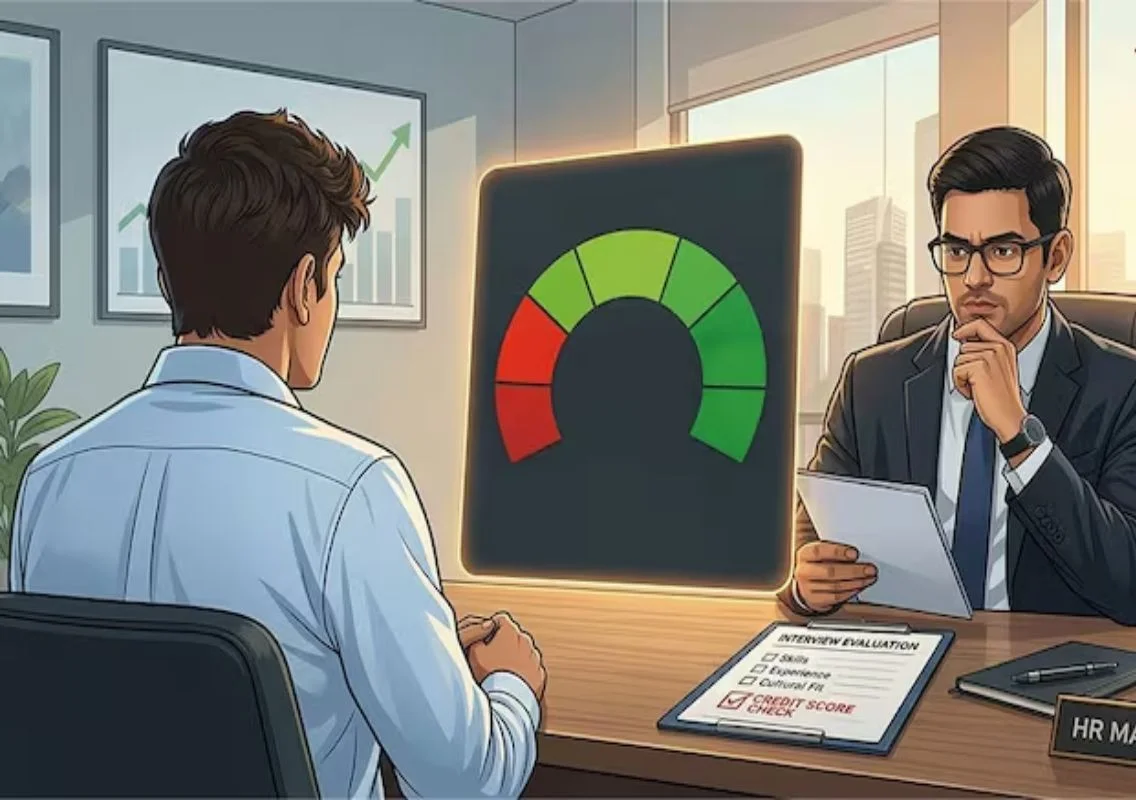

New Delhi: Clearing competitive exams and interviews has long been the primary pathway to securing a bank job in India. However, a new factor is quietly entering the hiring conversation — your credit score. While traditionally associated with loans and credit cards, your financial behaviour is now increasingly being viewed as a reflection of professional responsibility.
A recent clarification in the Rajya Sabha has brought this into sharper focus. Minister of State for Finance Pankaj Chaudhary stated that candidates selected through the Institute of Banking Personnel Selection are expected to maintain a “healthy credit profile.” Although this is not a mandatory criterion at the application stage, it signals a broader shift in how employability is being assessed in the banking sector.
Beyond marks and interviews
For years, recruitment in banks has largely revolved around academic performance, entrance exams, and interview results. While these remain critical, employers are now beginning to look at behavioural indicators as well.
Experts say financial discipline is emerging as one such indicator. How an individual manages personal finances — including timely repayments and responsible credit usage — can offer insights into their sense of accountability and risk awareness.
This shift reflects a wider trend where job readiness is no longer defined solely by qualifications, but also by real-world habits and decision-making patterns.
Why banks care about credit history
The banking sector operates on trust, with employees handling money, sensitive financial data, and critical systems daily. As a result, institutions are keen to hire individuals who demonstrate reliability and sound judgement.
A candidate’s credit behaviour can act as a proxy for these qualities. Regular repayments, minimal defaults, and prudent credit usage indicate financial discipline — a trait considered essential for roles involving fiduciary responsibility.
Importantly, experts clarify that credit history is not typically used as a strict elimination tool. Instead, it forms part of a broader evaluation to better understand a candidate’s overall profile.
What defines a healthy credit profile?
A strong credit profile is not about having a high income or multiple loans. Rather, it is built on consistent financial habits.
Key indicators include:
- Paying EMIs and credit card bills on time
- Avoiding loan defaults or settlements
- Maintaining a reasonable credit utilisation ratio
- Demonstrating long-term financial discipline
In essence, it reflects behaviour over time rather than a single number.
Will this trend expand to other sectors?
At present, the emphasis on credit scores is largely limited to banking and financial services. However, experts believe it could gradually extend to other sectors where trust and financial responsibility are crucial.
Industries such as fintech, insurance, and roles involving financial oversight may increasingly consider credit behaviour as part of hiring decisions. That said, it is unlikely to become a universal hiring benchmark across all sectors.
Most organisations are expected to use it selectively, depending on the nature of the role.
Why young professionals should take note
The growing focus on credit profiles highlights an important gap — financial literacy among young jobseekers. Many graduates enter the workforce with strong academic credentials but limited understanding of credit management and financial planning.
Simple habits, such as paying bills on time and using credit responsibly, can help build a solid credit history over time. Even managing a single credit product well can make a meaningful difference.
The conclusion
Your credit score is no longer just a number used by banks to approve loans. It is gradually becoming a reflection of your financial discipline and reliability.
While it may not determine your chances of getting a bank job on its own, it can influence how employers perceive your overall profile. As hiring practices evolve, maintaining a healthy credit record could play a small but significant role in shaping career opportunities.

Comments are closed.