
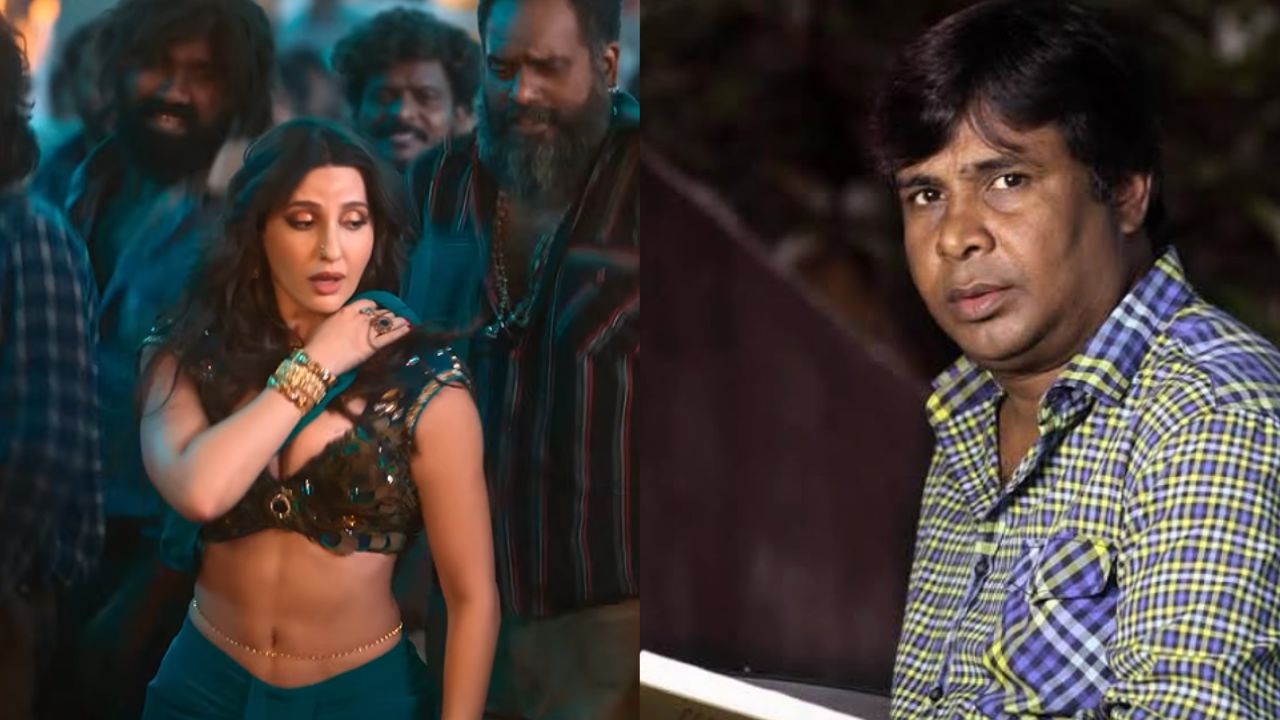
‘Sarke Chunar Teri Sarke’ controversy: NHRC notice, lyricist said – I did not write the song

Sarke Chunar Teri Controversy: While the controversy regarding rapper and singer Badshah’s song ‘Tateri’ is not over yet, a new food has become a part of controversies. This is the song ‘Sarke Chunar Teri Sarke’ from the Kannada film KD: The Devil, which is originally taken in Hindi from the Kannada song ‘Sarse Ninna Sarega Sarse’. Nora Fatehi and Sanjay Dutta are seen in this song. As soon as the song was released, there was a stir on social media. People are openly calling it obscene, vulgar and full of double meaning. Many users even demanded to ban it.
The lyrics are so offensive that most people are reluctant to share or even mention them. Nora Fatehi, most of whose songs get millions of views and become hits. This time she is facing heavy trolling for the same reason. People are saying that this is no longer entertainment, but is straight up vulgarity and cheapness. This has become the biggest example of the declining standards of the Hindi music industry.
What did Rakib Alam say?
Now, in view of the growing controversy, when NDTV TV contacted the lyricist, he immediately distanced himself from this obscenity. Rakib Alam, who has previously written Hindi versions of the songs of the film ‘Pushpa’, was discussed about this song. He cleared up a lot. When asked why he decided to write a song with such a double meaning, Rakib replied, ‘This song is actually the director’s version. I had refused to write this song in the beginning itself. I told him a thousand times that such a song will not work, it is not right.
How did the name come without giving credit?
Then when he was told that his name is written in the credits, he said, ‘I don’t know how my name came there. Since the release of the song, I have been continuously receiving calls from people trolling me. Good and bad things are being written on social media. I am worried. Finally, when asked directly whether it was you who had written the song, Rakib opened up the whole matter and said, ‘No, I did not write the original song. I only did its word to word translation. The film’s director Prem was not agreeing.
Was warning given earlier?
Rakib says, ‘He told me to translate in Hindi whatever is written in Kannada. I translated it and also warned that such a song would not pass the censor board. But the director said that he would see for himself. Actually he wanted controversy. They put my translation in the film as it is. Whatever is happening now, the result is in front of everyone.
Rakib Alam apologized
Now Rakib Alam shared the post apologizing. He wrote, ‘I would like to say something from my side on the controversy that has arisen regarding the lyrics of my song ‘Sarke Sarke’. First of all, I feel it is important to clarify that every word of this song is a translation of the original Kannada lyrics written by the director of the film. These lyrics do not include any of my own words; I have simply translated the original lyrics word-for-word. Still, if anyone’s sentiments have been hurt by the lyrics of this song, I apologize wholeheartedly. It was never my intention to hurt anyone. Your love and support means a lot to me…’
How come everyone remained unaware?
But this controversy does not end with just this statement, many more serious questions arise not only on the controversy-loving director but also on veteran actor Sanjay Dutt and actress-dancer Nora Fatehi, who has been living in India for a long time. Who became so ignorant of the lyrics of the songs that she did not understand how obscene the lyrics of the songs were. Sanjay Dutt, who has been contributing to Indian cinema for 44 years, where was his mind when he shot this song. Nora may be from Canada but she has understood Indian culture for the last 13 years, then how can she make such a big mistake that she did not understand the lyrics of the song. This controversy is no longer just about the song. In this way, deliberately releasing vulgar songs, shooting them and not heeding any warning points towards the pressure that has been there in the film industry for centuries.

Comments are closed.