
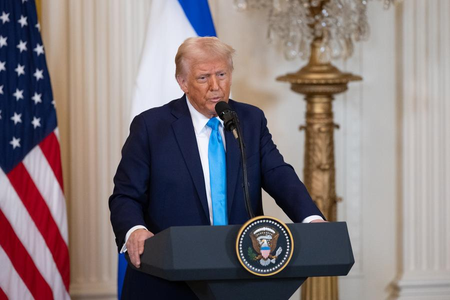

New York: US President Donald Trump signed an executive order Thursday that could slap long-threatened pharmaceutical tariffs of up to 100 per cent on some patented drugs from companies that don’t reach deals with his administration in the coming months.
Companies that have signed a “most favoured nation” pricing deal and are actively building facilities in the US to onshore production of patented pharmaceuticals and their ingredients will have zero tariff. For those that don’t have a pricing deal but are building such projects in the US, a 20 per cent tariff will apply, but will increase to 100 per cent in four years.
A senior administration official told reporters on a press call that companies still have months to negotiate before the 100 per cent tariffs kick in – 120 days for bigger companies, and 180 days for everyone else.
The official, speaking on condition of anonymity to preview the executive order before it was issued, did not identify any companies or drugs that were in jeopardy of getting hit with the increased tariffs but noted the administration had already reached 17 pricing deals with major drugmakers, 13 of which have signed.
In the order, Trump wrote that he deemed such actions necessary “to address the threatened impairment of the national security posed by imports of pharmaceuticals and pharmaceutical ingredients.” It arrived on the first anniversary of Trump’s so-called Liberation Day, when the president unveiled sweeping new import taxes on nearly every country in the world that sent the stock market reeling. Those “Liberation Day” tariffs were among the duties the Supreme Court overturned in February.
Some warned of the consequences of the coming tariffs announced Thursday. Stephen J Ubl, CEO of the pharmaceutical company trade group PhRMA, said taxes “on cutting-edge medicines will increase costs and could jeopardise billions in US investments.” He pointed to America’s already large footprint in biopharmaceutical manufacturing and noted medicines sourced from other countries “overwhelmingly come from reliable US allies.”
Trump has launched a barrage of new import taxes on America’s trading partners since the start of his second term and repeatedly pledged that sky-high levies on foreign-made drugs were on the way. But the administration has also used the threat of new levies to strike deals with major companies – like Pfizer, Eli Lilly and Bristol Myers Squibb – over the last year, with promises of lower prices for new drugs.
Beyond company-specific rates, a handful of countries have reached trade frameworks with the US to further cap tariffs on drugs sent to the US, EU, Japan, Korea and Switzerland will see a 15 per cent US tariff on patented pharmaceuticals, matching previously agreed rates for most goods, and the UK will get 10 per cent – which Thursday’s order noted would “then reduce to zero” under future trade agreements. The UK previously said it secured a 0 per cent tariff rate for all British medicines exported to the US for at least three years.
Trump also unveils an update to metal tariffs
In addition,Thursday, the president rolled out an update on his 50 per cent tariffs on imported steel, aluminium, and copper. Starting Monday, tariff rates on those metals will be calculated based on the “full customs value” of what US customers pay when buying foreign metal under the latest order, which the administration officials claimed will keep importers from other countries from escaping higher payments.
Products fully made of steel, aluminium, and copper will continue to be tariffed at 50 per cent for most countries. But the administration is also shifting how tariffs are calculated for derivative metals – or finished goods that contain some of these metals, but are not made entirely of them.
For a product with metal that amounts to less than 15 per cent of its entire weight (like the cap on a perfume bottle) only country-specific tariffs will now apply, officials told reporters Thursday. But for products with more metal, such as a largely steel washing machine, they said a 25 per cent tariff will apply to the whole value.
More sectoral taxes are piling up
Thursday’s orders reflect the latest example of Trump tapping into sectoral duties. The president used Section 232 of the 1962 Trade Expansion Act to impose the levies, the same authority he cited to slap import taxes on cars, lumber and even kitchen cabinets. And many expect to see more product-specific import taxes down the road.
That’s because a ruling from the Supreme Court struck down tariffs Trump imposed using another law – the 1977 International Emergency Economic Powers Act – to immediately slap tariffs on any country, at nearly any level.
While the February 20 court decision marked a significant blow to Trump’s economic agenda, the president still has plenty of options to keep taxing imports aggressively. Beyond sectoral levies, Trump also imposed a 10 per cent tariff on all imports under a separate legal power mere hours after the Supreme Court’s ruling, but that duty can only last for 150 days. Some two dozen states already challenged the new tariffs.
Trump has argued his steep new import taxes are necessary to bring back wealth that was “stolen” from the US. He says they will narrow America’s decades-old trade deficit and bring manufacturing back to the country. But Trump has also turned to tariffs amid personal grudges or in response to political critics. And upending the global supply chain has proven costly for businesses and households that are already strained by rising prices.

Comments are closed.