
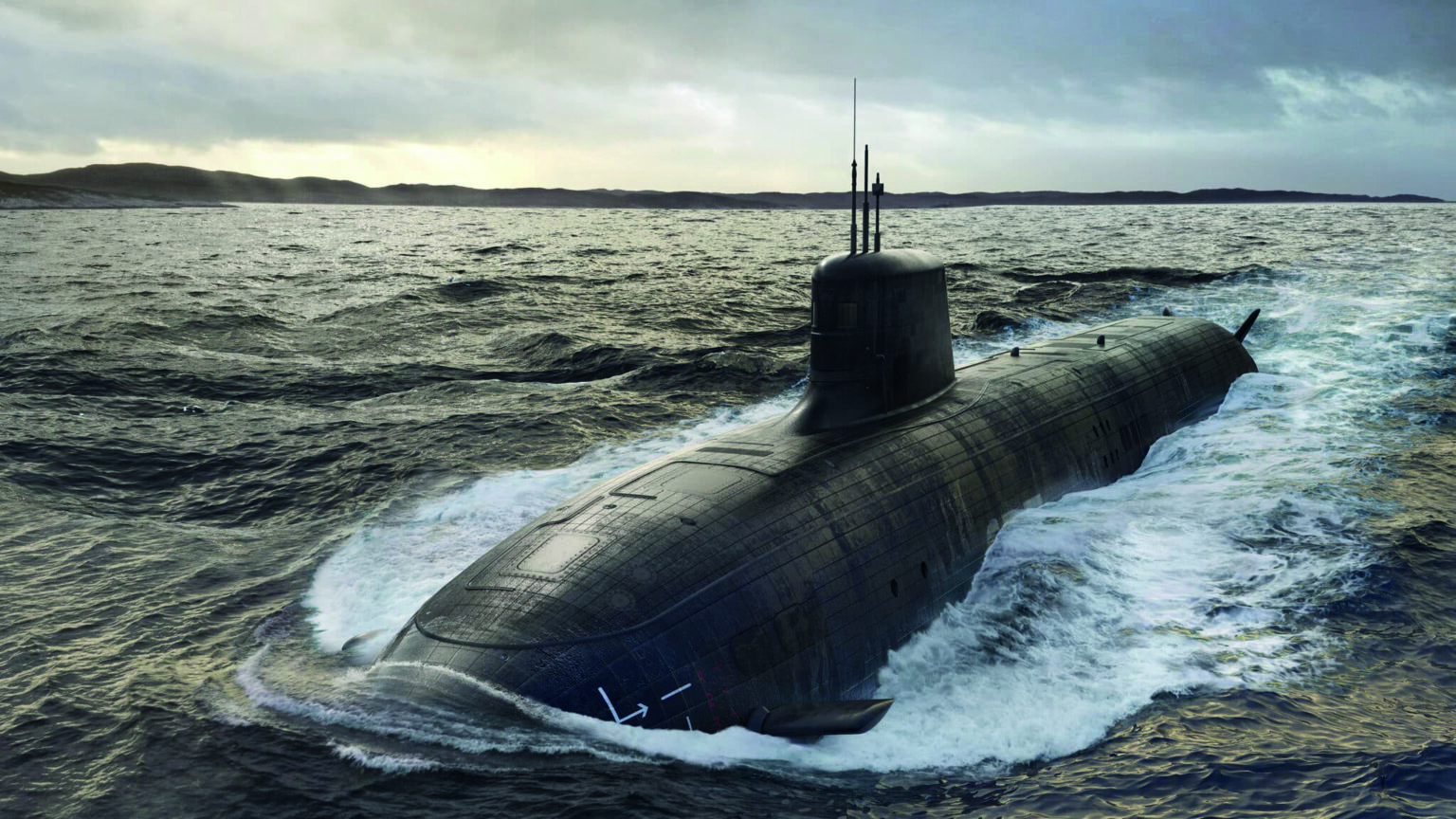

New discussions in Washington have revived questions about whether Australia will ultimately receive the nuclear-powered submarines promised under the AUKUS security partnership, prompting fresh debate at home about the long-term implications of the deal. While the agreement is designed to strengthen Australia’s military capabilities over several decades, uncertainty over submarine deliveries is sharpening concerns about financial commitments, environmental responsibilities and national priorities.
Recent analysis prepared for members of the US Congress suggests that alternative arrangements are being explored if production challenges prevent the transfer of submarines to Australia. The report, compiled by the US Congressional Research Service, outlines a scenario in which the United States could retain its Virginia-class submarines and instead operate them from Australian bases. In return, Australia could focus more heavily on developing other military capabilities, including long-range strike systems and advanced unmanned technologies.
For many Australians, the possibility that the submarines may never be handed over raises a fundamental question: what obligations is the country assuming in exchange for a deal that is not guaranteed to deliver its central promise?
Production Constraints Complicate Transfer Plans
A key issue highlighted in the congressional briefing is the strain on American submarine manufacturing. Shipyards in the United States have struggled to reach their target output of two Virginia-class submarines per year. In practice, annual production has averaged closer to just over one vessel, leaving the US Navy below its planned fleet size.
Under American law, submarines cannot be transferred to another country if doing so would compromise domestic naval readiness. This requirement introduces significant uncertainty into Australia’s acquisition timeline. If the United States determines it needs every available submarine to meet its own defense objectives, deliveries to Australia could be delayed or reconsidered.
Despite these concerns, Australian leaders continue to express confidence in the agreement. Defense Minister Richard Marles and officials from the Australian Submarine Agency maintain that the AUKUS program is progressing as planned. Current expectations still point to Australia receiving three Virginia-class submarines in the early 2030s.
However, some political figures remain cautious. Former prime minister Malcolm Turnbull has warned that Australia could end up investing heavily in infrastructure and facilities while the United States retains the discretion to prioritize its own fleet needs. Meanwhile, Greens senator David Shoebridge has argued that the arrangement risks making Australian ports operational hubs for US-controlled submarines.
Environmental Responsibilities Under the Spotlight
Beyond strategy and defense, the AUKUS debate is increasingly centered on environmental stewardship. Nuclear-powered submarines require onboard reactors, specialized maintenance systems and long-term plans for handling radioactive materials once the vessels reach the end of their service lives.
Australian authorities say they are preparing to meet these responsibilities. Officials note that the United States and United Kingdom have operated hundreds of naval nuclear reactors over several decades without documented harm to public health or the environment. Australia intends to adopt similar safety standards and management practices for its future submarine fleet.
A new regulatory structure is being built to oversee nuclear safety, drawing guidance from the International Atomic Energy Agency and established regulators in partner countries. According to current planning, Australia will not need facilities for high-level radioactive waste from retired submarines until at least the 2050s.
Environmental groups, however, say the timeline does not eliminate underlying concerns. Australia has yet to finalize a permanent solution even for some lower-level radioactive waste. Critics argue that managing reactor components and spent nuclear fuel — materials that remain dangerous for extremely long periods — will require careful long-term planning and transparent public engagement.
Coastal Communities Voice Safety Concerns
The environmental debate is particularly relevant for communities located near expanding submarine infrastructure. Areas around Port Adelaide and Garden Island in Western Australia are undergoing significant shipyard and base upgrades to support nuclear-powered vessels.
An impact assessment for construction at Osborne, near Port Adelaide, has drawn scrutiny from community advocates and independent observers who believe it does not fully address potential accident scenarios or long-term waste storage strategies. Residents are seeking clearer information about emergency preparedness and the unlikely but serious risks associated with nuclear incidents in port.
These local concerns are unfolding against a backdrop of broader pressures. Many Australian communities are already coping with more frequent heatwaves, increased bushfire threats and rising living costs, including higher household energy bills.
Rising Costs Fuel Broader Policy Debate
The scale of the financial commitment attached to the submarine program is another source of public discussion. Estimates suggest Australia could spend as much as 368 billion Australian dollars over the life of the project. For some citizens, this raises questions about opportunity costs and whether such spending could limit investment in renewable energy, climate resilience or public infrastructure.
Supporters of AUKUS argue that a secure and stable Indo-Pacific region is essential for economic growth and long-term climate action. They see nuclear-powered submarines as a key deterrent in a region experiencing intensifying geopolitical competition.
Critics counter that national security should also encompass environmental sustainability and community resilience. They argue that defense investments must be balanced with efforts to accelerate the transition to clean energy and strengthen protection against climate-related risks.

Comments are closed.