
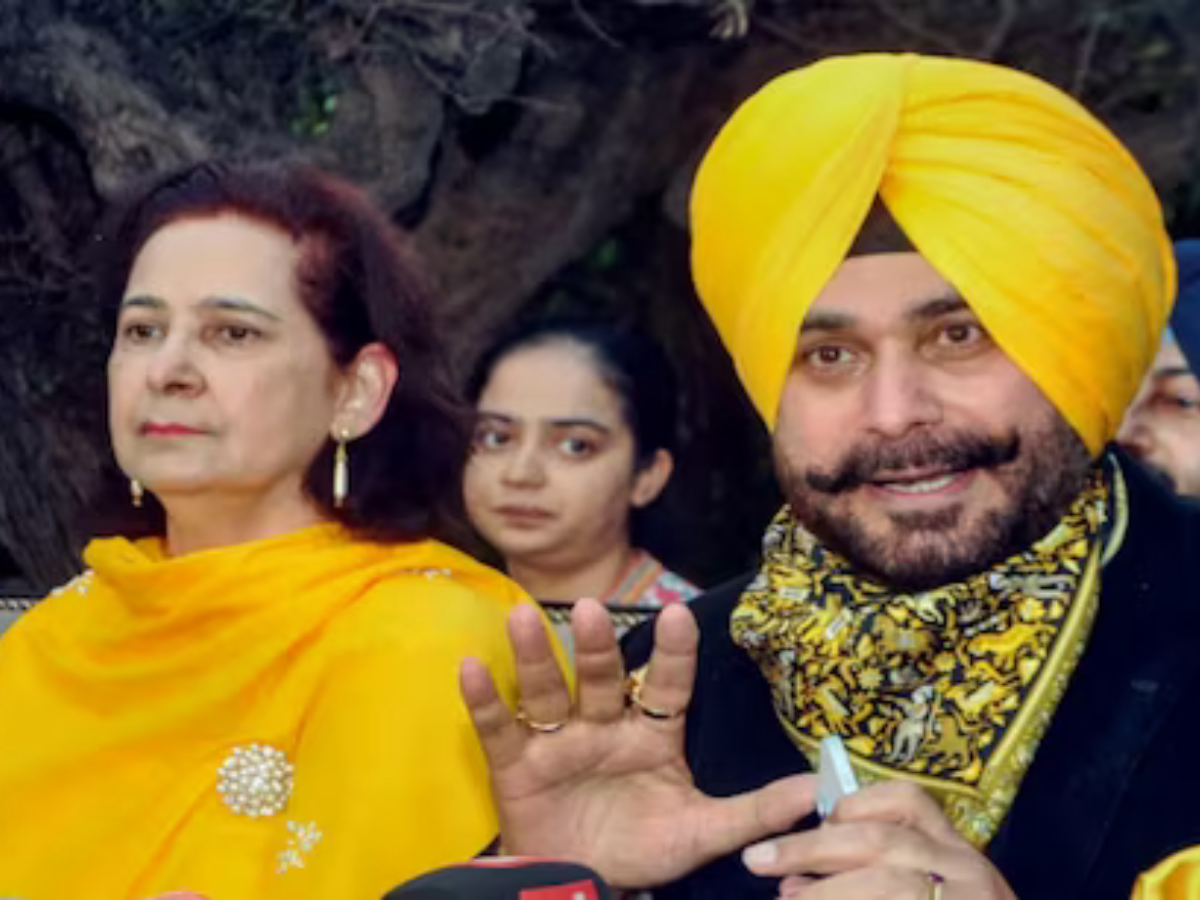
Dr Navjot Kaur Sidhu suspended from Congress after alleging a Rs 500 crore deal for the CM’s post

140
Chandigarh: Former legislator Dr Navjot Kaur Sidhu has been suspended from the Congress after launching a sweeping attack on the Punjab unit’s top leadership, alleging that the race for power has turned the party into a marketplace. Her comments, centred around a claim that the chief minister’s position could be secured by paying Rs 500 crore, set off a political storm that the party high command was unable to contain.
Sidhu accused Punjab Congress president Amrinder Singh Raja Warring, former deputy chief minister Sukhjinder Singh Randhawa, Leader of Opposition Partap Singh Bajwa and former chief minister Charanjit Singh Channi of damaging the organisation for personal ambition. She said the four leaders had converted internal politics into a business, driving ordinary workers away and poisoning the party’s culture. According to her, these leaders were not interested in strengthening the Congress but were focused only on settling scores and securing positions.
One of her most serious allegations was that councillor tickets in Punjab municipal bodies were being sold for nearly Rs 5 crore each. She alleged that Warring and Bajwa played a central role in the process, collecting large sums from aspirants. She claimed that money generated from this exercise was later distributed to councillors at the residence of Akali leader Bikram Majithia to engineer resistance against her family, particularly her husband Navjot Singh Sidhu.
Sidhu did not stop there. She went after Randhawa, accusing him of selling tickets in Rajasthan and maintaining links with gangsters. Without presenting direct evidence, she insisted that Randhawa’s political dealings were influenced by individuals outside the Congress framework. She said that politicians who once joined public life without footwear on their feet had now become powerful enough to betray their own colleagues.
Her criticism extended to suggesting that Randhawa, Channi and Bajwa were all eyeing the post of chief minister and were working in different directions, weakening the Congress and confusing its cadre. She alleged that each of them was running a parallel power centre and that these competing ambitions had left no space for ideology, discipline or internal democracy.
Sidhu also claimed that Partap Singh Bajwa had built an informal understanding with the BJP, insinuating that his political strategies were no longer aligned with the Congress. She further alleged that Warring recently met Rajasthan Chief Minister Bhajanlal Sharma, hinting at a growing proximity that, according to her, raises serious questions about loyalties at the top.
Her remarks travelled fast across political circles, embarrassing the Congress at a time when the party was trying to project unity ahead of upcoming civic and Assembly challenges. Senior leaders dismissed her allegations as wild and irresponsible, arguing that such statements only serve rival parties. However, the sheer volume and nature of her charges made it difficult for the Congress to ignore the matter.
The party leadership, after deliberations, announced her suspension, stating that her conduct violated party discipline and damaged its reputation. With this action, the Congress signalled that internal dissent would not be tolerated publicly, especially when it involved accusations of corruption and secret dealings.
Sidhu’s suspension has now widened the rift within Punjab Congress rather than closing it. Her supporters claim she merely spoke the truth and exposed a rot that the high command refuses to acknowledge. Her critics say she crossed a line and handed ammunition to opponents at a crucial political moment. Either way, her outburst has forced uncomfortable questions to the surface, leaving the party leadership struggling to contain the fallout.
The controversy is far from over, and the coming weeks are expected to determine whether Sidhu’s allegations trigger a deeper shake-up within the Punjab unit or become another flashpoint lost to the state’s turbulent political memory.

Comments are closed.