
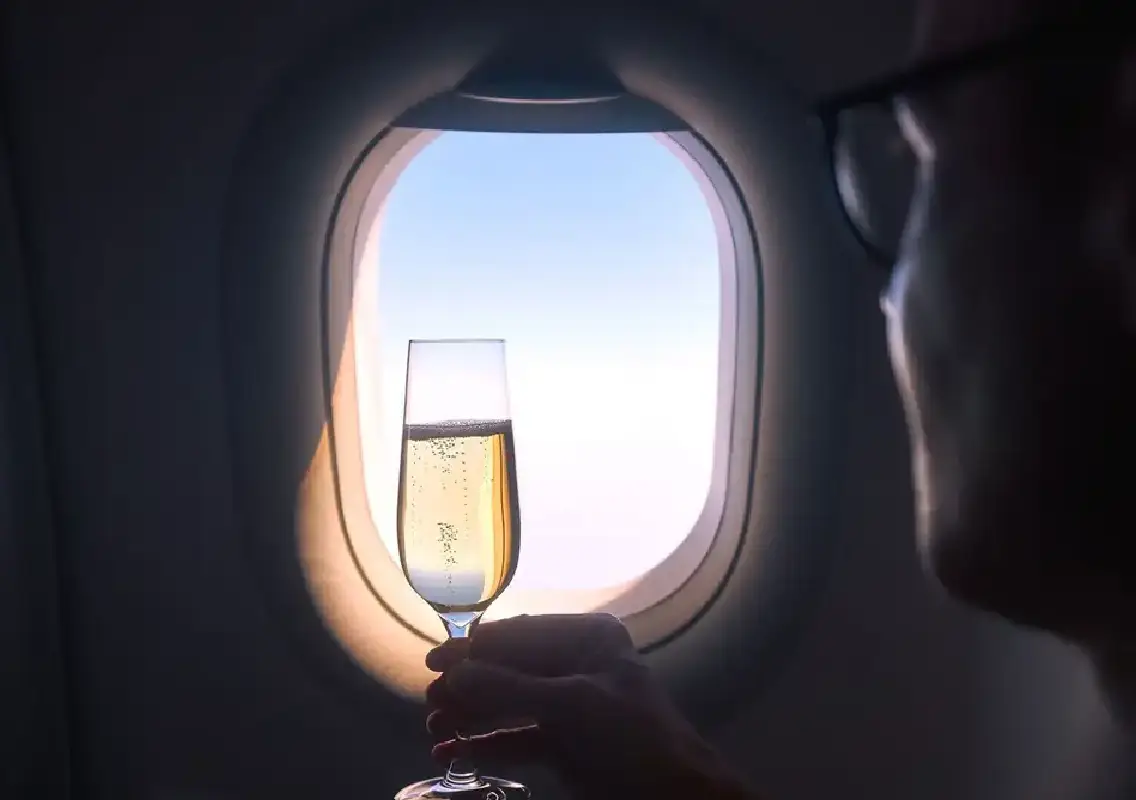

For many travellers, a glass of wine seems like an easy way to fall asleep during flights. However, health experts are cautioning against this common habit, highlighting potential risks.
Why alcohol and flying don’t mix well
According to Dr Kunal Sood, consuming alcohol before sleeping on a flight can negatively affect the body, especially due to cabin conditions.
Aircraft cabins typically have lower oxygen levels compared to ground environments. When combined with alcohol, this can lead to a further drop in blood oxygen levels and an increase in heart rate.
Increased risks for some passengers
Experts warn that individuals with pre-existing heart or lung conditions may face higher risks when consuming alcohol mid-flight.
Studies simulating aircraft conditions have shown that the combination of alcohol and reduced oxygen can strain the body, particularly during sleep.
Alcohol may disrupt sleep quality
While alcohol may help induce sleep faster, it significantly reduces sleep quality.
Dr Vassily Eliopoulos explains that alcohol suppresses REM and deep sleep—critical stages for brain recovery, memory consolidation, and overall health.
Even moderate consumption before sleep can reduce sleep quality by up to 24%, leading to fatigue and poor recovery.
Impact on overall health
Poor-quality sleep can elevate stress hormones like cortisol and contribute to long-term health issues, including accelerated ageing.
Experts emphasise that the immediate relaxing effect of alcohol can be misleading, masking deeper physiological disruptions.
Better alternatives for restful travel
Doctors recommend safer alternatives for better in-flight rest:
- Stay hydrated with water
- Use neck pillows and eye masks
- Adjust sleep schedules before travel
- Practice relaxation techniques
Awareness is key
While occasional consumption may not cause harm for healthy individuals, experts advise moderation and awareness—especially on long-haul flights.
Understanding how the body reacts in flight conditions can help travellers make healthier choices and arrive feeling truly reste

Comments are closed.