
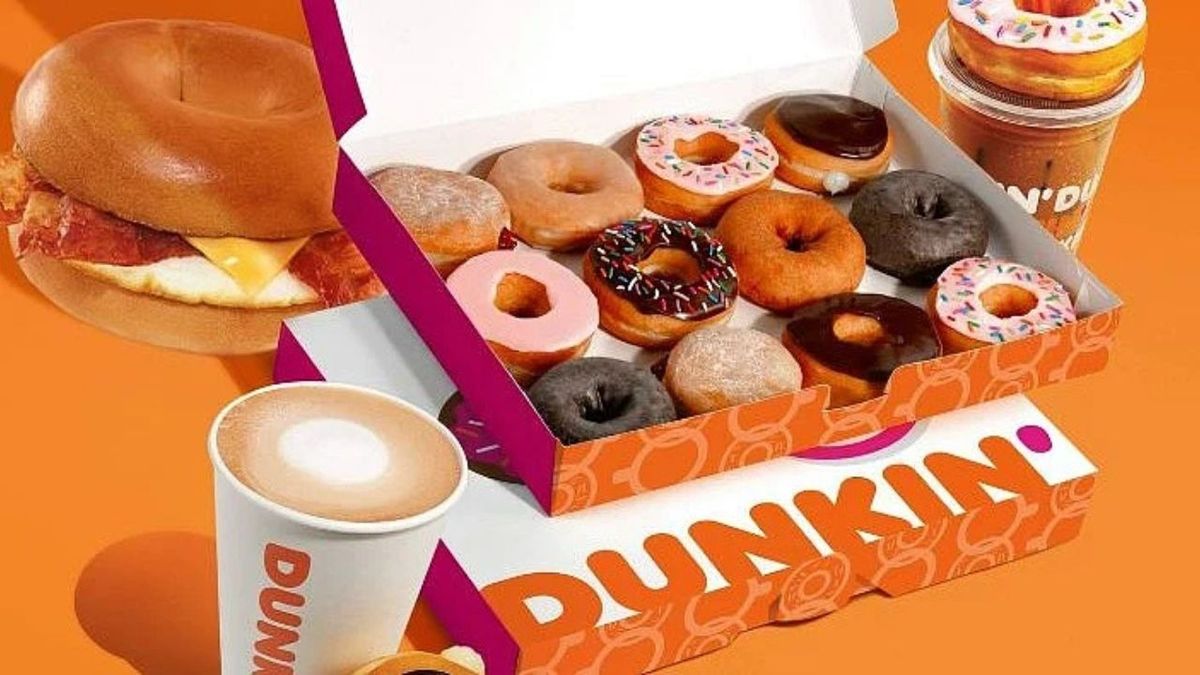

In a major shift for India’s quick-service restaurant (QSR) landscape, American food chain Dunkin’ Donuts is set to exit the country. Its franchise partner, Jubilant FoodWorkshas decided not to renew their agreement, bringing curtains down on a partnership that once promised to revolutionize India’s café culture.
The franchise agreement will officially end on December 31, 2026. Post that, Dunkin’ outlets across India will gradually shut down in a phased manner, marking the end of an ambitious but ultimately challenging journey in one of the world’s fastest-growing food markets.
Credits: Deccan Herald
A Strategic Reset at Jubilant FoodWorks
The exit is not abrupt—it’s strategic. Jubilant FoodWorks has been recalibrating its business priorities, choosing to focus on brands and markets that deliver stronger returns and scalable growth.
The decision to discontinue Dunkin’ was approved by the company’s board and disclosed through an official filing. This signals a clear intent: streamline operations and concentrate resources on high-performing verticals.
Jubilant has built a stronghold in India’s QSR ecosystem, primarily through its successful management of Domino’s and the growing footprint of Popeyes. Compared to these, Dunkin’ struggled to carve out a distinct and profitable niche.
The Growth That Never Quite Took Off
When Dunkin’ entered India, it attempted to position itself as a premium café-meets-fast-food brand. However, the strategy didn’t fully resonate with Indian consumers.
Industry insiders point to sustained losses and slower-than-expected growth as key reasons behind the exit. Unlike in the U.S., where Dunkin’ thrives on coffee and donuts, Indian consumers leaned more toward savory options and value-driven offerings.
The brand even pivoted its menu to include burgers and wraps, trying to compete with established QSR players. Yet, it found itself stuck between categories—neither a full-fledged café like Starbucks nor a value-driven fast-food giant.
This lack of clear positioning made it difficult to build a loyal and scalable customer base.
Phased Shutdown: A Gradual Goodbye
Jubilant FoodWorks has clarified that the shutdown will not be immediate. Instead, Dunkin’ outlets will close in phases over the coming months.
Some stores may be shut entirely, while others could be sold or transferred in compliance with regulatory norms. This measured approach is designed to minimize disruption for customers, employees, and stakeholders.
For loyal Dunkin’ fans, this means there’s still time to grab their favorite coffee and donuts—before the brand slowly disappears from Indian streets.
Jubilant’s Expanding Global Playbook
While Dunkin’ exits, Jubilant FoodWorks is far from slowing down. Founded in 1995, the company has evolved into a major food services powerhouse with a presence across six countries: India, Turkey, Bangladesh, Sri Lanka, Azerbaijan, and Georgia.
With over 3,500 stores globally, Jubilant is doubling down on brands that show strong unit economics and expansion potential. Apart from Domino’s and Popeyes, it is also investing in its in-house concepts like Hong’s Kitchen and Turkey-based café chain COFFY.
This shift reflects a broader industry trend where operators are prioritizing profitability and operational efficiency over aggressive brand expansion.

Credits: Entrepreneur India
What This Means for India’s QSR Market
Dunkin’s exit highlights the complexities of cracking the Indian food market. Even global giants can struggle without the right localization, pricing strategy, and brand positioning.
For competitors, this opens up space in the café and snack segment. For consumers, it’s a reminder that not all global brands can seamlessly adapt to India’s diverse tastes.
As the QSR sector becomes more competitive and mature, success will depend less on brand legacy and more on execution, adaptability, and understanding the Indian consumer.
Dunkin’s India story may be ending—but it leaves behind valuable lessons for every global brand eyeing the market.

Comments are closed.