
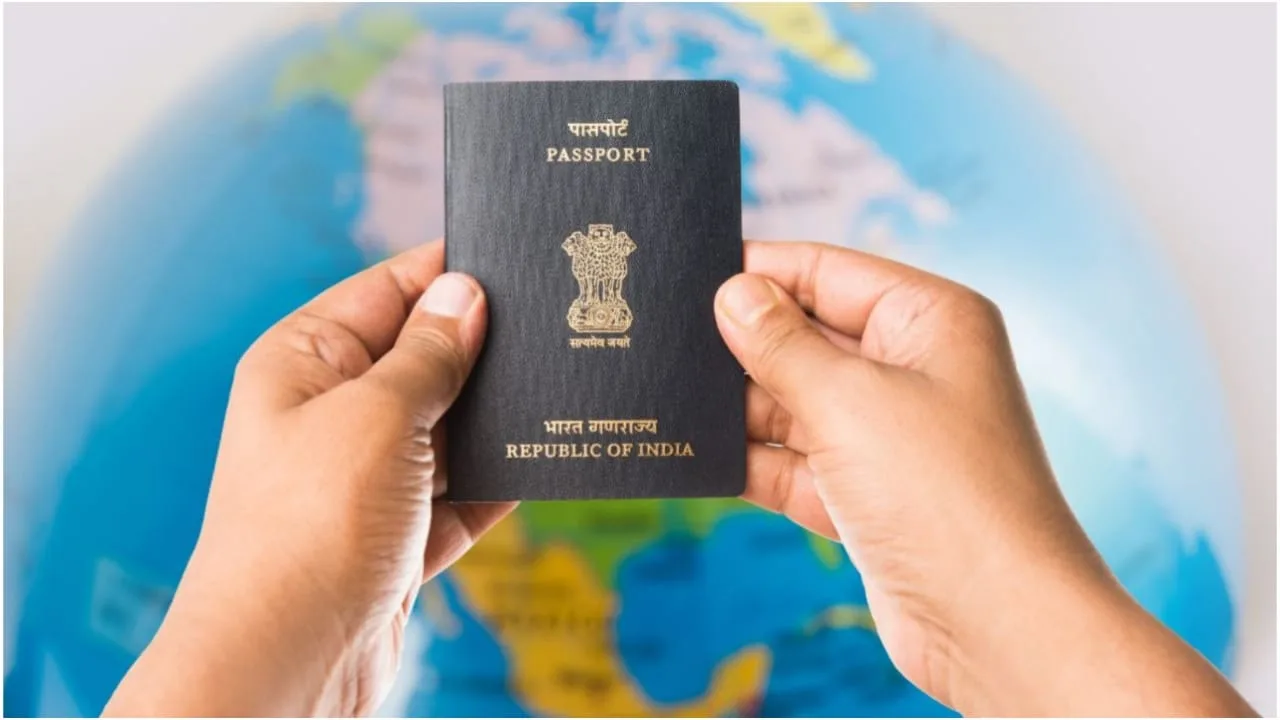

E-Passport in India: The Ministry of External Affairs has officially launched the E-Passport in India under the Passport Seva Program 2.0. The service is currently being rolled out as a pilot in select cities, and the government plans to expand it nationwide under the Digital India initiative soon. The new e-passport is designed to enhance security, prevent fraud, and speed up immigration processes.
Here is everything you need to know about the e-passport, including its features, application process, and required documents.
What Is an E-Passport, and How Does It Work?
An e-passport, also known as an electronic passport, comes with an embedded RFID (Radio Frequency Identification) chip. This chip securely stores the passport holder’s personal and biometric information, including name, date of birth, passport number, photograph, and fingerprints.
To help identify it, the front cover of an e-passport features a golden symbol indicating it is chip-enabled.
Key Security and Processing Benefits
The most significant advantage of an e-passport is enhanced security. Since biometric and personal data are stored in an encrypted chip, the risk of duplication or tampering is significantly reduced. Immigration officers can scan the chip without opening the passport, allowing them to verify details instantly.
This technology not only prevents passport fraud but also reduces airport wait times, making the immigration process faster and smoother for travelers.
How to Apply for an E-Passport in India?
Applicants who wish to apply for an e-passport must visit the official Passport Seva portal. New users need to register, while existing users can log in using their credentials. After logging in, applicants must fill out the e-passport application form and book an appointment at the nearest Passport Seva Kendra (PSK) or Post Office Passport Seva Kendra (POPSK).
Once the appointment is booked, the required passport fee must be paid online. On the scheduled date, applicants must arrive at the selected center on time to complete the biometric submission and document verification.
Documents Required for E-Passport Application
To apply for an e-passport, applicants must present valid proof of address, such as an electricity bill, bank passbook, or voter ID card. For date-of-birth verification, documents such as a birth certificate or a high school mark sheet are required. Identity proof, such as an Aadhaar card or a voter ID, is also mandatory.
Applicants are advised to carry original documents along with photocopies. If the application is for passport renewal, the old passport must be submitted as well. Educational certificates from high school, intermediate, and graduation may be required during verification.
What Data Is Stored in the E-Passport Chip?
The chip embedded in the e-passport securely stores essential details, including the passport number, name, date of birth, photograph, and biometric data such as fingerprints. Because of this secure storage, unauthorized access or misuse becomes extremely difficult.
This advanced verification system enables immigration officials to scan and verify passport details digitally, improving security and efficiency.
Nationwide Rollout Expected Soon
While the e-passport service is currently limited to a few cities, officials have indicated that a nationwide rollout is expected soon. Once fully implemented, the e-passport is expected to become the standard travel document for Indian citizens.

Comments are closed.