
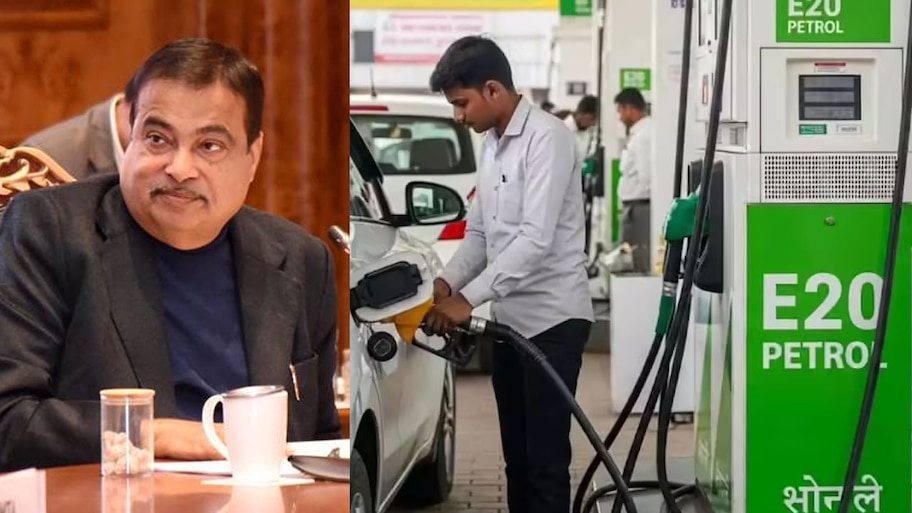
E20 Petrol Myth vs Reality: Is petrol with 20% ethanol really destroying your car’s engine? Government gave clarification

New Delhi/Lucknow: For the last few days, many scary videos regarding E20 fuel (20% ethanol blended petrol) are going viral on social media. In these videos it is being claimed that the ethanol being mixed in petrol by the government is completely ruining the engines of vehicles. It reached such a limit when it was even said in some viral posts that due to the presence of sugar in petrol, ants and bees are entering the petrol tank. To save the people of the country from being misled by all these rumours, the Ministry of Petroleum and Natural Gas itself has come forward and exposed each and every lie. The government has said in clear words that E20 petrol is completely safe and the claims being spread on social media are completely fabricated. Let us know what is the real truth behind these rumours. 40,000 km testing: Is the engine really going bad? Rejecting the claims of social media, the Ministry said that the Automotive Research Association of India (ARAI) has done extensive research on this. During testing, cars were driven for 40,000 kilometers and two-wheelers were driven for 20,000 kilometers. This rigorous testing revealed that it has no adverse effect on the life of the engine or the performance of the vehicle. In fact, due to the high octane rating of ethanol, the pickup and performance of the vehicles becomes even better. The fear of parts melting and warranty void is just a rumor. ARAI has conducted an investigation in collaboration with Indian Oil (IOCL), Indian Institute of Petroleum (IIP) and Society of Indian Automobile Manufacturers (SIAM), in which no rust or defect has been found in any part of metal or plastic. Yes, some rubber parts of very old vehicles may need to be replaced prematurely. On the issue of expiry of warranty and insurance, the government made it clear that all the vehicle manufacturers and insurance companies have given in writing that the warranty and claims of E20 compliant vehicles will be completely protected. Ants and sugarcane juice in petrol tank: What is the truth of viral claims? On the strangest claim going on the internet i.e. ‘ants coming in petrol tank’, the Ministry said that the ethanol found in petrol is prepared through a very modern distillation process, due to which there is no trace of sugar left in it. The videos showing sugarcane juice being mixed directly into petrol are completely edited and fake. Such elements are added to ethanol which drive away insects, and the smell of petrol itself is so strong that no living creature can come near it. How much truth is there in the claims of wastage of water and shortage of food grains? There is also a rumor that 10,000 liters of water is wasted in making 1 liter of ethanol, whereas the reality is that only 3 to 5 liters of processed water is used. All distilleries in India run on ‘Zero Liquid Discharge’ (ZLD) system, which recycles and reuses water. On the food security of the country, the government clarified that ethanol is being made from the surplus rice and maize (which is more than 40% of the total supply) after meeting the food requirements. This is not a unique ‘experiment’ of India, it is implemented all over the world. The misconception is being spread that E20 is an untested experiment, whereas America, Brazil, Canada, Thailand, Japan and many European countries have been using ethanol in vehicles by mixing it with petrol for the last several decades. India has implemented it on a large scale only after observing best practices at the global level. Today’s modern vehicles and fuel infrastructure have advanced safety features to prevent water from entering the vehicle’s tank, so there is no risk of water entering the vehicle’s tank. Self-reliant India: What has the country benefited so far? Under the Ethanol Blending Programme, the country has achieved great success at the economic and environmental level. Its main figures are as follows: Saving of ₹ 1.9 lakh crore: Since 2014-15, there has been huge saving in the foreign exchange expenditure incurred in importing crude oil. Payment of ₹1.6 lakh crore: This huge amount has gone directly into the accounts of the farmers of the country, which has greatly strengthened the rural economy.

Comments are closed.