
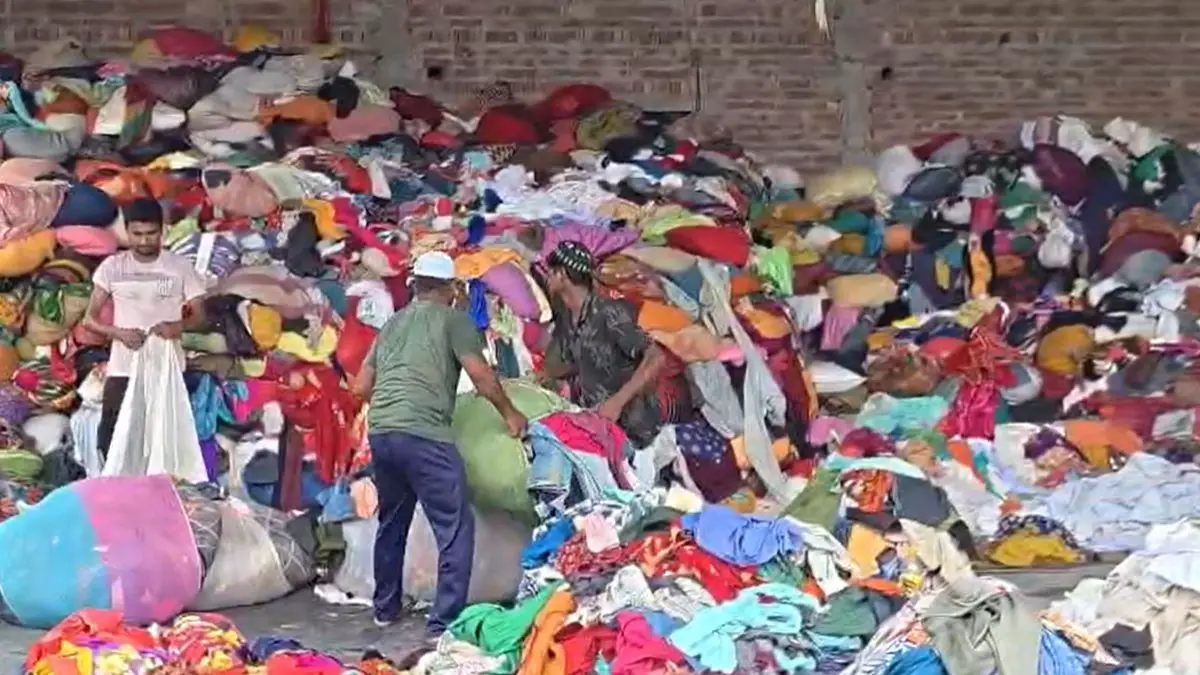
Earned name from scrap: That village of Moradabad where torn and old clothes became the fate of thousands of families

Moradabad. There is a village in Moradabad district of Uttar Pradesh which has written its own destiny. Today, while people in rural areas are running towards cities for employment, the skilled people of this village have made scrap and old clothes their source of income. We are talking about Gram Panchayat Raninagal of Bhagatpur Tanda development block. This village has turned recycling of old clothes into a big business, which has today become the main source of employment for thousands of people.
Raninagal, situated about 20 kilometers away from Moradabad district headquarters, has a population of about 10 thousand. But today the threat of this small village is spread far and wide. In fact, the business of old clothes is being done here on a large scale for the last two decades. The situation is such that there is hardly any house in the village which is not associated with this work. This self-reliant village has not only established itself, but the livelihood of hundreds of nearby villages is now dependent on this business.
Clothes are brought from every corner of the country
The process of this unique business is also quite interesting. Village people go to different states and big cities of the country. There they go door to door and collect old clothes or buy them. After this these clothes are brought to Raninagal. These are sorted very minutely in the big warehouses built here. The clothes which are in somewhat good condition are sold in the market for re-use. But the real magic happens with clothes that are completely useless.
Carpets are made with hard work and traditional techniques
The artisans of the village convert these waste clothes into beautiful, strong and durable carpets with the help of their hard work and traditional techniques. It is being told that these colorful carpets prepared in Raninagal are in demand in many states of the country. The villagers themselves transport these carpets to the markets through hawkers and through big traders. This is the reason that today this village has created a separate and strong identity for itself in the entire Uttar Pradesh in terms of recycling of old clothes and carpet industry.
Nawab Ali changed the face of the village
Nawab Ali, the current head of the village, has played a big role in taking this business to this stage. He says that the beginning was not so easy. He himself once roamed from village to village and bought old clothes and started selling them by taking them to Amroha. Gradually, when the work increased and the demand for colorful clothes started coming in the market, he started involving other people of the village also in this work. In no time, a small effort has become the basis of livelihood of the entire area.
However, local people believe that there is more scope for progress in this cottage industry. According to the villagers, if they get facilities like modern machines, technical training, easy loans and better market linkages from the government, then this work can spread on a larger scale. This will not only create new employment opportunities but will also give a new direction to the rural economy. This model of saving the environment and becoming self-reliant by giving new life to old clothes is truly an example for the country.

Comments are closed.