
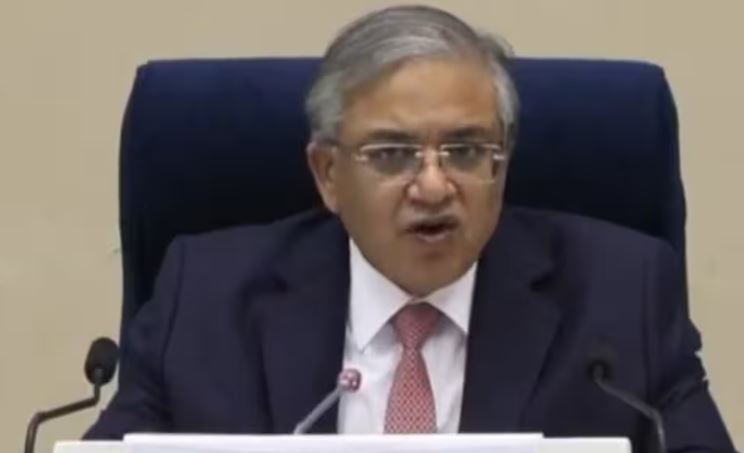

The Election Commission of India announced the schedule for assembly elections in West Bengal, Tamil Nadu, Kerala, Assam, and the Union Territory of Puducherry.
The polls will take place in April, with counting scheduled for May 4, 2026.
Chief Election Commissioner Gyanesh Kumar, along with Election Commissioners Sukbir Singh Sandhu and Vivek Joshi, addressed a press conference in New Delhi to unveil the schedule. The Commission confirmed that West Bengal will vote in two phases, while the other states and Puducherry will complete polling in a single phase.
The Commission said around 17.4 crore electors will participate in this electoral exercise. Officials emphasised that the Special Intensive Revision (SIR) of electoral rolls ensured accuracy, leaving no eligible voter out and removing ineligible names.
The poll panel described elections in India as the “festival of democracy” and highlighted the cultural richness and diversity represented by the five states and Puducherry. The Commission also announced that more than 20 countries will send observers to witness the Indian electoral process.
State-wise Election Schedule
West Bengal
- Seats: 294
- Term Ends: May 7, 2026
- Polling: Phase 1 – April 23, 2026; Phase 2 – April 29, 2026
- Counting: May 4, 2026
Tamil Nadu
- Seats: 234
- Term Ends: May 10, 2026
- Polling: Single Phase – April 23, 2026
- Counting: May 4, 2026
Kerala
- Seats: 140
- Term Ends: May 23, 2026
- Polling: Single Phase – April 9, 2026
- Counting: May 4, 2026
Assam
- Seats: 126
- Term Ends: May 20, 2026
- Polling: Single Phase – April 9, 2026
- Counting: May 4, 2026
Puducherry (UT)
- Seats: 30
- Term Ends: June 15, 2026
- Polling: Single Phase – April 9, 2026
- Counting: May 4, 2026
Election Logistics
The Commission confirmed deployment of nearly 25 lakh officialsincluding:
- 15 lakh polling personnel
- 8.5 lakh security officials
- 49,000 micro observers for polling
- 40,000 counting officials
- 21,000 sector officers
- 15,000 micro observers for counting
- 1,444 observers

Comments are closed.