
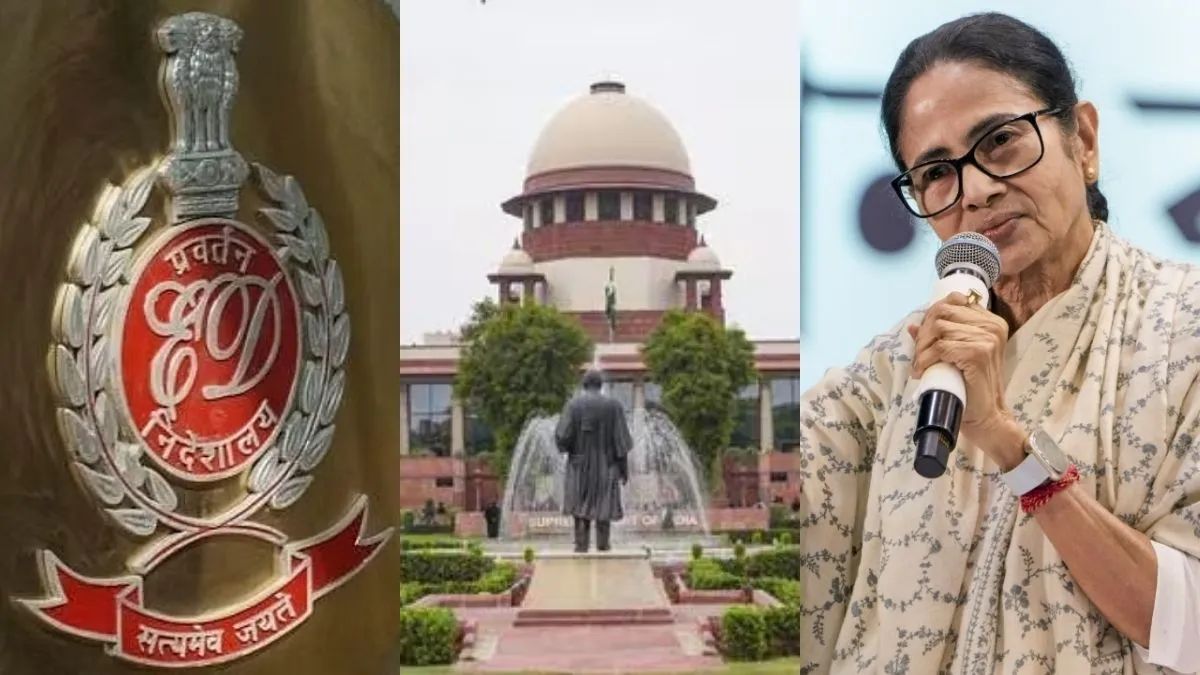
Echo of IPAC case in Supreme Court, ED-Bengal government face to face, sharp confrontation over interference in investigation

IPAC raid case involving political strategists in West Bengal on Thursday Supreme Court As soon as it arrived, it seemed to be taking the form of a constitutional conflict rather than a legal debate. In the hearing between the Enforcement Directorate and the state government (Mamata Banerjee Controversy), the allegations and counter-allegations were so sharp that the court itself had to comment that the matter is “extremely serious” and cannot be taken lightly.
The side appearing for the Center claimed that there was direct interference in the work of the investigating agency during the raid, while the Bengal government said that these allegations were exaggerated. During the hearing, it became clear from the arguments of both the parties that the dispute is not limited to just one raid, but has reached the limits of the rights of central agencies and states.
ED’s allegations: Investigation was disrupted
The ED told the court that action was being taken on the premises related to IPAC in a money laundering case, when the situation changed with the presence of Chief Minister Mamata Banerjee and senior police officers (Mamata Banerjee Controversy). The agency says that the ongoing action under PMLA was given a political color and the officers present on the spot had to face pressure.
ED also said that if such incidents are ignored, it will become difficult for central investigating agencies to work independently in future. On this basis, a demand was made from the court to give strict instructions against the state officials.
Major questions raised in court
Were constitutional limits violated during the raid?
Was there deliberate interference in the work of the investigating agency?
How impartial was the role of the state police?
Bengal government’s clarification
Senior lawyers appearing for the state government termed the ED’s claims as “one-sided”. He said that the presence of the Chief Minister has been misrepresented and the allegation of any kind of seizure or obstruction is not factually correct. The government’s stand was that whatever steps were taken were within the ambit of law and as per the circumstances.
The State side also said that some of the points made before the court did not tally with the documentary record and were giving unnecessary weight to the matter.
Court’s harsh comment
After listening to both the sides, the Supreme Court said that there are many aspects in this case which demand a judicial inquiry (Mamata Banerjee Controversy). The court made it clear that it is necessary to maintain a balance between the independence of the investigating agencies and the responsibility of the state governments. Along with this, the court has issued a notice to the state government and sought its reply.
Why is this matter important?
Impact on the working style of central agencies
State vs Central rights debate
Questions on the role of political strategy companies
Overall, this matter which started with IPAC Raid has now become the center of not only legal but also political and constitutional discussion. The next hearing of the Supreme Court will decide what are the limits of the investigating agencies and to what extent the state governments can interfere in them.

Comments are closed.