
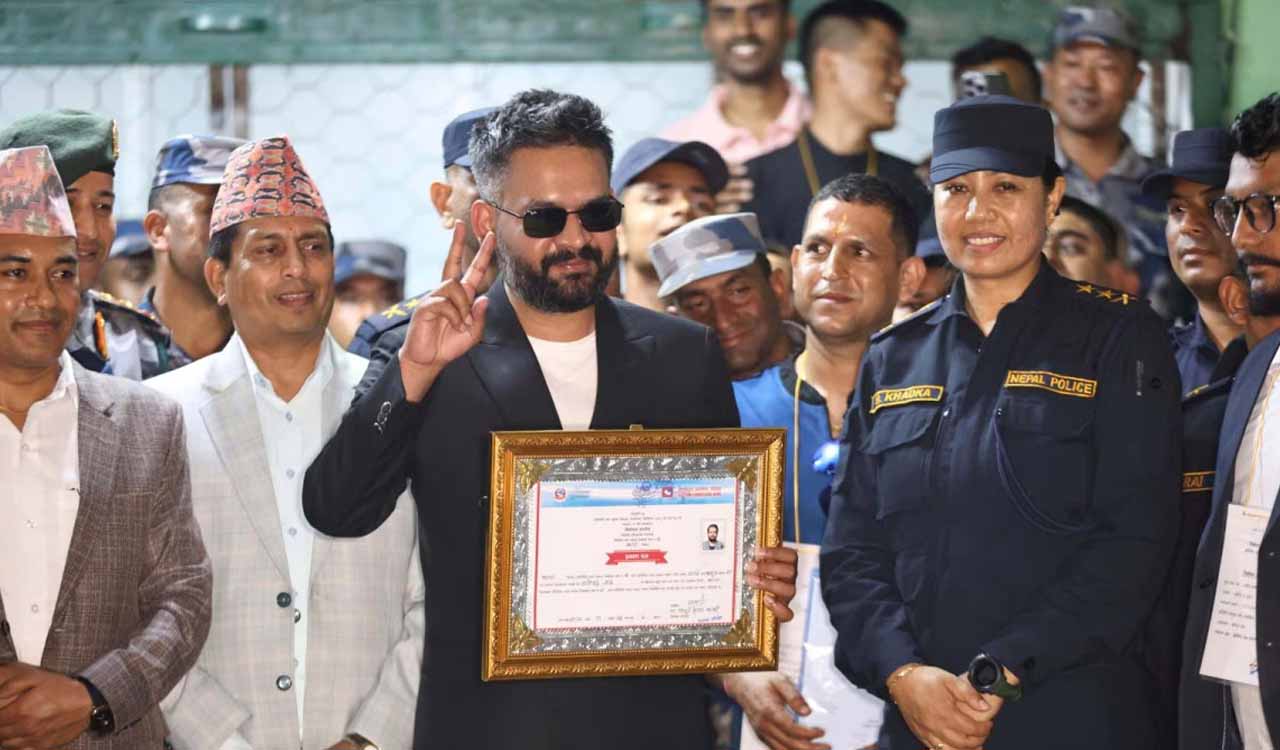

The rise of 35-year-old rapper-turned-politician Balendra Shah, popularly known as Balen, reflects the aspirations of Nepal’s youth who demanded an end to corruption, nepotism, and misgovernance
Published Date – 10 March 2026, 10:00 PM
Nepal has delivered an unmistakable mandate that rejected the old brand of politics and voted for a new dawn. The rise of a 35-year-old rapper-turned-politician, Balendra Shahpopularly known as Balen, symbolises the break from the past and a yearning for change in the tiny Himalayan nation that had witnessed social turbulence in the recent past. The sweeping victory of the fledgling Rashtriya Swatantra Party (RSP) in the national elections signals a dramatic rejection of the country’s entrenched political order and deep frustration among the youth over economic distress. The results reflected revenge voting, as legacy parties such as the Communist Party of Nepal (Unified Marxist–Leninist) (CPN-UML) and the Nepali Congress (NC) fared poorly at the hustings. Even stalwarts like former Prime Minister KP Sharma It was suffered humiliating defeats. Balen himself defeated Oli by a huge margin, indicating the intensity of voters’ anger against the established political elite. For decades, political instability has been the default mode in the nation of 30 million people, with fragile coalitions of disparate groups becoming the norm. Nepal has seen 14 governments in the past 18 years, with veteran leaders playing musical chairs for the PM’s post. The rise of Balen, a popular rapper and powerful orator, has been dramatic in a country whose politics was traditionally dominated by old guards. Having first gained prominence when he won the Kathmandu mayoral poll as an Independent in 2022, he has successfully channelled Gen Z frustration into a national political movement.
Balen’s victory embodies the aspirations of Nepal’s youth, who mobilised through street protests and social media to demand an end to corruption, nepotism, and misgovernance. He is poised to become Nepal’s youngest Prime Minister and its first Madhesi to occupy the coveted post. The challenges before him are formidable, including tackling corruption, reviving a struggling economy, and ensuring political stability. Years of instability, corruption, economic stagnation, and high unemployment have eroded public trust in traditional parties. The turning point came in September last year when the country’s youth hit the streets, driven by frustration with government policies. These protests led to Prime Minister Oli’s resignation and early national elections. For the RSP, which has positioned itself as a harbinger of change, the first big hurdle will be managing the governance itself. While the party’s rise is fuelled by hopes of reform, turning those hopes into real policies will require a determined approach and teamwork. Nepal’s bureaucratic system is complex and often resistant to change. Overhauling government institutions, improving public services, and fighting corruption will need sustained reforms. For India, the outcome carries significant strategic implications. Bouts of political instability, coupled with pro-China policies of leaders like Oli, have adversely impacted bilateral projects. If the RSP government pursues pragmatic diplomacy, Nepal stands to gain by strengthening its traditional ties with India.

Comments are closed.