

Virendra Pandit
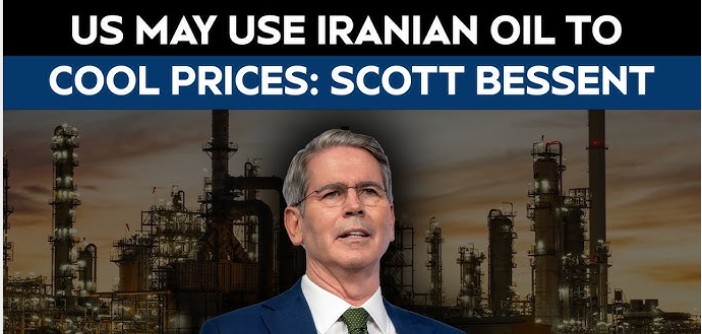
New Delhi: Treasury Secretary Scott Bessant has said the US is looking to lift sanctions, long imposed on Iranian oil, to ease the spike in energy prices triggered by its war in the Gulf region, and could also look at a unilateral release of its own reserves.
“In the coming days, we may un-sanction the Iranian oil that’s on the water,” Bessent said on. Fox Business on Thursday.
The US is already “allowing” Iranian oil to pass through the Strait of Hormuz, and that nation has about 140 million barrels afloat now,” he said. “Depending on how you count it, that’s 10 days to two weeks of supply.”
Iran’s supplies have mainly been heading to China up to now, but once sanctions are eased, that can then go elsewhere, Bessent said, according to media reports.
“It can flow into Malaysia, Singapore, Indonesia, Japan, India — who have been good actors in this.”
“We will be using the Iranian barrels against the Iranians to keep the price down for the next 10 or 14 days as we continue this campaign,” Bessent said.
By the time the US takes action on Iran’s floating oil, there will have been “about 260 million excess barrels of energy” created, Bessent said — pointing to also to the release of reserves of oil by a number of countries.
Kharg Island
“The US could unilaterally do another SPR release to keep the price down,” he also said, referring to the Strategic Petroleum Reserve.
Bessant noted that there had been some speculation the US Treasury would intervene in the oil futures market, but “we’re absolutely not doing that.”
“We are not going to do a financial market intervention,” he also said. “We’re not intervening in the financial markets. We are supplying the physical markets.”
The US hasn’t been targeting Iran’s energy assets in the war, he said. About the Kharg Island, a key Iranian export hub, the US mounted a “precision strike” against the military assets.
“The other thing I can tell you, if you’re an oil worker, you don’t want to work there,” Bessant said. “We will see what happens with whether that eventually becomes a US asset.”

Comments are closed.