
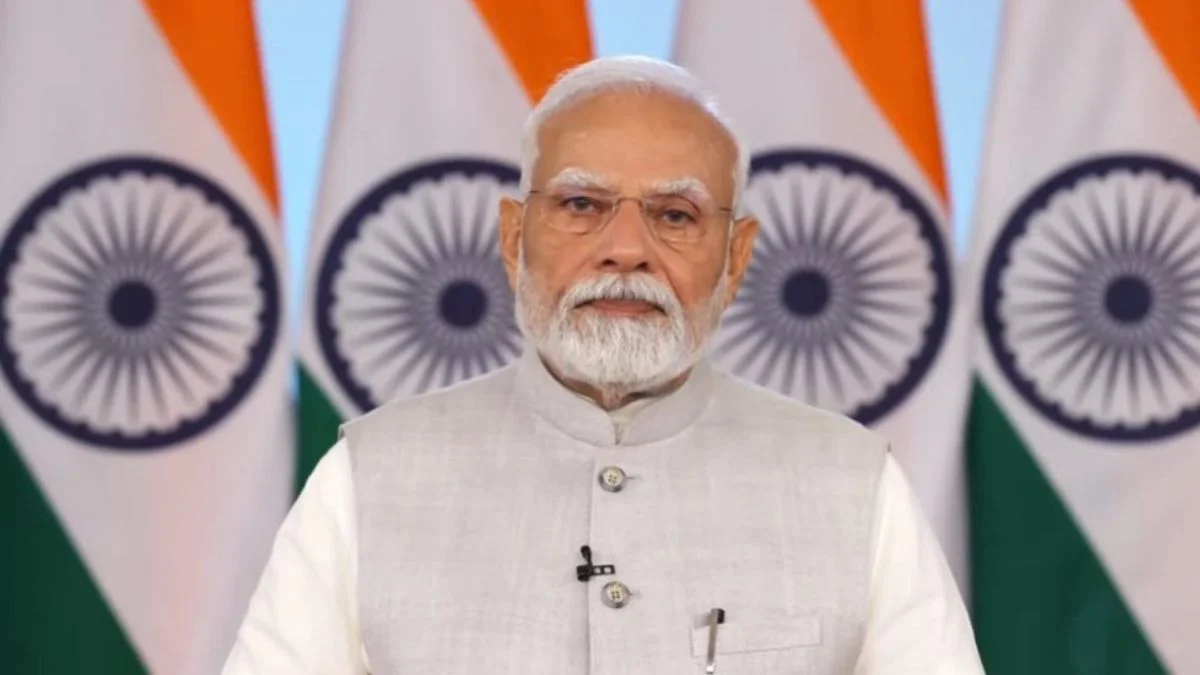

Prime Minister Narendra Modi provided the clearest and most direct consumer reassurance of the entire West Asia crisis on Tuesday, March 24, 2026, telling Parliament that India has enough reserves, that the country’s aim is not to be dependent on any single source, and that the government is moving fast to ensure LPG, PNG, and other essential supplies reach consumers from its existing reserves.
The statement addresses the anxiety that has been quietly building in Indian households since the Strait of Hormuz was effectively closed in late February 2026. Will LPG cylinders be available? Will CNG and PNG prices spike uncontrollably? Will petrol and diesel supplies be disrupted? Modi’s answer to all of those questions, delivered from the floor of Parliament, is the same: we have enough reserves, we are not dependent on one source, and we are moving to ensure supplies reach you.
India Has Enough Reserves
The Prime Minister’s confirmation that India has sufficient reserves is the most operationally significant element of the statement. India maintains strategic petroleum reserves at underground rock caverns in Visakhapatnam, Mangaluru, and Padur with a combined capacity of approximately 5.33 million metric tonnes of crude oil, equivalent to roughly 9 to 10 days of India’s total crude consumption. Beyond the strategic reserves, India’s oil marketing companies maintain operational crude and product inventories across their refinery and storage networks that provide additional days of coverage.
The government has clearly been drawing on these reserves to manage the supply gap created by the Hormuz disruption while simultaneously working to replace incoming cargo through the diversified procurement strategy Modi has described. The fact that the Prime Minister is able to say India has enough reserves from the parliamentary floor, rather than acknowledging any supply stress, suggests the reserve management has been effective and that the buffer between current inventory and any potential supply shortfall remains comfortable.
Not Dependent on One Source
Modi’s statement that India’s aim is not to be dependent on any single source encapsulates the energy security strategy that India has been building for over a decade and which is now paying dividends precisely when it matters most. India’s expansion of its crude oil supplier base from 27 countries to 41 countries, its development of Russian crude import relationships at discounted prices, its growing LNG import infrastructure that accesses American and Australian gas alongside Gulf supplies, and its domestic production investments all contribute to a supply architecture that no single disruption can fully compromise.
The current West Asia crisis is the most severe test that diversification strategy has faced. The fact that Modi can tell Parliament that India is not dependent on any one source and that ships from multiple places are arriving safely is evidence that the strategy is working under real-world stress conditions, not just in theory.
LPG, PNG and Essentials Being Moved Fast From Reserves
The specific mention of LPG, PNG, and other essentials being moved fast from existing reserves is the detail that will matter most to ordinary Indian households. LPG cylinder availability for household cooking is the single most visible and politically sensitive energy supply question in India. A shortage of LPG cylinders, or a sharp price spike, would be felt immediately and directly by hundreds of millions of Indian families who depend on the fuel for daily cooking.
PNG, the piped natural gas that serves millions of urban households in cities including Mumbai, Delhi, Ahmedabad, and Pune, is the other essential that urban middle-class India watches closely. CNG for vehicles is the third leg of the household and transport energy picture that is most directly visible to consumers in their daily lives.
Modi’s statement that the government is moving fast on all three from reserves means the supply management operation is already in execution, not in planning. Officials in the Ministry of Petroleum and the oil marketing companies are actively managing distribution from reserve stocks to ensure that retail availability of LPG cylinders, PNG connections, and CNG supplies is maintained without visible disruption to consumers.
What This Means for Indian Households
For the ordinary Indian family, Modi’s parliamentary statement translates into a straightforward reassurance across three dimensions. First, LPG cylinders will be available. The government is drawing on reserves and managing distribution actively to ensure supply continuity. Second, PNG and CNG supplies in urban areas will not be disrupted. Third, India is buying from 41 countries and will continue buying from wherever supply is available, meaning the supply chain has multiple redundancies that prevent any single disruption from cascading into a shortage.
The price question is separate from the availability question. Prices for energy products remain elevated because crude oil remains significantly above pre-war levels and the rupee remains weak against the dollar. The government is absorbing a significant portion of that cost increase through oil marketing company under-recoveries, but that absorption has limits that will eventually require either fiscal support or price adjustments. Modi’s statement addresses availability, not price. The supply chain is secure. The price environment remains challenging.
The Bigger Picture
Modi’s supply security statements across both the Lok Sabha and Rajya Sabha on Monday and Tuesday represent a comprehensive parliamentary communication strategy designed to address the three dimensions of the West Asia crisis that matter most to Indian households and markets simultaneously. The diplomatic dimension, India is calling for de-escalation and Hormuz opening directly with West Asian leaders. The supply dimension, ships are arriving safely from multiple sources and we have enough reserves. And the resilience dimension, India is not dependent on any one source and is built to manage exactly this kind of disruption.
Together these statements paint a picture of a government that has prepared for the scenario it is now living through and is managing it without the panic or supply breakdown that the scale of the disruption might have suggested was likely. For Indian consumers watching LPG prices and fuel availability with anxiety, that picture is the most reassuring thing their Prime Minister could have told them from the floor of Parliament.
Disclaimer: This article is for informational purposes only and does not constitute financial or investment advice.

Comments are closed.