
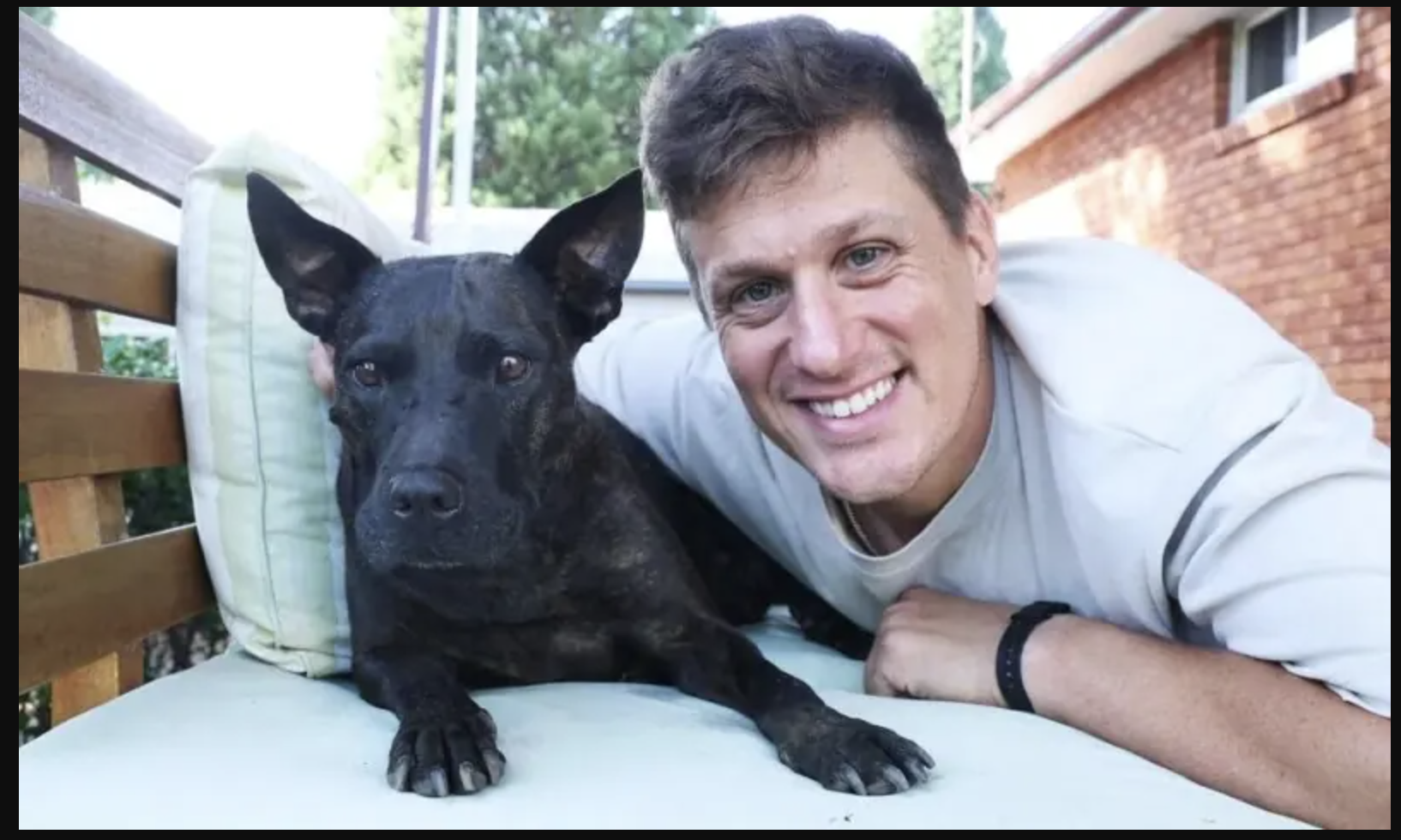

Like a spark in the dark, hope flickered where science met love, refusing to let time have the final word.
When Desperation Meets Innovation
Paul Conyngham, a tech entrepreneur from Australia, turned to artificial intelligence when his eight-year-old rescue dog, Rosie—a Staffy-Shar Pei cross—was diagnosed with aggressive mast cell cancer. Large tumours on her back leg left her with only months to live, according to reports. Unwilling to accept the prognosis, Conyngham explored unconventional options after traditional treatments failed to slow the disease.
With 17 years of experience in machine learning and data analysis, he used ChatGPT alongside AlphaFold, an AI program designed to analyse protein structures, to craft a personalised approach. His goal: to design a custom mRNA vaccine targeting the specific mutations driving Rosie’s cancer. Collaborating with researchers at the University of New South Wales, he translated biological data into a tailored treatment, which was administered in December.
“We took her tumour, sequenced the DNA, we converted it from tissue to data, and we used that to find the problem in her DNA and then develop a cure based off that,” Conyngham said while speaking during the Today Show on Saturday. “ChatGPT assisted throughout that entire process.”
A Leap of Life, A Glimpse of the Future
The results have been striking. Rosie’s tumour has reportedly reduced by half, and her energy levels have rebounded. Conyngham recalled a moment that captured her renewed vitality:
“In December, she had low energy because the tumours were creating a huge burden for her,” Conyngham said. “Six weeks post-treatment, I was at the dog park when she spotted a rabbit and jumped the fence to chase it. I’m under no illusion that this is a cure, but I do believe this treatment has bought Rosie significantly more time and quality of life.”
The journey was not without challenges. Conyngham spent three months securing ethical approval for the experimental treatment. Yet, the story underscores a larger possibility—the transformative role of AI in personalised medicine. Experts have noted that such innovation could open doors to more targeted cancer therapies in the future.
In the quiet intersection of code and care, even fleeting moments can bloom into borrowed forever.
Summary
Australian entrepreneur Paul Conyngham used AI and ChatGPT to develop a personalised mRNA cancer vaccine for his dog, Rosie, after conventional treatments failed. Collaborating with researchers, he targeted specific tumour mutations. The treatment significantly reduced tumour size and improved her health, highlighting AI’s growing potential in personalised medicine and innovative cancer therapies.
Image Source
Comments are closed.