
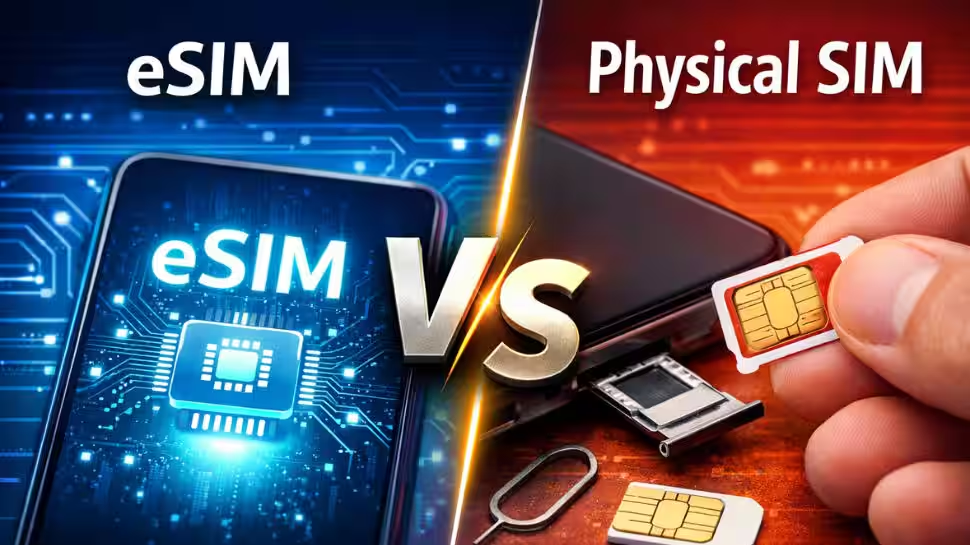
eSIM vs physical SIM: Which one is better and safer for your smartphone in 2026? | Technology News

eSIM vs physical SIM performance: Smartphones are evolving rapidly, and so is the technology behind mobile connectivity. One of the biggest changes in recent years is the rise of eSIM technology. Many new devices now support both traditional physical SIM cards and eSIMs. Have you ever wondered which one is better? And which option is safer and more future-ready?
What is physical SIM?
A physical SIM card is the small removable chip that you insert into your phone. It stores your mobile number and connects your device to your telecom network. For years, this was the standard method used worldwide.
Add Zee News as a Preferred Source
Physical SIM cards are easy to replace and transfer between devices. If you change your phone, you simply remove the SIM card and insert it into the new device. However, because it is removable, it can also be lost, damaged, or stolen.
What is eSIM?
An eSIM, or embedded SIM, is built directly into the phone’s hardware. It works digitally, allowing users to activate a mobile plan without inserting a physical card. Telecom operators provide a QR code or activation process to download the network profile directly to the device.
Many premium smartphones now support eSIM, and some brands are slowly moving toward eSIM-only models in certain markets.
Which one is safer?
In terms of security, eSIM has an advantage. Since it is embedded inside the phone, it cannot be physically removed if the device is stolen. This makes it harder for thieves to misuse the number.
eSIM also reduces the risk of SIM swap fraud, although it does not eliminate it completely. Telecom operators still need strong verification systems to prevent misuse. Physical SIM cards, on the other hand, can be easily removed and inserted into another device.
(Also Read: India’s Own AI Chat App Indus launched by Sarvam: Multi-language support, ChatGPT and Gemini rival; Check top features, and how to download)
Convenience and flexibility
eSIM offers greater convenience for people who travel frequently. Users can switch between mobile networks without changing physical cards. It also supports multiple profiles, meaning one phone can store more than one number digitally.
However, physical SIM cards remain more practical in areas where eSIM support is limited. Not all telecom operators and budget smartphones currently support eSIM.
Which is more future-ready?
Experts believe eSIM is more future-ready. As smartphones become slimmer and more advanced, removing the SIM tray saves space for better batteries or other components.
While physical SIM cards are still widely used, eSIM technology is growing rapidly. In the coming years, digital SIM activation may become the global standard.

Comments are closed.