
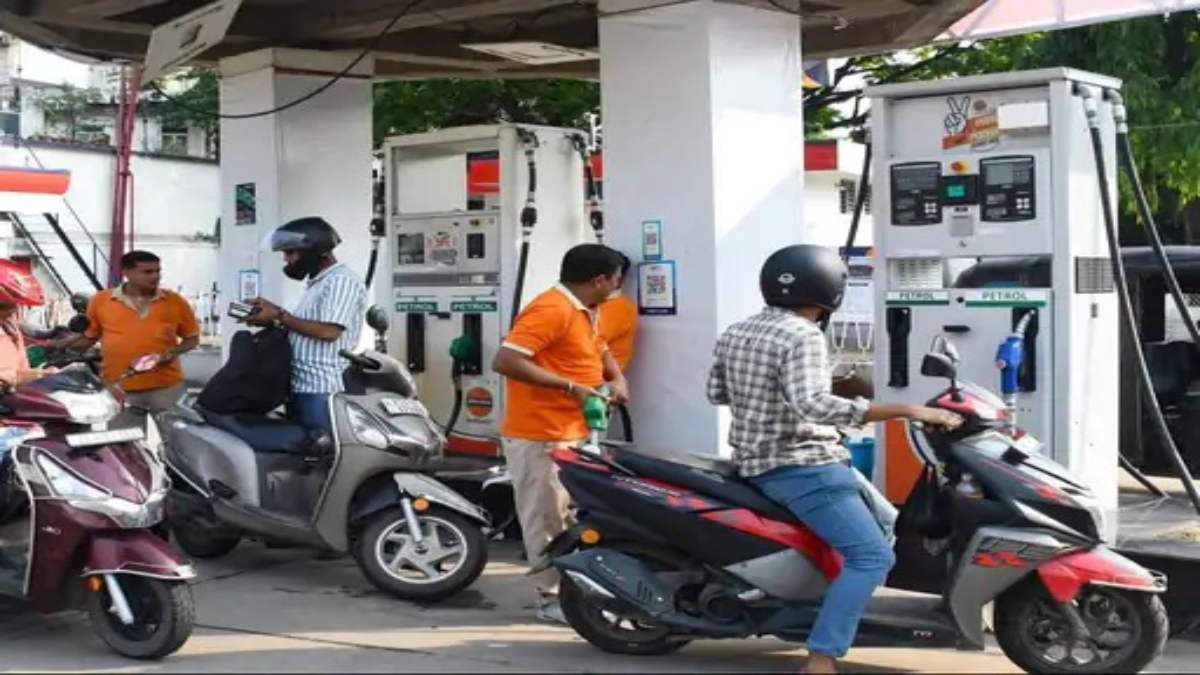
Ethanol Blended Petrol: Zero excise duty on petrol with 22% to 30% ethanol, will petrol be cheaper?

Business Desk – Ethanol Blended Petrol: The Central Government has taken a big decision to reduce the import of crude oil in the country and promote clean fuel. The government has completely abolished excise duty on ethanol blended petrol from 22% to 30%. This means that new petrol variants like E22, E25, E27 and E30 will no longer be subject to excise duty. However, 20% ethanol blended E20 petrol is not included in the scope of this exemption.
The government believes that this decision will encourage oil companies to mix more ethanol in petrol, which will reduce the country’s dependence on foreign crude oil and promote green energy.
What is ethanol?
Ethanol is a type of alcohol, which is prepared from the fermentation of starch and sugar. It is used as fuel by mixing it with petrol. In India, ethanol is produced primarily from sugarcane juice, but it can also be made from corn, rotten potatoes, cassava and other starchy materials.
Ethanol is divided into three categories. First generation ethanol is made from sugarcane juice, corn, sweet beet and sweet sorghum. Second generation ethanol is prepared from rice and wheat bran, corn, bamboo and other agricultural residues. At the same time, work is going on to make third generation biofuel from algae.
Why did the government take this decision?
India imports about 87% of its crude oil requirement from abroad. This puts huge pressure on foreign currency. The government wants more use of domestically produced ethanol, which will reduce oil imports and also benefit the environment. Oil companies are being encouraged to adopt more than 20% ethanol blending by giving exemption in excise duty.
Preparations complete for new petrol variant
The government has not only given tax exemption, but has also prepared the technical infrastructure for it. Bureau of Indian Standards (BIS) has notified fuel quality standards for E22, E25, E27 and E30 petrol. Under this 19850:2026, these standards have come into effect from May 15, 2026. In these, the quantity of ethanol, octane rating, sulfur limit, testing process and safety standards have been decided.
How far has India reached in ethanol blending?
The country’s ethanol blending program is progressing rapidly. In the National Policy on Biofuels-2018, the target of 20% ethanol blending in petrol was earlier set by 2030, which was later reduced to ethanol supply year 2025-26. Government oil companies had already achieved the target of 10% blending in June 2022, five months ahead of schedule.
What will be the impact on vehicles?
After the implementation of E20 petrol in the country, some vehicle owners had expressed concern about reduced mileage and impact on old engine parts. The matter reached the Supreme Court, but in September 2025, the court rejected the petition against the implementation of E20. The government had said in the court that this decision has been taken after extensive study and keeping in mind the interests of the farmers.
According to SIAM, an organization of automobile companies, the use of E20 in some old vehicles may result in a slight reduction in mileage, but there is no threat to the safety of the vehicle.
Will petrol become cheaper?
It is generally believed that ethanol is cheap, but at present it is not so. According to government data, buying ethanol is costlier for oil companies than refined petrol. By July 31, 2025, the average purchase cost of ethanol including transport and GST was Rs 71.32 per liter. This is the reason that despite the increase in the quantity of ethanol, there is no possibility of reduction in the retail prices of petrol at present.
Instead of immediately providing cheaper petrol, this step of the government is being considered as part of a long-term strategy of energy security, reduction in oil imports, increasing the income of farmers and promoting clean fuel.

Comments are closed.