
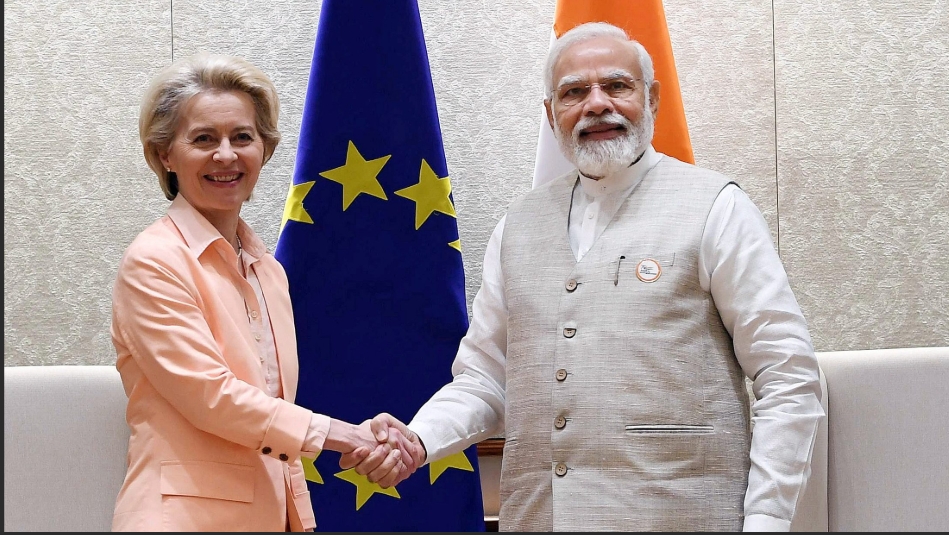
EU chief speaks on new trade deal with India, becomes center of discussion before the summit

European Commission President Ursula von der Leyen, speaking at the World Economic Forum in Davos on January 20, 2026, described the potential EU-India Free Trade Agreement (FTA) as “on the verge of a historic trade deal”. “Some people call it the mother of all deals,” he said, emphasizing its scale: a combined market of nearly 2 billion people that accounts for nearly a quarter of global GDP. This comes at a time when the EU is trying to diversify trade partnerships, promote fair trade and reduce excessive dependence on a few partners amid global conflicts.
Von der Leyen’s comments come ahead of her visit to India on January 25-27, 2026, where she – along with European Council President Antonio Costa – will be the chief guest at India’s 77th Republic Day celebrations on January 26. The leaders will co-chair the 16th India-EU Summit in New Delhi on January 27, during which they are widely expected to announce the conclusion or significantly advance the FTA negotiations. Talks, which resumed in 2022 after a long hiatus, have made progress on issues such as tariffs, market access, sustainability and supply chains in sectors such as semiconductors, renewable energy and pharmaceuticals – in line with India’s Act East policy and the EU’s Global Gateway initiative to balance dependencies including China.
The article’s framework links the deal to EU efforts to reduce dependence on the US amid rising trade tensions. Reports confirm that on January 17–18, 2026, US President Donald Trump announced a 10% tariff (rising to 25% by June 1) on imports from Denmark, Finland, France, Germany, the Netherlands, Norway, Sweden, and the UK, apparently linked to pressure for a US annexation of Greenland (a Danish territory). European leaders, including von der Leyen, have condemned the move as coercive, prompting discussions on retaliatory measures through the EU’s anti-corrosion instrument.
Although the FTA is still in the final stages and “work remains,” the vision to see it as a pillar of diversification is accurate and timely. The deal promises job creation, innovation and flexible supply chains for both sides, with optimism running high ahead of the summit.

Comments are closed.