

New Delhi, 23 January. India is celebrating 77th Republic Day on 26 January. On this occasion, two big leaders of the European Union (EU) are going to attend as chief guests. Due to the visit of EU leaders to India, there are speculations that a Free Trade Agreement (FTA) with the European Union may be given the green signal.
European Council President Antonio Luis Santos da Costa and European Commission President Ursula von der Leyen will be in India from January 25 to 28. Von der Leyen made it clear that Europe is diversifying its markets after the turmoil caused by US tariffs and major changes in the global economy.
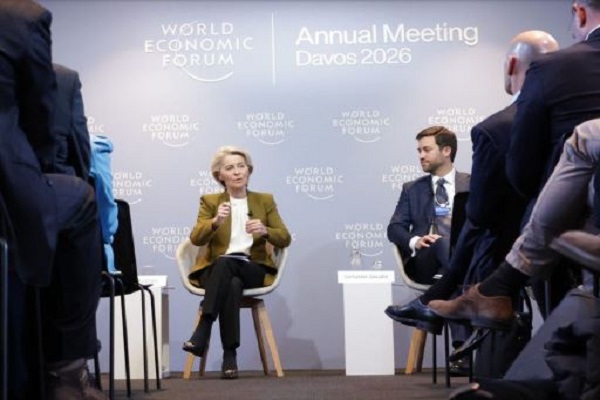
Ursula von der Leyen said at the World Economic Forum (WEF) in Davos, ‘And right after Davos, I will go to India. There is still work to do, but we are in the final stages of a historic trade agreement. Some call it the mother of all deals, an agreement that will create a market of 2 billion people, almost a quarter of global GDP.’
“Most importantly, it will give Europe a first-mover advantage as one of the fastest-growing and most dynamic continents in the world,” Layne added. Europe wants to do business with today’s growth centers and this century’s economic powerhouses.
In fact, India and the European Union are close to finalizing the much-awaited Free Trade Agreement, which can be formally announced on January 27. According to sources, negotiations on FTA will be completed successfully in the India-EU summit to be held on January 27. Both sides will adopt a document to declare the end of FTA negotiations. The agreement will then be approved by the European Parliament and Council through the necessary legal process.
The two sides are also set to sign a security and defense partnership agreement and a pact to increase mobility for Indian professionals seeking employment in the EU. The agreement will be India’s biggest ever deal, covering goods and services with the 27-nation European Union, one of India’s largest export destinations.
Commerce Minister Piyush Goyal has called it the ‘mother of all agreements’ to show its importance. The European Union is India’s largest trading partner, with trade worth $135 billion in fiscal year 2024, and the FTA is expected to bring further market access and economic complementarities. Although negotiations are progressing, sensitive areas such as the EU’s Carbon Border Adjustment Mechanism (CBAM) are still under discussion.
India is pushing for zero-duty access for its labour-intensive sectors such as textiles, leather, apparel, gems and jewellery, and handicrafts. Last week, Commerce Minister Piyush Goyal said that talks for a trade deal between India and the European Union have reached the final stage.

Comments are closed.