
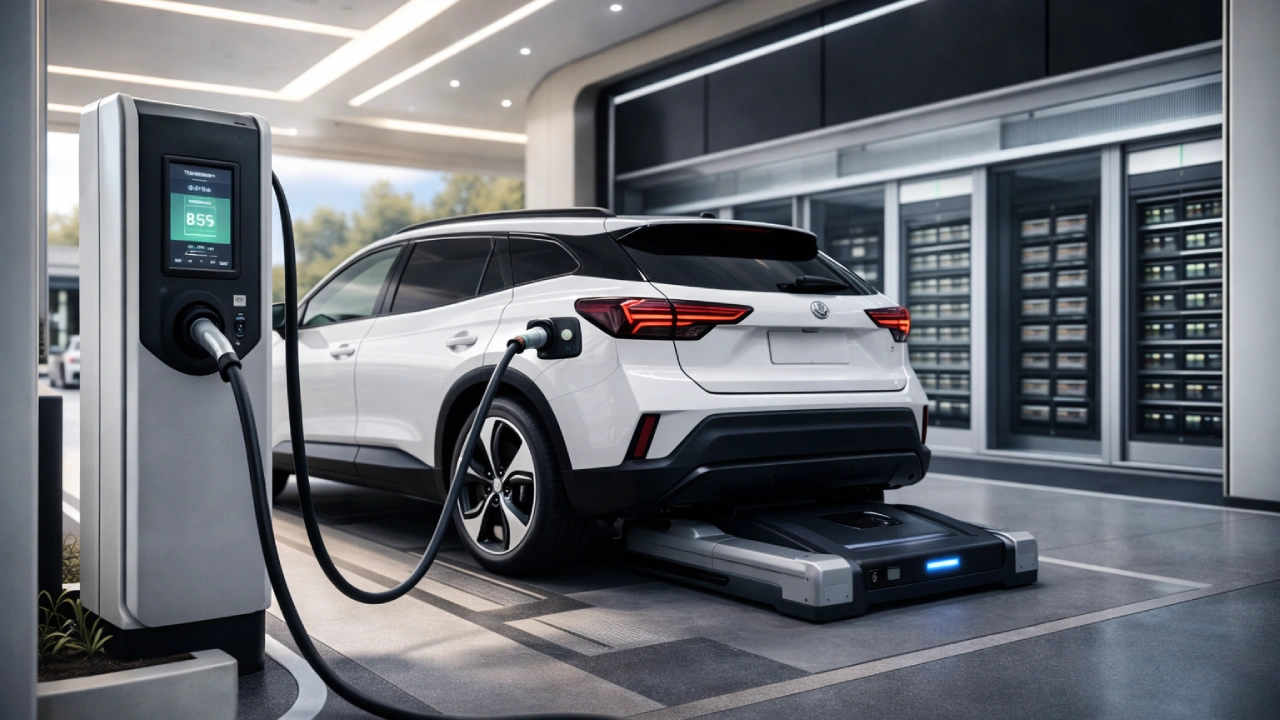

The testing of EV battery-swapping systems shows their practical use, cost efficiency, and ability to expand through different testing procedures.
The testing shows that battery-swapping systems operate successfully in specific Asian regions while their use remains limited in other areas.
The automotive industry, together with battery producers and government agencies, now needs to establish common standards that will enable the widespread implementation of their products.
The swapping systems will deliver maximum advantages for both fleet operations and urban transportation services.
The charging system for electric vehicles needs a complete redesign through new approaches to develop better solutions for electric vehicle charging needs. The transportation system now relies on electric vehicles because they reduce greenhouse gas emissions and decrease dependence on fossil fuels. The world has experienced increased electric vehicle adoption since battery technology, charging networks, and vehicle design have improved during the past ten years. Yet one obstacle continues to dominate consumer concerns: charging time.
All public charging stations need several minutes to deliver sufficient battery restoration, while charging stations operate at different speeds from all public charging stations. For drivers who prefer the fast refueling process of gasoline stations, battery charging requires them to wait, which creates a fundamental change to their driving experience.
Battery swapping provides an alternative approach to handling battery power needs. The specialized station enables drivers to obtain new batteries because they need to exchange their empty batteries for fully charged ones. The entire process can take only a few minutes — similar to refueling a conventional car.
The process of swapping between two things has reached its peak of development. The present challenge involves evaluating whether this method can evolve from its current limited applications to become a widely adopted replacement for existing fast charging systems.
EV battery: How Battery Swapping Works
Battery swapping systems operate through stations that contain robotic systems that automatically handle the process of battery removal and installation for electric vehicles. The driver brings their vehicle to the station, where the system conducts the battery swap operation, which takes only a few minutes to complete.
The station keeps the new battery until it requires recharging, which will prepare it for later use. In this model, drivers do not need to own the battery that powers their vehicle because they can access charged batteries through their subscribed service.
Advantages of Battery Swapping
Battery swapping solves multiple problems that prevent people from using electric vehicles.
Speed and Convenience
The most obvious advantage is speed. Swapping can be completed far faster than even high-power charging. This development enables drivers who need to travel extensive distances to use electric vehicles, as they depend on them for their daily duties.
Reduced Battery Degradation Concerns
Users experience reduced worries about battery performance because the network takes responsibility for battery upkeep. Fleet operators or service providers manage battery health, replacing units when necessary.
Grid Management Benefits
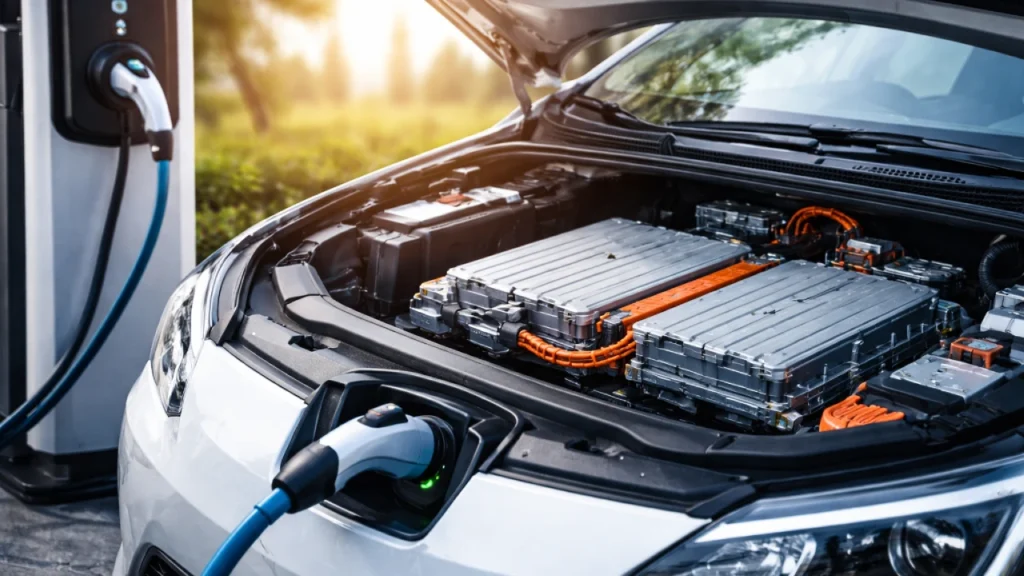
The electrical grid becomes overloaded when numerous vehicles attempt to charge at the same time. Battery-swapping stations operate through off-peak hours to recharge batteries, which they store until required.
The system improves electrical demand management because it decreases maximum power usage while maintaining equal electricity distribution across the system.
Potential Cost Flexibility
Consumers will experience reduced initial expenses when they separate battery ownership from vehicle purchase. Drivers now have the option to use battery access services instead of purchasing batteries through direct ownership.
The Standardization Problem
The system requires batteries to be interchangeable between different vehicle models from various manufacturers for effective swapping operations. Automakers develop batteries today with various dimensions and designs, cooling mechanisms, and electrical connection systems.
The absence of standardized battery designs forces swapping networks to handle various battery types, which results in operational challenges and higher costs.
The automotive industry has faced challenges in reaching agreement on common battery standards since the beginning of vehicle production. Manufacturers tend to choose exclusive product specifications that create market differentiation for their automotive offerings.
The implementation of large-scale battery swapping requires all manufacturers to establish complete collaborative relationships with one another.
Infrastructure and Capital Requirements
Battery-swapping networks require significant infrastructure expenditures for their construction. The stations need to accommodate robotic systems for operation, battery storage systems, safety mechanisms, and high-capacity charging stations.
Swapping facilities require more extensive operational space and higher financial investment for their automated systems when compared to traditional charging stations.
Regional Success Stories
Success in markets occurs when three factors combine because urban areas have high population density, there exists government backing, and vehicles operate under common design standards.
China has developed extensive swapping networks across multiple Asian regions. NIO has established a comprehensive network of battery-swapping stations throughout its vehicle system. The battery exchange process allows drivers to complete their battery swaps within minutes, which decreases their range concerns while facilitating their ability to drive across long distances.
Electric two-wheel and three-wheel vehicles used in India and Southeast Asia gain advantages through battery swapping systems. These vehicles use standardized batteries that are smaller in size, which makes them simple to replace through manual exchange.
Battery swapping succeeds when vehicle design matches infrastructure development because it shows actual benefits.
Fleet Vehicles and Commercial Applications
Fleets should consider battery swapping because it offers essential advantages.
Taxis, ride-sharing companies, and delivery fleets require their vehicles to operate without interruptions. Operations stop when vehicles need to recharge their batteries.
Swapping enables these vehicles to resume their operations in a fast manner. Drivers can continue their work after completing a battery swap instead of waiting for their batteries to finish charging.
Consumer Acceptance and Trust
Battery swapping requires consumer acceptance because their behavior determines its success. Drivers must feel comfortable exchanging batteries that they do not own and whose history they may not know.
Trust in battery quality and safety is essential. Service providers must ensure consistent performance and transparent maintenance practices.
Some drivers may choose to use their own battery because they value the comfort of having familiar ownership of their vehicle battery system.
People who need their battery management operations handled will find managed battery services to be helpful.
User perception, together with technology adoption, establishes the criteria that should determine technology adoption.
Competition With Fast Charging
Developments in fast charging technology keep making progress. The latest chargers increase their power output, which results in faster charging times for users.
When charging reaches the speed of battery swapping, users will lose interest in supporting the charging infrastructure.
Fast charging enables users to charge their devices through less complex systems that work with most vehicles on the road today.
To succeed in the market, battery swapping needs to deliver better performance through faster services at lower costs and easier access for users.
Environmental and Energy Considerations
Battery swapping creates environmental impacts that require examination. Charging facilities that operate from a centralized location can boost energy efficiency through their ability to optimize charging times and use renewable energy sources.
Building extensive battery storage systems forces companies to consume more physical materials, creating an environmental challenge. It becomes essential to manage battery lifecycles through responsible methods.
Recycling programs, together with second-life battery applications, provide solutions to reduce environmental damage.

Policy and Regulatory Support
Government policies direct the development of electric vehicle charging networks throughout the country. Government funding, together with standardization requirements and urban transportation projects, will help boost the use of battery swapping technology.
The Future of Battery Swapping
Battery swapping will not become the complete replacement for traditional charging methods. The technology functions better when used together with existing solutions specially designed for particular situations.
The automotive industry has established vehicle categories that enable effective vehicle exchange between urban mobility services and delivery fleets.
The fast charging networks serve as primary power sources for private passenger vehicles, which multiple car manufacturers produce using different battery systems.
The future will require an infrastructure system that merges both existing operational methods.
Conclusion: A Promising but Complex Alternative
Battery swapping provides an effective solution for electric vehicle operation because it eliminates the need for drivers to wait during extensive charging periods. Drivers can complete their journeys within minutes after they receive fully charged batteries by exchanging their used batteries.
The realization of this vision requires multiple obstacles to be solved. The technology needs standardization, infrastructure funding, public confidence, and government partnership to achieve its operational potential.

Comments are closed.