
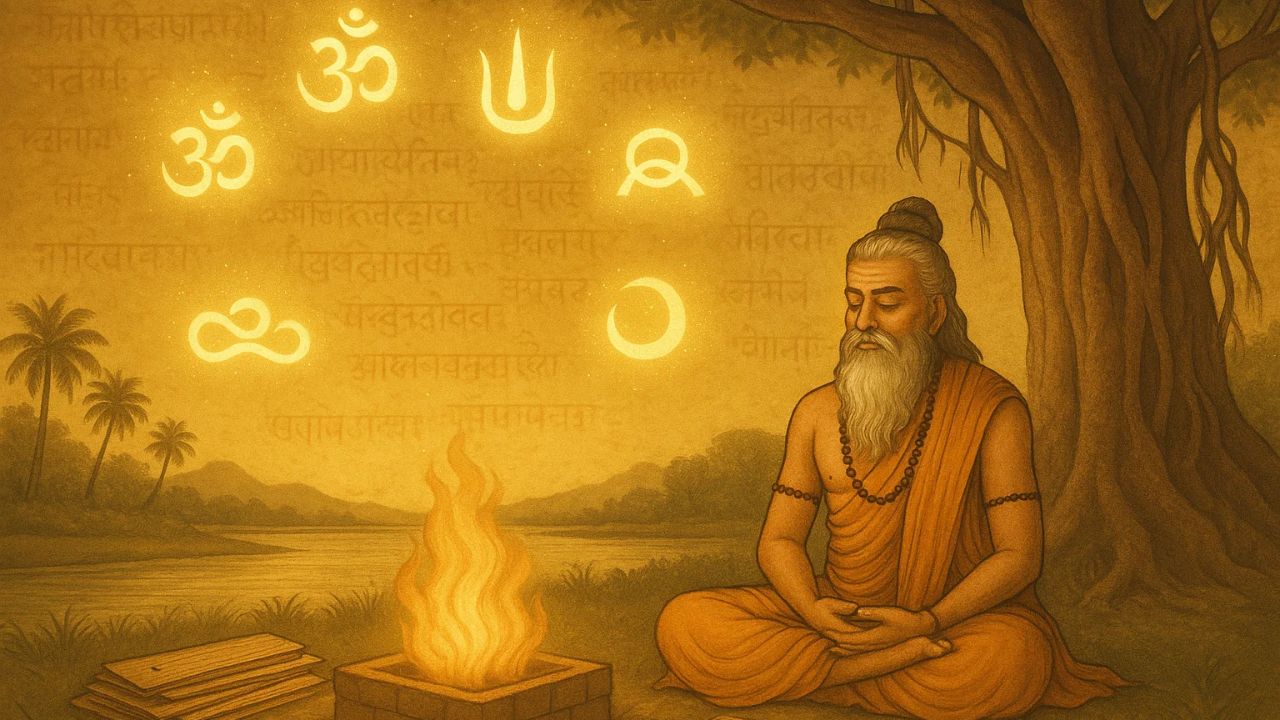

Vedanta philosophy is considered the pinnacle of knowledge in the ancient Vedic tradition of India. This is not only the most profound aspect of Indian philosophy, but also guides us towards the ultimate aim of human life, salvation. The word ‘Vedanta’ means the end or essence of the Vedas, which is based on the Gyankandas of the Vedas i.e. Upanishads. Vedanta explains the relationship between the soul and God and how man can attain liberation through the balance of knowledge, devotion and karma.
Vedanta is not seen in a single form, rather many of its philosophical schools have developed over time, which include Advaita Vedanta of Adi Shankaracharya, Vishishtadvaita of Ramanujacharya, Dvaita of Madhvacharya, Shuddhadvaita of Vallabhacharya, Dvaitadvaita of Nimbarkacharya and Acintya Bhedabheda of Chaitanya Mahaprabhu. Every philosophy explains the relationship between soul and God from a different perspective but the goal of all is the same.
Also read: When is Utpanna Ekadashi, 15th or 16th November? From fasting story to rules, understand everything
How many types of Vedanta are there?
Many schools (branches) of Vedanta developed in Indian philosophy. Mainly six major Vedanta philosophies are considered.
Advaita Vedanta
- Originator: Adi Shankaracharya
- Recognition: Soul and God are not different, both are one and the same.
- Speciality: This is the philosophy of monism – everything is Brahman.
- Goal: Attainment of salvation through the realization of ‘Aham Brahmasmi’ (I am Brahma).
Vishishtadvaita Vedanta
- Originator: Ramanujacharya
- Recognition: Soul and God are one, but soul is a part of God, not the same.
- Speciality: It is based on the path of devotion.
- Example: Like the ocean and its waves – both are water but the waves are not the ocean.
Also read:Lingaraj Temple: Where Lord Shiva and Vishnu are worshiped in the same Shivalinga.
Dvaita Vedanta
- Originator: Madhvacharya
- Recognition: Soul and God are completely different.
- Speciality: God is supreme, the soul can be free only by His grace.
- This is a philosophy based on devotion to God and discrimination.
Shuddhadvaita Vedanta
- Originator: Vallabhacharya
- Recognition: Only pure Brahma is real, the world is also its form.
- Speciality: This philosophy is based on ‘Krishna Bhakti’ and ‘Pushtimarg’.
Dvaitadvaita Vedanta
- originator: Nimbarkacharya
- Recognition: Soul and Brahma are both one and separate – their relationship is inseparable.
- Example: The Sun and its rays are both connected and separate.
Inconceivable difference differences Vedanta
- Originator: Chaitanya Mahaprabhu
- Recognition: There are both ‘Achintya Bhedabheda’ (unconceivable unity and difference) in the soul and the Supreme Self.
- Speciality: This philosophy is the basis of the Gaudiya Vaishnava tradition.
Features of Vedanta
- Philosophy centered on Brahma – The ultimate truth is Brahma, which is the cause of the origin of everything.
- Shows the path to salvation – liberation through self-knowledge.
- Confluence of devotion and knowledge – Some beliefs emphasize on knowledge and some on devotion.
- The ultimate goal of all religions is the same – unity or union of the soul with God.
What is the meaning of Vedanta?
Vedanta means the last part of the Vedas or the conclusion of the Vedas. Because the philosophical ideas found in the last part of the Vedas are called Upanishads. Therefore Vedanta is also called the philosophy of Upanishads.
From a philosophical point of view:
- Vedanta is the philosophy which states that
- What is Brahma (ultimate truth),
- What is soul (soul),
- What is the world?
- And what is the mutual relationship between these three?
- Vedanta teaches that the ultimate goal of life is moksha (liberation), which is achieved through enlightenment.
What are the foundation texts of Vedanta?
There are three main bases of Vedanta, which are called Prasthanatrayi.
Upanishads (Shruti Prasthan)
Bhagavad Gita (Smriti Departure)
Brahma Sutra (Justice Departure)
On the basis of these three, many schools of Vedanta developed in India – like Advaita, Vishishtadvaita, Dvaita etc.

Comments are closed.