
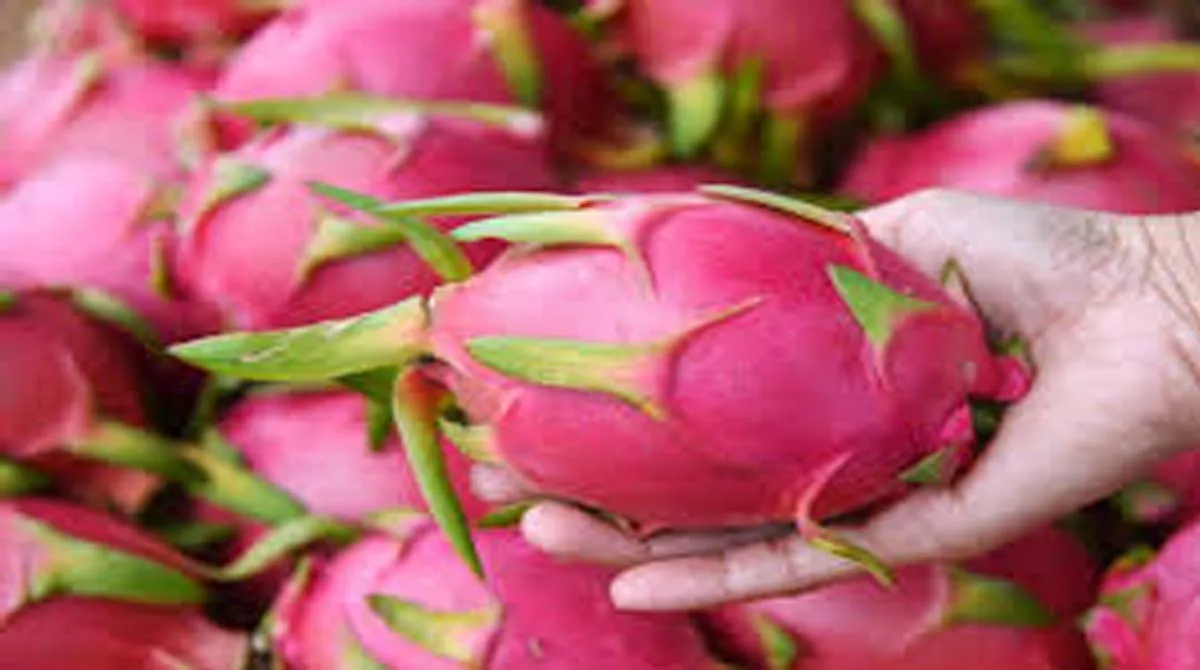
Farmer brothers, pay attention! Grow ‘pink gold’ on barren land, government is giving 40% money, every year you will get assured earning of Rs 8 lakh.

New Delhi/Meerut: In the changing times of farming, betting on ‘high-value’ fruits instead of traditional crops like wheat and paddy is proving to be more profitable. In this context, dragon fruit, now also known as ‘Kamalam’, has become a luxury business for farmers. The most important thing is that the central and state governments are giving huge subsidy of up to 40% on this crop which produces gold even in less water and barren lands. Due to this, the initial expenditure of the farmers is reduced to half. In areas like Meerut of Uttar Pradesh, farmers are now abandoning sugarcane cultivation and adopting it and earning profits worth lakhs annually.
Less hard work and huge income for 25 years
Dragon fruit is actually a cactus plant, which requires very little maintenance. Once you plant it, it continues to bear fruit for the next 20-25 years. Due to the presence of thorns in its plants, there is no fear of even stray animals. Also, it is less prone to diseases, which reduces the cost of pesticides to almost zero. This plant has tremendous ability to tolerate extreme heat, hence it is the best option for areas with low rainfall or drought affected areas.
How to start farming and what is the right time?
Sandy loam soil is considered most suitable for its cultivation, whose pH value is between 5.5 to 7. The time between July to November is best for its planting. If you plant trees today, the yield starts from the second year and reaches its peak by the third-fourth year. Its growth is much faster due to drip irrigation and use of cow dung manure. About 2000 plants can be planted in one acre, and the good thing is that 75% of the space is left between the plants, where you can also grow other small crops (intercropping).
How much subsidy will you get from the government and how to apply?
Starting dragon fruit cultivation involves an investment of Rs 5 to 8 lakh per acre, which includes the cost of poles, drip system and plants. But don’t panic! The government is standing by to help you under the National Horticulture Mission. Under Dragon Fruit Development Scheme in Bihar, subsidy of 40% (about Rs 3 lakh) on the cost of Rs 7.5 lakh is being given directly into the bank account (DBT) in three installments. At the same time, under the Chief Minister Horticultural Development Scheme of Uttar Pradesh, a grant of Rs 1.62 lakh per hectare is being given and in Uttarakhand, a grant of up to 80% is being given. Farmers in areas like Meerut can apply for subsidies and free training by visiting the local horticulture department or government portal.
Earning Mathematics: Lakhs will come into your pocket after deducting expenses.
The earning graph of Dragon Fruit always remains up. Each plant produces 4-6 fruits between July and November, weighing 200 to 500 grams. Its price in the market ranges from Rs 35 to Rs 150 per kg. After deducting all the expenses from one acre, farmers are earning a net profit of Rs 5 to 8 lakh annually. Farmers like Sachin Chaudhary of Meerut are a living example of this, who has left sugarcane farming and is now earning Rs 8 lakh annually. It is in huge demand in Ghazipur market of Delhi and due to its health benefits, there is immense potential for its export.

Comments are closed.