
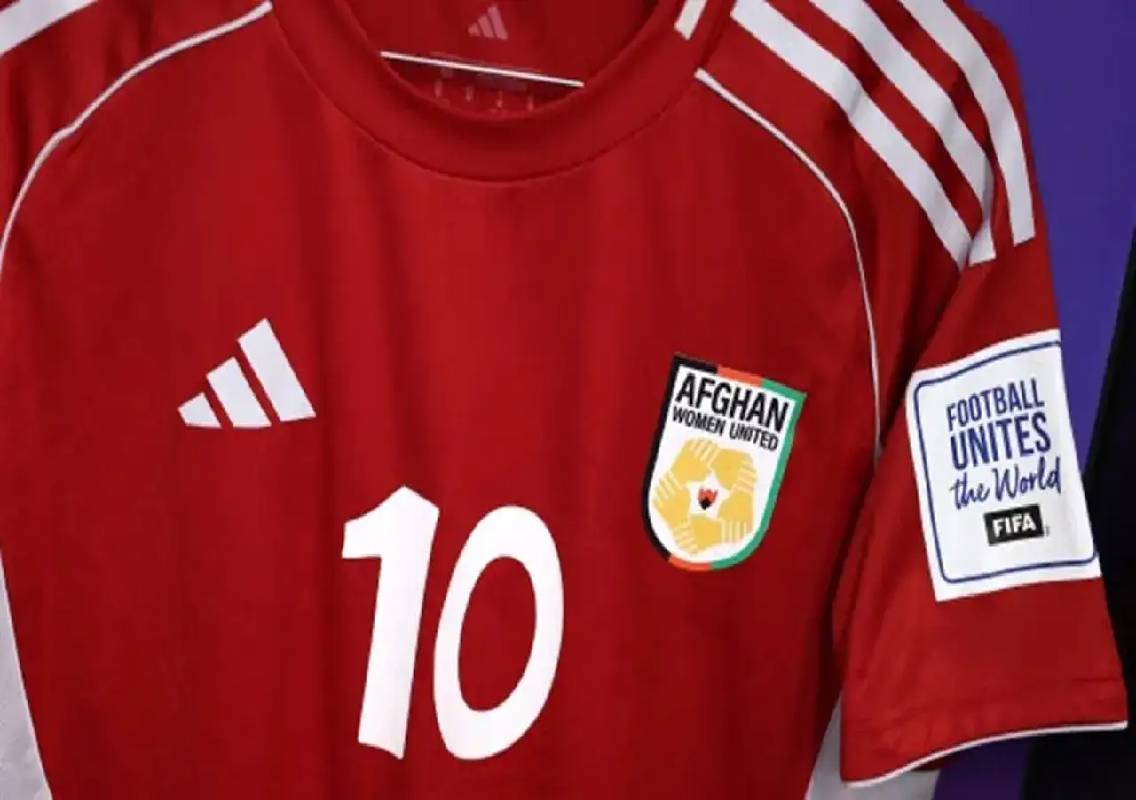

Zurich: In a landmark decision for global sport, the FIFA Council has approved an amendment to its Governance Regulations, enabling Afghan women footballers to represent their country in official international competitions once again.
The move marks a historic breakthrough for players who have been unable to compete under their national banner due to extraordinary circumstances in Afghanistan. The decision allows female athletes, including members of the FIFA-supported Afghan Women United squad, to participate in recognised international matches with full sporting status.
New rule ensures inclusion under exceptional conditions
The amendment empowers FIFA, in consultation with relevant confederations such as the Asian Football Confederation to establish and approve a national or representative team when a Member Association is unable to do so.
This unprecedented provision aims to ensure that players are not excluded from international football due to factors beyond their control. The decision aligns with FIFA’s broader principles of universality, inclusion, and non-discrimination.
FIFA President Gianni Infantino described the reform as a defining moment in world sport.
“This is a powerful and unprecedented step. FIFA has listened to these players as part of its responsibility to protect the right of every girl and woman to play football and represent their identity,” he said.
Afghan Women United to gain official recognition
The decision builds on the FIFA Strategy for Action for Afghan Women’s Football, approved last year. Under this initiative, the Afghan Women United team was formed to provide structured playing opportunities for Afghan women footballers living outside the country.
With the new amendment in place, these players will now be able to officially represent Afghanistan in international competitions for the first time since the disruption of organised women’s football in the country.
FIFA has committed to supporting the team through administrative, technical, and financial assistance to ensure a smooth transition into official competition structures.
Global support and reactions
The announcement has been widely welcomed by players, former athletes, and human rights advocates.
Nadia Nadim, who has earned over 100 international caps for Denmark, called the decision transformative. She emphasised that it recognises Afghan women footballers as elite athletes deserving of visibility and respect.
Former Afghanistan captain Khalida Popal highlighted the emotional significance of the decision, stating that representing Afghanistan is deeply connected to identity, dignity, and hope.
Andrea Florence, Executive Director of the Sport & Rights Alliance, said the reform sets a global precedent by demonstrating how sports governing bodies can adapt rules to protect human rights in exceptional situations.
Implementation and next steps
Although the amendment has taken immediate effect, FIFA will now oversee several operational steps before Afghan women can take the field in official matches. These include team registration, establishing governance structures, and ensuring compliance with international standards.
The organisation has also pledged to provide continued support packages for Afghan Women United players for up to two years. This will help maintain professional standards, safeguard player well-being, and build a sustainable pathway for long-term participation.
As part of their preparations, the team is scheduled to hold a training camp in New Zealand from June 1 to 9. During this period, they are also expected to play matches, including a fixture against the Cook Islands.
A defining moment for sport and equality
The decision is being viewed as a milestone not just for Afghan athletes, but for global sport as a whole. It underscores the evolving role of governing bodies in addressing social challenges and ensuring equal opportunities for all athletes.
By enabling Afghan women footballers to represent their country despite complex circumstances, FIFA has set a strong example of how sport can serve as a platform for inclusion, empowerment, and human rights.
Conclusion
FIFA’s historic amendment opens a new chapter for Afghan women in football, restoring their right to compete on the international stage. As implementation progresses, the move is expected to inspire similar actions across sports, reinforcing the idea that talent and determination should never be limited by external barriers.
Comments are closed.