
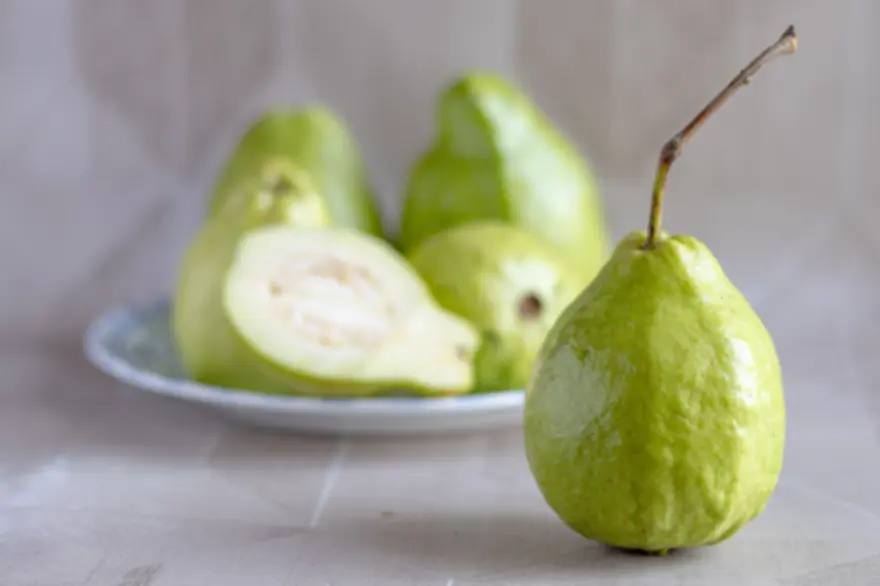

Guava comes in different shapes—round, pear-shaped, or ovoid—measuring around 5 to 10 cm in length and weighing between 50 to 200 grams. White and pink-fleshed varieties are the most common and are consumed fresh or used to prepare juices, jams, jellies, pastries, and fermented products. Being a climacteric fruit, guava ripens quickly after harvesting, especially in warm conditions, leading to moisture loss and softening. Winter temperatures slow down these processes, helping the fruit stay fresh longer while preserving its cellular structure.
Laboratory analyzes have shown that fresh guava pulp is packed with water, vitamins, minerals, dietary fiber, and antioxidants, all within a relatively low-calorie package.
Nutritional Profile of 100 grams of Fresh Guava
Water: ~80.8 g – helps maintain hydration
Energy: ~68 kcal – low in fat, moderate in carbohydrates
Carbohydrates: 14.32 g – includes natural sugars and non-digestible fiber
Dietary Fiber: 5.4 g – includes both soluble and insoluble fiber
Protein: 2.55 g – higher than many commonly eaten fruits
Potassium: 417 mg – supports heart and muscle function
Calcium: 18 mg and Magnesium: 22 mg – essential for bones and metabolism
Iron: 0.26 mg – present with organic acids and vitamin C
Vitamin C (Ascorbic Acid): 228.3 mg – several times higher than citrus fruits
B Vitamins: Trace amounts of niacin, thiamine, pyridoxine, and cyanocobalamin
7 Health Benefits of Guava Fruit and Leaves
Scientific studies on guava, including controlled experiments on fruit, leaves, seeds, and bark, have revealed several health-promoting properties:
1. Helps with Cold and Cough
Guava leaf extracts have been shown to reduce coughing frequency in experimental models. Astringent compounds in the leaves are believed to interact with the respiratory tract, providing relief from irritation.
2. Supports Antioxidant Activity
Extracts from guava fruit and leaves can scavenge harmful free radicals and inhibit lipid peroxidation. These effects are attributed to flavonoids, polyphenols, and carotenoids present in the fruit.
3. Influences Gastric Acidity and Ulcer Formation
Studies on methanolic extracts of guava leaves in experimental models demonstrated antacid and ulcer-protective properties, helping reduce gastric distress and protect the stomach lining.
4. Affects Glucose Metabolism
Guava leaf extracts have shown the ability to lower blood sugar levels in diabetic and obese animal models while modulating enzymes involved in carbohydrate digestion and gluconeogenesis.
5.Demonstrates Antimicrobial Action
Guava seeds, leaves, and bark extracts have been proven to inhibit the growth of harmful bacteria like Escherichia coli, Salmonella typhimurium, and Pasteurella multocida in laboratory tests.
6. Contributes to Mineral-Associated Physiological Processes
The high content of potassium, magnesium, calcium, phosphorus, and iron in guava supports important functions like electrolyte balance, neuromuscular signaling, and vascular health.
7. Provides Carotenoid-Related Biochemical Activity
Carotenoids such as lycopene, beta-carotene, and beta-cryptoxanthin in guava pulp have demonstrated antioxidant potential in lab studies, helping to reduce oxidative stress markers.
Disclaimer: This article is for informational purposes only. It does not replace professional medical advice. Always consult a healthcare provider for any health concerns or dietary changes.

Comments are closed.