
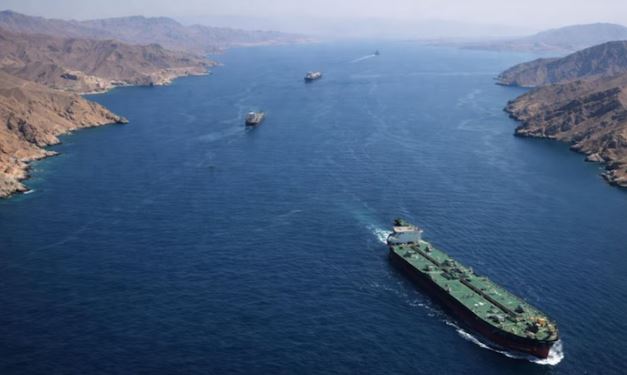
After the closure of the Strait of Hormuz, America supported countries are looking for alternative routes

New Delhi. The US-Israeli war over Iran enters its fourth week this weekend. Meanwhile, oil and gas markets are under increasing pressure due to the massive disruption to shipping traffic through the Strait of Hormuz, as well as attacks on and around major energy facilities in the Gulf. In peacetime, 20 percent of the world’s oil and gas is shipped from Gulf producers through the Strait of Hormuz, the only way to reach the open sea. This route involves 20 million barrels of oil per day. To meet the shortage created by its closure, countries in the Middle East are looking for alternative routes for energy exports.
Read :- ‘Jag Vasant’ LPG Vessel kandla port: ‘Jag Vasant’ vessel reached India with 42 thousand metric tons of LPG, relief news
Let us tell you that on March 2, two days after the US and Israel launched attacks on Iran, Ibrahim Jabari, a senior advisor to the Commander-in-Chief of Iran’s Islamic Revolutionary Guard Corps, announced that the strait was closed. He said that if any ships try to pass there, the IRGC and the navy will open fire on those ships. Since then, traffic through the strait has declined by more than 95 percent. Iranian officials have recently said that the strait is not completely closed. Except for the ships of America, Israel and their allies, but they have also set some new rules. Any ship must obtain approval from Tehran to pass through this narrow waterway.
As a result, over the past fortnight countries have been racing to strike deals with Iran to ensure safe passage. Some ships, mostly Indian, Pakistani and Chinese flagged tankers, have been allowed to pass through. On Thursday, Malaysian Prime Minister Anwar Ibrahim thanked Tehran for allowing Malaysian ships to pass through the strait. Meanwhile, about two thousand ships with flags of other countries are stranded on both sides of this strait.

Comments are closed.