
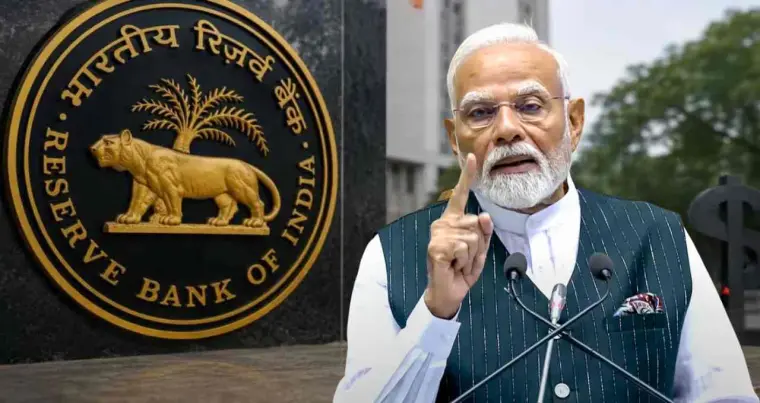

The recent policy announcements and investment reforms of the Reserve Bank of India (RBI) can have a positive impact on the Indian economy.
Business News: In a positive sign for the Indian economy, the recent reforms and investment-related policy steps of the Reserve Bank of India (RBI) are expected to bring in $40 to $75 billion of foreign investment into the country. This estimate has come to light in new reports of SBI Research and Kotak Securities.
Meanwhile, Prime Minister Narendra Modi held a high-level meeting with the Economic Advisory Council (EAC-PM) to accelerate growth and improve ease of doing business amid global economic uncertainties.
RBI reforms may increase foreign investment inflow
According to reports, the recent reforms of RBI could give a strong boost to foreign capital inflows into India. SBI Research estimates that these measures could attract at least $40 billion of investment, while Kotak Securities has predicted this figure to reach $50 to $75 billion. Experts believe that these reforms will:
- Foreign investment will increase
- Indian rupee will strengthen
- Government borrowing costs will reduce
- There will be stability in financial markets
Along with this, the market expects that RBI may keep the repo rate stable at 5.25% in the August Monetary Policy Committee (MPC) meeting.
Changes in growth estimates, pressure on inflation
RBI has reduced India’s economic growth forecast for the financial year 2026-27 to 6.6%, from 6.9% earlier. The central bank has attributed this to global economic slowdown, supply chain disruptions and seasonal risks like El Nino. Also, the retail inflation estimate has been increased to 5.1%, increasing the possibility of pressure on domestic demand and price stability.
Important meeting with PM Modi’s Economic Advisory Council
Amid global economic instability and geopolitical tensions, Prime Minister Narendra Modi held a meeting with the Economic Advisory Council (EAC-PM) to discuss India’s development strategy in detail. The meeting also discussed measures to further strengthen the country’s economic growth:
- Ease of Living
- Ease of Doing Business
- improve the investment climate
- increasing the pace of policy reforms
Important topics were discussed. The meeting also discussed the economic implications of global geopolitical tensions, especially the ongoing conflict in West Asia. Experts presented an analysis of its impact on global trade and energy markets before the Prime Minister.
India’s economic strategy amid global crisis
According to experts, the world is currently facing many economic challenges—including trade uncertainty, regional conflicts, and slow global growth. In such an environment, India is in a position to move forward rapidly through its strong domestic demand and reform-based policies. According to government data, India’s real GDP growth rate is estimated to be 7.8% in the fourth quarter of the financial year 2025-26, while it may remain up to 7.7% for the entire financial year. Manufacturing and service sectors are playing a major role in this growth.
Comments are closed.