
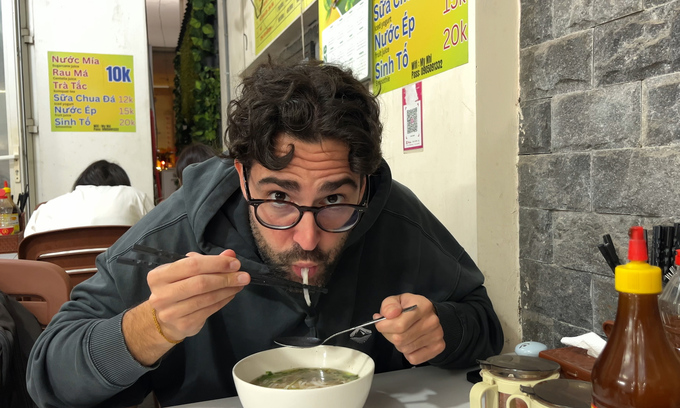

During a recent trip to Da Nang, 31-year-old Italian traveler Alessandro Perasso cycled more than five kilometers from his hotel to a local market to try will nota sizzling breakfast dish of beef, eggs and bread served on a hot cast-iron skillet. The name, which roughly translates to “dodging beef,” comes from diners instinctively leaning back to avoid oil splattering from the sizzling plate.
Perasso said sampling Vietnam’s breakfast scene was one of his main goals after seeing the viral #vietnambreakfast trend on social media.
Back home in Italy, breakfast usually consists of coffee with a pastry or oatmeal, and he often eats the same thing for weeks.
“In Vietnam, deciding what to eat is the hardest part,” he said. “There are so many choices, from pho and noodle soup to sticky rice, porridge and banh mi. I can have something different every day.”
He was equally impressed by the country’s drink selection, which ranges from coffee and tea to fresh fruit beverages.
A serving of will not costs around VND50,000 (US$2), far less than a protein-rich breakfast in Italy, which he estimated would cost US$15-20.
Beyond the food, Perasso said he enjoyed the lively atmosphere of roadside breakfast stalls, where people gather on small plastic stools to eat and chat before starting work.
Alessandro Perasso, 31, an Italian tourist, enjoys a bowl of pho at a restaurant in Da Nang in June 2026. Photo courtesy of Alessandro Perasso |
For Marquez Ryan, a 36-year-old American living in Ho Chi Minh City, Vietnam introduced him to another breakfast habit: grabbing food to go.
He was surprised to see locals buying meals from street vendors in nearly every alley and eating while commuting, even on the back of motorbikes.
Such convenience is uncommon in the U.S., where breakfasts like cereal, oatmeal or sausage meals are usually eaten at home or while seated, he said.
Cost also changed his routine. While eating breakfast out in the U.S. often costs around US$25, Ryan now spends just VND20,000-60,000 (US$0.80-2.30) on dishes such as banh mi or sticky rice.
Like Perasso, he said choosing what to eat each morning has become the biggest challenge because of the sheer variety. “Every morning, I find myself wondering what I should eat because there are so many options,” he said.
The appeal of Vietnamese breakfasts has recently gained momentum online, with videos tagged #vietnambreakfast attracting tens of millions of views on TikTok and Instagram. Some travelers have even challenged themselves to try a different Vietnamese breakfast every day for a month.
Vietnam’s food scene has also earned growing international recognition. In 2025, CN Traveller ranked the country among the world’s top culinary destinations, while TasteAtlas included Vietnamese beef stew and Hue spicy beef noodle soup among the world’s 100 best breakfasts. This year, Michelin inspectors praised Vietnamese cuisine for its depth, distinctiveness and sustainable approach.
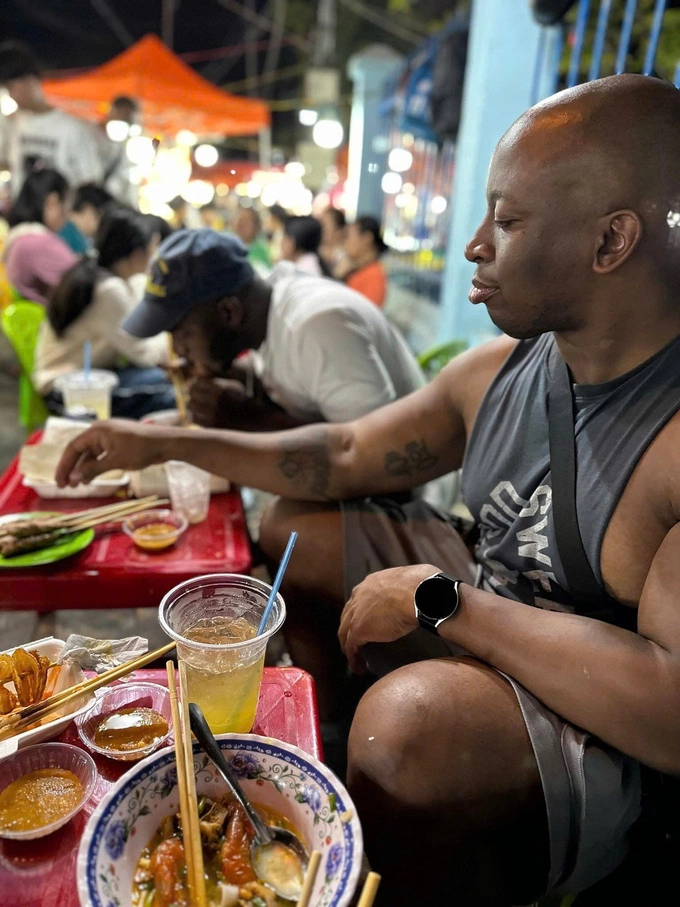 |
Marquez Ryan, 36, an American traveler, explores HCMC’s street food scene in July 2026. Photo courtesy of Marquez Ryan |
According to Associate Professor Pham Ngoc Trung, a former faculty head at the Academy of Journalism and Communication, Vietnam’s breakfast diversity reflects its geography, climate and agricultural traditions.
The country’s tropical climate encourages people to start work early, making hearty breakfasts an important source of energy. In contrast, many Western countries have later work schedules and colder climates, leading to lighter morning meals.
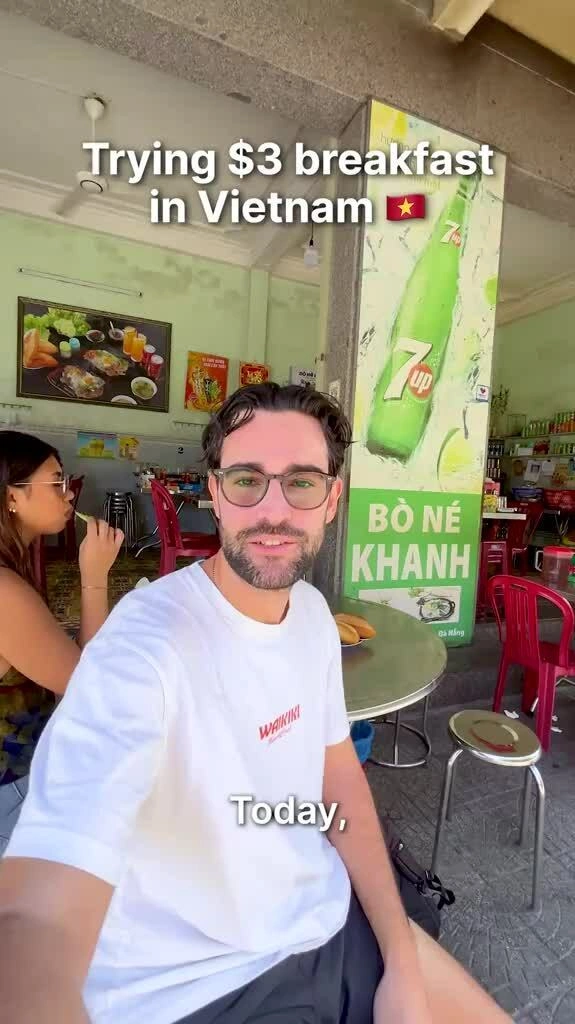
Alessandro Perasso has will not for breakfast in Da Nang in June 2026. Video from TikTok/@alexpear_
“International visitors’ enthusiasm for Vietnamese breakfasts shows that street food has become both a cultural bridge and a powerful tourism draw,” Trung said.
Australia’s Ray Kuschert, who has lived in Ho Chi Minh City for more than a decade, said he initially found it unusual that Vietnamese people ate rice-based dishes for breakfast. “But once I got used to it, it made perfect sense,” he said.
Even after more than 10 years in Vietnam, Kuschert said he still has not managed to sample every regional breakfast dish the country has to offer.
Comments are closed.