
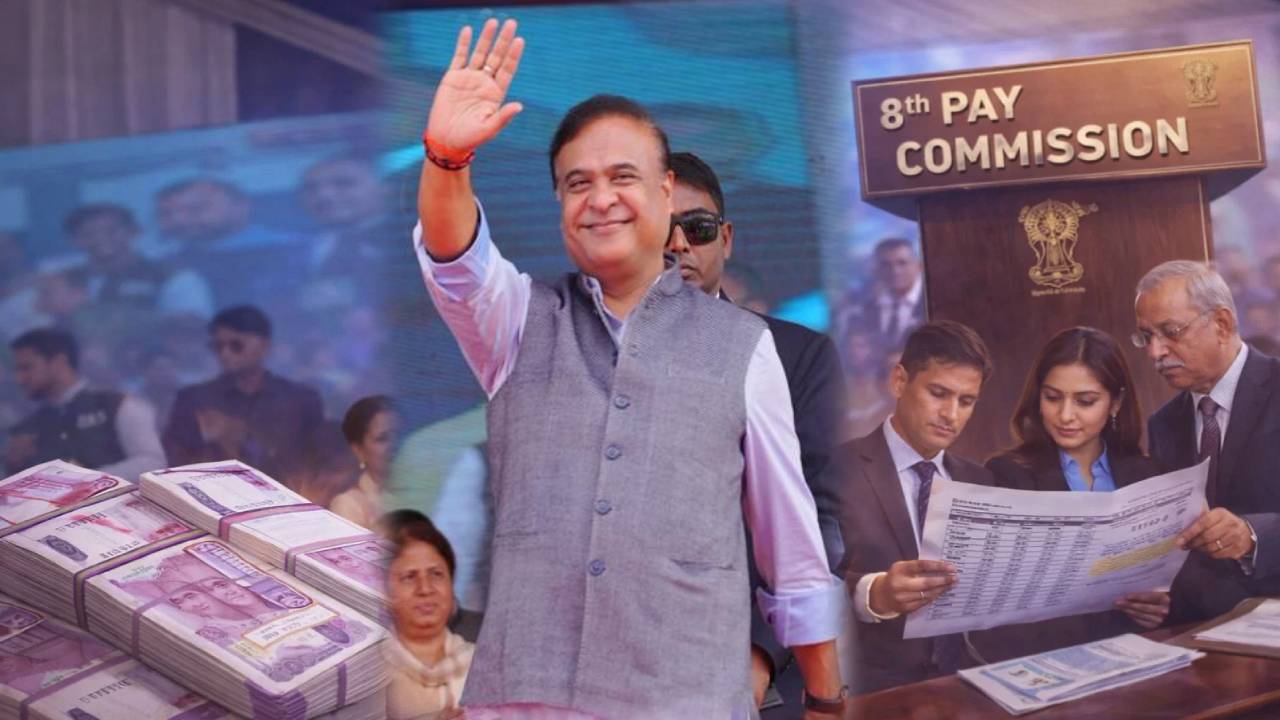
Salary review after almost 10 years, formation of Assam 8th Pay Commission, what will be the major changes?

Assam 8th Pay Commission: Assam The government has constituted the 8th Assam Pay Commission to amend the salary, pension structure and service conditions of its employees. After almost a decade, the process of salary revision has been started in the state.
The new commission will be headed by former Additional Chief Secretary Subhash Chandra Das. Apart from him, seven other members will also be included in the commission. According to the notification of the Finance Department, the Commission has been given 18 months time to present its recommendations.
When was the first wage revision implemented?
The last pay revision for state employees came into effect from April 1, 2016, based on the recommendations of the 7th Assam Pay and Productivity Pay Commission.
What is the government’s target in Assam 8th Pay Commission?
- The government says that this time the aim is not only to update the salaries and allowances, but the target is also to improve the structure of human resource management, better use of technology and promote result-based administration.
- The notification states that the government is committed to strengthening financial stability, improving service delivery outcomes and increasing administrative efficiency.
- The government believes that along with amendment in the salary structure, structural reforms like logical restructuring of the number of employees are also necessary.
- Apart from salary, the commission will also review the structure of pension and family pension.
- In this commission, recommendations will also be given on the system of dearness relief and pension revision keeping in mind inflation and consumer price index.
On whom will Assam 8th Pay Commission not be applicable?
However, the 8th Pay Commission will not be applicable to officers of All India Services, posts falling under the technical pay scale of UGC/AICTE and those Judicial Service officers whose pay is decided through the National Judicial Pay Commission.

Comments are closed.