
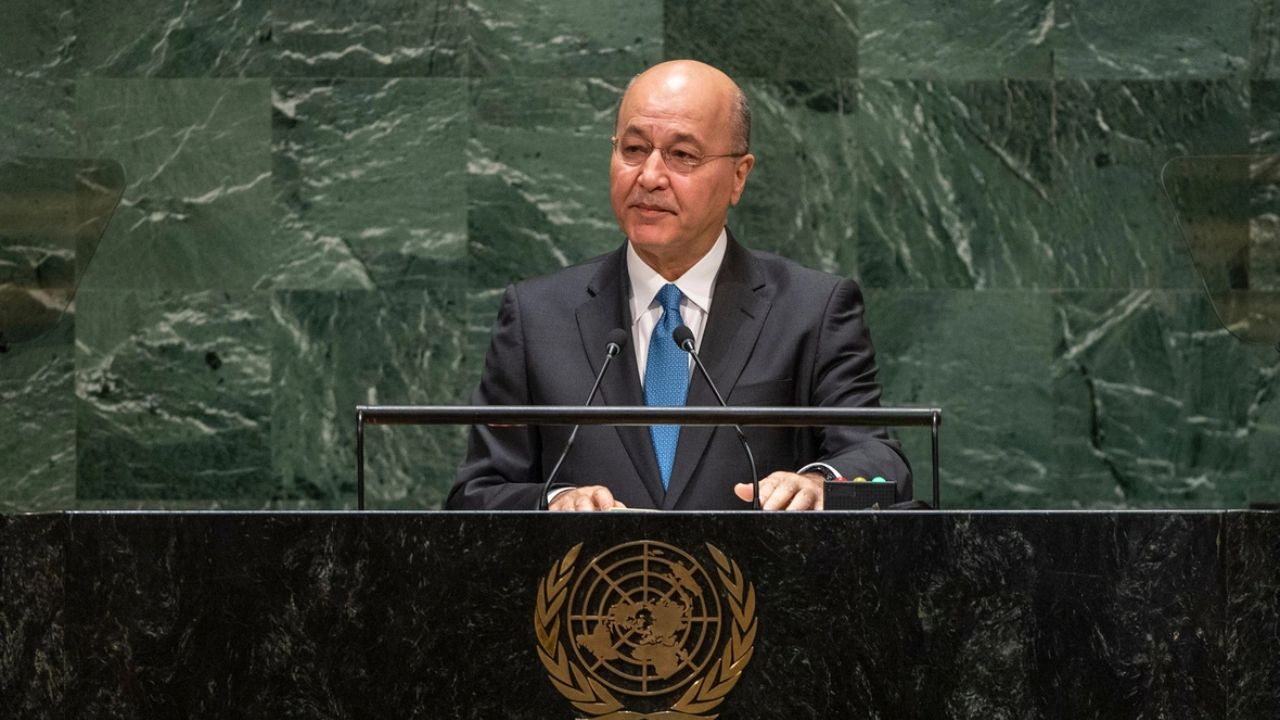
Iraq comes into limelight again after years Former President gets big responsibility, will do this work in UN

Barham Salih Elected UN Refugee Agency Head: Former Iraqi President Barham Saleh has been appointed United Nations High Commissioner for Refugees. He has been given this post at a time when the refugee agency is facing two serious problems regarding the issue of refugees, lack of funds and increasing demand for help. Saleh is being considered the most eligible candidate for this post. Because he himself had been a refugee at one time.
On 19 December, the United Nations General Assembly unanimously appointed Saleh to the post on the recommendation of Secretary-General Antonio Guterres. On this occasion, Saleh said, “As a former refugee, I know how protection and opportunity can change someone’s life.” His experience will help him lead with a sensitive and practical approach towards refugees.
Saleh will replace Filippo Grandi
Saleh replaces Italy’s Filippo Grandi, whose term ends at the end of this year. Grandi welcomed Saleh, saying his experience makes him the best fit to lead the refugee agency at this difficult time. Antonio Guterres has also previously held this post related to refugees. Till now this post has mostly been held by people from Europe.
According to figures from the United Nations Refugee Agency, there are more than 117 million refugees worldwide, with the majority living in developing countries. The agency operates in 128 countries and has 14,600 employees.
Became President of Iraq in 2018
Barham Saleh was the President of Iraq from 2018 to 2022 and also the Kurdistan Regional Prime Minister from 2009 to 2012. He went to Britain to study before becoming a refugee during Saddam Hussein’s regime in 1979.
Also read: Epstein Files will be made public today, pictures of Bill Gates with women surfaced
Serious challenge regarding refugees
A report earlier this year warned that refugees faced serious problems, including increased displacement and lack of funding. According to the report, $1.4 billion worth of schemes have been halted due to lack of funding, putting some 11.6 million refugees at risk of being deprived of assistance.

Comments are closed.