

But one thing survived all of it. One thing that every central bank in the world is quietly accumulating — while publicly calling it irrelevant. That which cannot be manufactured.
Published Date – 20 July 2026, 01:16 AM
By Chandu Kumar Potti
Your grandfather may have told you about a time when a rupee meant something, when it bought a full meal, not half of one, when a family could save for a year and actually have something at the end of it.
He wasn’t imagining it. He was remembering a different monetary world.
How did we get from there to here?
The answer is 5,000 years old. And it has happened — without exception — every single time humans invented money.
Somewhere in Odisha, around 1820, a merchant sat counting his life savings.
Not in coins. Not in paper. In shells.
Small, smooth, ivory-coloured cowrie shells — called kaudi — that had been accepted as money across India for centuries. Carried from the Maldives by boat. Counted in strings. Trusted completely.
In Bengal, 2,560 cowries equalled one rupee. The merchant knew this.
His father knew this. His grandfather knew this. Three generations of trust in a small shell from the Indian Ocean.
Then the British declared them invalid.
No exchange window. No compensation. No warning.
His savings became a decorative pile of shells overnight.
He did not know it then — but he had just experienced the oldest trick in monetary history. The same trick that destroyed the Roman Empire.
The same trick that collapsed medieval China. The same trick that gave Germany its darkest chapter. The same trick that a Washington press conference performed on the entire world in 1971.
Different costume. Same cheat. Every time.
Why Barter Failed — And What Replaced It
Before money, humans bartered. I have wheat. You have a goat. We trade.
Simple. Honest. Direct.
But it had one fatal problem — both parties had to want what the other was offering at exactly the same moment.
The wheat farmer needed a goat in January. The goat herder needed wheat in June. No deal possible.
So humans — independently, across every continent, without consulting each other — arrived at the same solution.
Find one thing that everyone wants. That doesn’t spoil. That can be divided. That is scarce enough to have value but not so scarce it cannot circulate.
In most of the world: gold and silver. In coastal India and across Africa: cowrie shells. In ancient Mesopotamia: barley. In Rome’s early legions: salt. Salary comes from the Latin salarium — the salt given to soldiers as payment.
Every civilisation found something real. Something that existed independently of any king’s promise. Something you could hold in your hand and know its worth without asking anyone’s permission.
That was honest money.
It did not last.
The First Cheat — Rome’s Slow Betrayal
The Roman Denarius was introduced as nearly pure silver — 95% purity, 4.5 grams of real metal.
A Roman soldier knew what his pay was worth. A merchant in Alexandria knew what a Roman coin could buy. From Britain to Persia, the Denarius circulated as trusted, verified, real money.
Then the emperors discovered the trick.
Nero started it in 64 AD. The Great Fire of Rome had emptied the treasury. Wars needed financing. Palaces needed building. So Nero quietly reduced the silver content — from 95% to 90%.
The coin looked identical. The stamp was the same. The face value was the same. But it contained less real silver.
Each emperor after Nero followed the same path. By 200 AD — the Denarius was under 60% silver. By 300 AD — it had collapsed to 5% silver.
The same coin. The same stamp. The same face value. One twentieth of the real content.
Prices across the Roman Empire rose 6,300% in the final decades.
Soldiers demanded payment in grain instead of coins because coins had become meaningless. Trade collapsed. Trust evaporated.
The Roman Empire did not fall to barbarians alone.
It was hollowed out first — by its own monetary debasement. The barbarians simply walked into what was already a shell.
China Invented Paper Money — Then Immediately Abused It
In Tang Dynasty China — around 800 AD — merchants faced a practical problem.
Large transactions required carrying thousands of heavy copper coins.
A merchant travelling from Sichuan to Beijing could not physically transport enough coins to conduct serious business. So they invented something elegant.
Leave your coins with a trusted official. Receive a paper receipt. Carry the receipt. The person receiving it could redeem it for the coins elsewhere.
By the Song Dynasty — around 1000 AD — these paper receipts became the world’s first proper paper currency. Called Jiaozi. Accepted everywhere. Backed by real coins in real vaults.
Within decades — more Jiaozi were printed than coins in the vaults.
The same trick. Different material. Paper instead of debased silver.
By 1309 — old Yuan notes were converted to new ones at a ratio of five to one. Overnight, anyone holding the old notes lost 80% of their savings. No warning. No compensation. No apology.
Centuries later. Different continent. Different material. Same trick.
Spain Drowned Europe in Silver — And Called It Wealth
In 1492, Columbus arrived in the Americas on behalf of the Spanish crown. Between 1500 and 1650, approximately 16,000 tonnes of silver flooded into the European monetary system from the mines of Bolivia and Mexico. Spain felt rich. Gloriously, overwhelmingly rich. But more silver chasing the same amount of goods — wheat, cloth, timber, labour — meant prices had to rise. Across all of Europe. In countries that had received none of the silver. In villages that had never seen a Spanish ship.
Prices across Europe doubled and tripled over the 16th century.
Historians call it the Price Revolution.
The Spanish called it prosperity. The English farmer, the French peasant, the Italian merchant — they called it survival.
Spain had performed the first recorded act of exporting inflation to innocent countries.
America would perfect this mechanism four centuries later. Same trick. No silver ships required: just a printing press and a reserve currency.
India’s Own System — That Was Suppressed, Not Defeated
While Europe was discovering paper money and China was inflating it, India had already built something sophisticated.
The Hundi — an indigenous bill of exchange — had been in use since at least the 12th century. A merchant in Guntur could issue a Hundi for a transaction in Punjab. Money transferred across thousands of kilometres — without physically moving gold. Without a bank. Without a government intermediary.
The system ran on something more reliable than any institution — community reputation. A merchant who dishonoured a Hundi was finished. His family was finished. The social consequence was the enforcement mechanism.
This system evolved centuries before European banking existed. It financed trade routes from Arabia to Southeast Asia.
The British did not replace it because it failed. They suppressed it because it competed — with their own banks, their own paper notes, their own extraction mechanisms.
India’s monetary sovereignty was not lost on a battlefield. It was lost in a legislative session in London.
Germany — When Printing Destroyed Democracy Itself
January 1923. A loaf of bread in Berlin cost 700 marks. By November 1923 — the same loaf cost 200 billion marks.
Germany after World War One faced impossible reparations. Unable to pay in gold or foreign currency, the Weimar government did what desperate governments always do.
They printed.
1,783 printing presses running around the clock could not keep up with the demand for paper money. Workers were paid twice a day — because their morning wages were worthless by lunchtime.
People carried money in wheelbarrows to buy groceries. A woman left a suitcase of banknotes outside a shop briefly — someone stole the suitcase and left the money on the street.
The middle class — teachers, doctors, engineers, small businessmen — who had saved their entire lives responsibly — were wiped out completely. Their savings, accumulated over decades, became
worthless paper in months.
Monetary debasement did not just destroy the German economy. It destroyed German democracy. Extremist political forces found their moment in the ruins of a people’s savings.
Nixon 1971 — The Global Version
You already know this story. But it belongs here in full context. Everything described above — Roman debasement, Chinese inflation, Spanish silver flooding, colonial monetary suppression, Weimar printing — all of it was visible. Painful. Eventually obvious.
Nixon’s act in 1971 was different. It was invisible. Global. And dressed in the language of stability. No coins were clipped. No wheelbarrows required. The dollar bill in your pocket looked exactly the same before and after August 15, 1971.
But its promise — that it could be exchanged for real gold — was cancelled without warning, without a vote, without asking the 190 countries holding dollars as their reserve.
The Roman emperor debased one empire’s coins. Nixon debased the entire world’s money. In one television broadcast. Same trick. Planetary scale.
Bitcoin — The Honest Attempt With An Old Problem
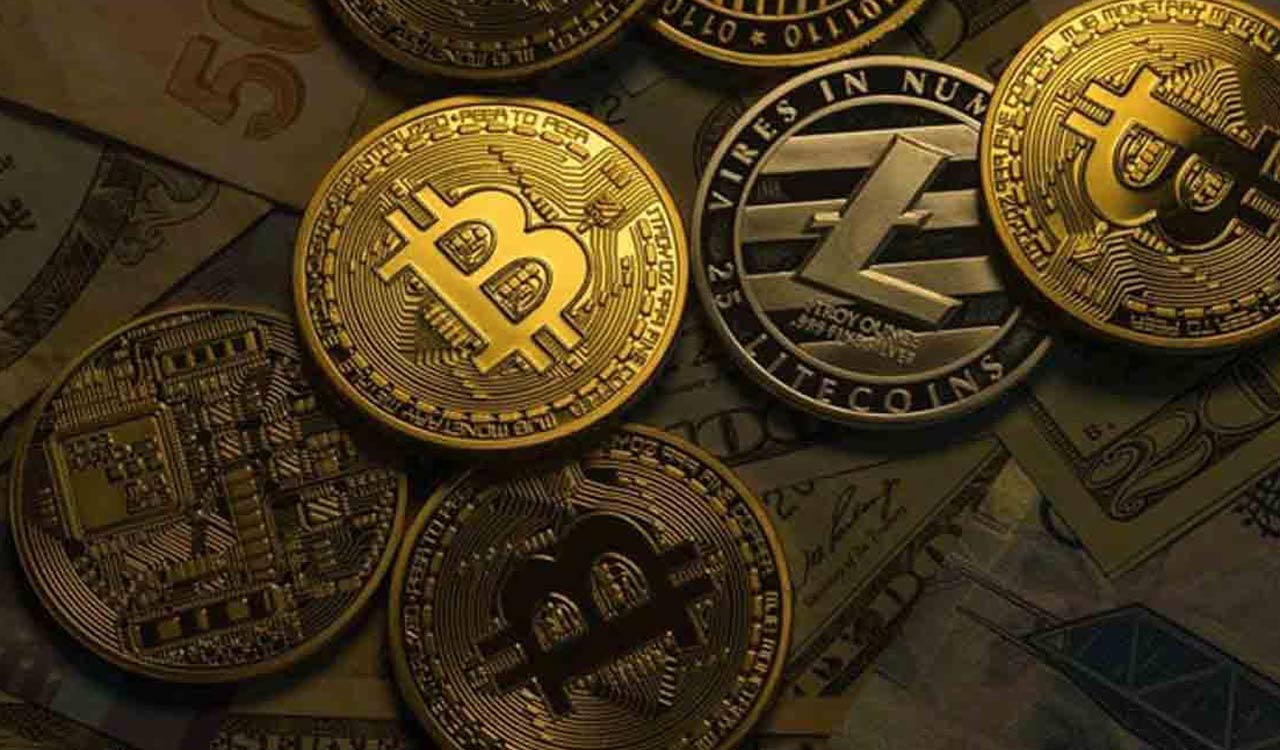
In 2009, Bitcoin was introduced with a pure intention. A currency that no government could print. No emperor could debase.
Fixed supply — only 21 million Bitcoins would ever exist. Mathematically enforced scarcity.
For the first time in history — a monetary system designed to make cheating structurally impossible.
The instinct was correct. But two old problems emerged.
First — a fixed supply in a growing world economy means persistent deflation. The same problem that paralysed the classical gold standard.
Second — Bitcoin was supposed to be decentralised. Owned by everyone. Controlled by no one. Today, a small number of large holders — called whales, those who accumulated early and can move markets at will — control enough Bitcoin to determine its direction.
The emperors who mixed copper into gold coins have simply become the whales who accumulated Bitcoin early. Same human instinct. Different technology. The cheat finds a way. Every time.
The One Trick — Stated Simply
Five thousand years. Six continents. Dozens of monetary systems. One trick destroyed all of them. Someone found a way to create the money without creating the value.
Roman emperors mixed copper into silver coins.
Chinese merchants issued more paper receipts than coins in their vaults.
Spanish silver flooded innocent economies with inflation they did not cause.
British colonial legislation suppressed Indian monetary systems that competed with their own.
Weimar Germany printed until democracy itself collapsed.
America printed the world’s reserve currency and exported inflation to every nation on earth.
The costume changes. The trick stays the same.
So What Has Survived Every Trick?
Five thousand years. Every empire. Every collapse. Every clever monetary innovation.
One thing survived all of it. One thing that every central bank in the world is quietly accumulating — while publicly calling it irrelevant. One thing that the cowrie shell, the Denarius, the Jiaozi, the Hundi, and the Bitcoin blockchain were all — in their own way — attempting to represent. Real value. That cannot be manufactured.

(The author is Founder & Chairman, Versatile Auto Components Pvt Ltd, Versatile Electric Automotive Private Limited, Former Chairman, Pashamylaram Industrial Park and Founding Secretary, Society for Sangareddy Security Council)

Comments are closed.