

He says he was disturbed by noise from the first day he moved into an apartment complex in Tay Mo Ward, Hanoi, in early 2020.
Karaoke music from portable speakers blared into his bedroom as early as 6 a.m., while neighborhood gatherings often continued late into the night, leaving him chronically sleep-deprived.
He says he was even more bothered by the level of attention from neighbors. One evening while cooking he was startled when someone looked into his kitchen and asked: “What are you cooking? It smells so good.” He was unused to someone entering his private space without invitation, he says.
Neighbors also seemed curious about his daily routine: When he came home late, they asked why; if he stayed home, they asked why he was not working.
Questions about his personal relationships, income and schedule too bemused him, he says. But his perspective about Asian neighborliness changed 180 degrees after he once fell seriously ill.
A woman living on his floor, who did not even speak English, brought him medicines and gifts after learning he lived alone. Other neighbors brought snacks, fermented pork rolls and fruits. “Everyone rallied to nurse me back to health as if I were their family,” he recalls gratefully.
It was then that he realized their questions were not ill-intentioned but merely a sign of concern. He says, contrite: “I used to think it was overbearing. Now the neighbors who were once strangers have taught me how to love.”
After five years in Vietnam he says he now understands the value of community. During holidays he joins local gatherings and looks forward to invitations to neighbors’ homes. In fact, he says he now feels empty when neighbors are away for long periods.
David Dobson, 41, a South African, lets his child play with Vietnamese neighbors at a residential complex in Tay Mo Ward, Hanoi, in 2025. Video from TikTok/@davidchristopherd6
Hans, a 36-year-old Briton, says he was also sensitive to noise when he arrived in Vietnam in 2016, and street vendors’ calls at dawn and the constant traffic noise unsettled him at first.
His discomfort disappeared after he became part of the sidewalk life in Ngu Hanh Son Ward in Da Nang City. He began drinking draft beer, watching elderly men play Chinese chess, and attended local events, including a death anniversary ceremony.
He says: “Sitting at the same table with dozens of strangers, I felt an unusual warmth. They even packed food for me to take home like I’m family.”
Dobson and Hans are two of many, many foreigners forming social bonds in Vietnam.
The 2025 Expat Insider report by InterNations, a global expatriate network and research platform, ranked Vietnam fifth globally among the best destinations for expatriates, up three places from 2024. The country scored highly for local friendliness and ease of making friends.
As of May 2025 nearly 162,000 foreigners were living and working in Vietnam, up from 135,000 in 2023.
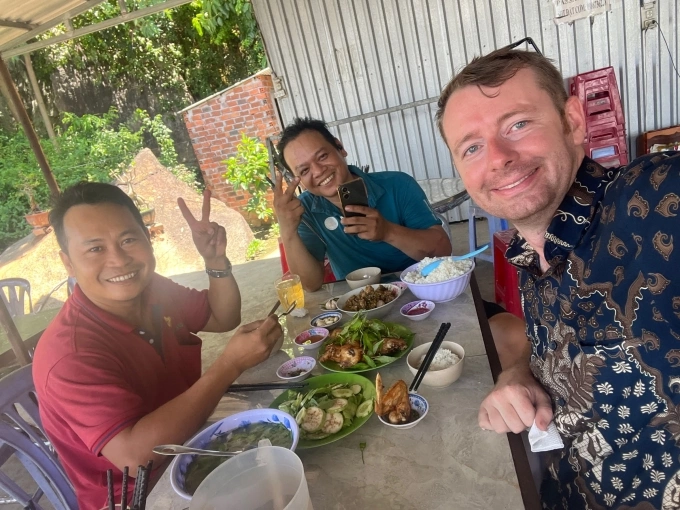 |
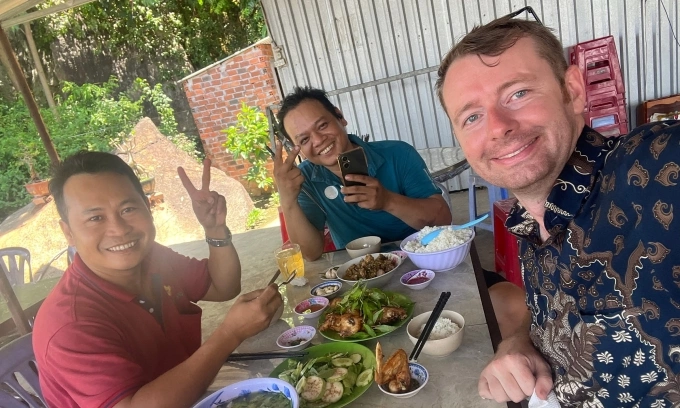
Hans (R), 36, a British immigrant in Vietnam, has lunch with neighbors in Da Nang City. Photo courtesy of Hans |
Assoc. Prof. Pham Ngoc Trung, former head of the faculty of development culture at the Academy of Journalism and Communication in Hanoi, says western culture emphasizes privacy while Vietnamese society places great value on community.
“Foreigners may feel scrutinized when locals ask about their age or income when first moving to Vietnam. But over time some people realize it is a form of caring.”
He points out that depression caused by loneliness is rife in countries such as Germany, the UK and the US, while in Vietnam the community offers psychological support.
Many foreigners now enjoy sitting at sidewalk tea stalls and asking about neighbors’ lives to better understand local culture, he adds.
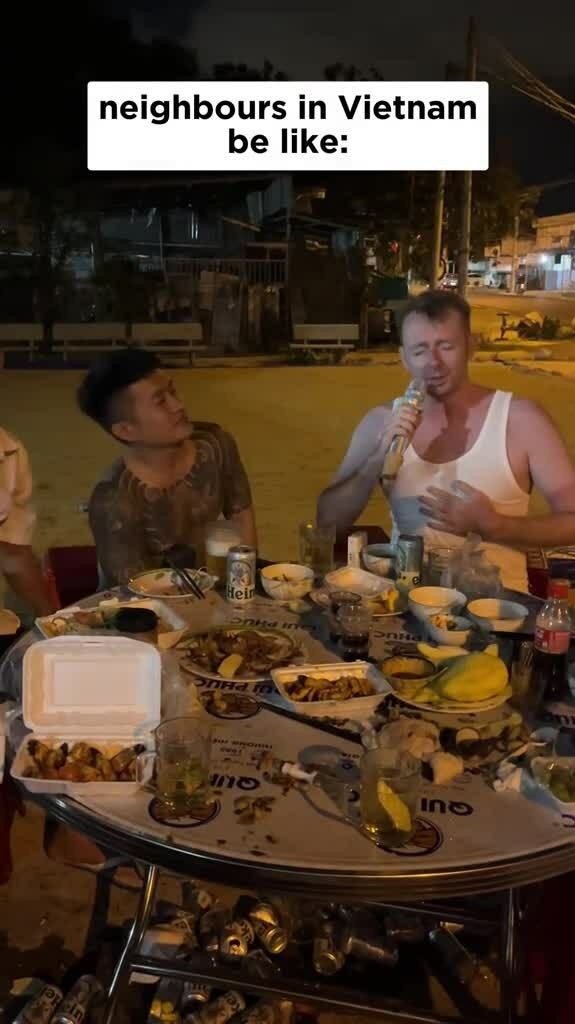
Hans, 36, a Briton who moved in Vietnam, sings karaoke with neighbors in Da Lat City in 2025. Video from Instagram/@handy_hans_
But the adaptation is a two-way thing, with Vietnamese, who also experience awkwardness initially when they live alongside people from other cultures, learning to cope.
Ngoc Mai, a neighbor of British man Marek, 33, says she was wary when he first moved into her apartment building in Da Nang.
Not knowing English, the 62-year-old asked for information about the newcomer from the landlord.
She says: “Marek was very reserved at first. I thought he was hard to approach.”
Their relationship blossomed after she took him gifts. Marek, initially hesitant, gradually loosened, and Vietnamese food became their point of connection.
But not all experiences end positively, with foreigners sometimes being unable to cope.
Frenchman Julian, 29, moved out of a small alley in Go Vap Ward, HCMC, after just one week of renting a place. He says he was overwhelmed by noise from local loudspeakers, morning street vendors and late-night drinking parties.
He moved to a gated apartment complex, choosing to pay more for privacy and quiet.

Comments are closed.