
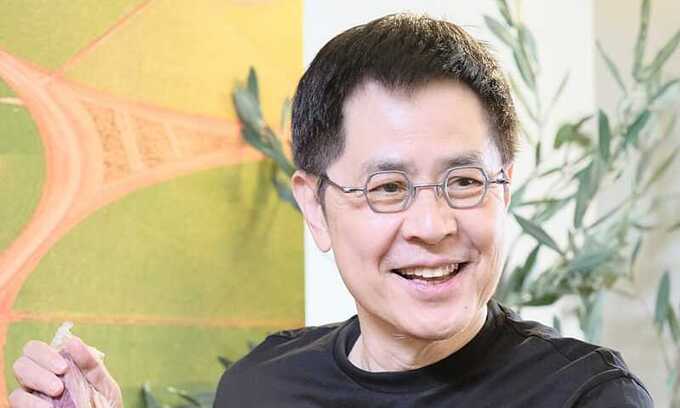
From duty-free fortune to wagyu beef empire: Hong Kong-born Singaporean Bruce Cheung starts over at 60

Born in 1954, Cheung grew up in a large, close-knit family. His father, the eldest son of a Guangdong rattan craftsman, had moved to Hong Kong and invested in a department store in Causeway Bay that he operated for 38 years.
As a child, Cheung was treated to meals at a Japanese restaurant whenever he earned good grades in school. It was there that he first tasted sukiyaki, a dish featuring thin beef slices. The meat, which he said melted in his mouth, left a lasting impression and sparked an unrealistic childhood dream.
“I didn’t get good grades all the time, so I wish one day I would be able to eat it daily or get my family and my kids to eat it all the time,” he recalled at a 2025 conference, as quoted by Beef Central.
Cheung later attended boarding school in the U.S., where he earned undergraduate and master’s degrees in finance.
After returning to Asia, Cheung relocated to Singapore, where he had relatives. He went on to co-found China International Duty Free Group and capitalized on China’s economic rise to grow it to more than 100 points of sale across airports, cruise ships and airlines.
Cheung became a Singapore citizen in 1998 after years of living and working in the city-state.
As he neared 60, Cheung decided against a quieter retirement filled with golf and dim sum, choosing instead to pursue a new challenge.
Bruce Cheung, founder of Pardoo Wagyu. Photo from Bidfood’s website |
Seeing the demand for high-value protein among expanding middle-class consumers in Asia and other regions, he decided to buy a farm in Australia.
“And of course I am very naive,” he recalled during the 2025 conference. “I have never farmed a day in my life. I thought, wow, how do you go about doing this?”
Determined to find the right property, Cheung flew to Sydney, rented a car and spent weeks driving through New South Wales and Queensland to inspect farms on the market.
He then settled on the 200,000-hectare Pardoo Station, which he bought for A$13 million (US$9 million) in 2015, attracted by the vast Wallal aquifer beneath the property.
Convinced the underground water could sustain cattle farming in the remote Pilbara region, he began his venture into agriculture.
His next challenge was securing approval from the Western Australian government to access the water resources. Two hours into what was planned to be a 10-minute meeting with Western Australia’s premier, Cheung secured the government’s approval. His proposal included investing his own capital, which has since grown from an initial A$15 million to more than A$100 million.
Cheung’s venture made headlines for pioneering the use of pivot irrigation systems to grow year-round pasture for wagyu cattle, a breed rarely raised in drought-prone regions because of the risks involved.
Explaining his choice, Cheung was quoted by the Australian Broadcasting Company as saying: “We should go for what’s the best available in terms of taste, in terms of what the market demands, so we basically want to explore whether wagyu is doable in such a dry and hot area.”
The gamble has paid off. Over the past decade, Pardoo Wagyu has expanded into 15 international markets and won the World’s Best Grain-Fed Sirloin title at the World Steak Challenge last year.
The business now runs a herd of 40,000 cattle, which Cheung aims to increase to 65,000-70,000.
Cheung did not bring the brand to Singapore until this March, when it entered the market through an exclusive partnership with Bidfood Singapore. He admitted he had been reluctant to present the product to people until its quality became more consistent.
“Deep inside, there’s a shy side of me that’s afraid to be ridiculed by my classmates or close friends,” he told Channel News Asia. “My marbling score is now 8.2 and I’m beginning to feel like I have something to offer my friends. So that’s when I felt it’s probably time to come home.”
The beef farm venture has not been without tribulations. Cheung said it has experienced multiple setbacks like fires, droughts, floods, cyclones and disease.
The toughest test came in 2023, when a powerful cyclone destroyed 95% of his cattle-rearing facilities and all staff dormitories. Though the devastation left him fearful, Cheung remained steadfast and pressed ahead with rebuilding.
“If you’re not stubborn enough, you can’t get anything done,” he told ThinkChina magazine.
Cheung said he sees Pardoo Wagyu as a long-term commitment with strong ties to Singapore, hoping it will demonstrate that Singaporean entrepreneurs are capable of building and operating large-scale farming businesses abroad.
“I want people to recognize that Singaporeans can farm,” he told The Straits Times in March. “This is not something short-term, but generational.”

Comments are closed.