
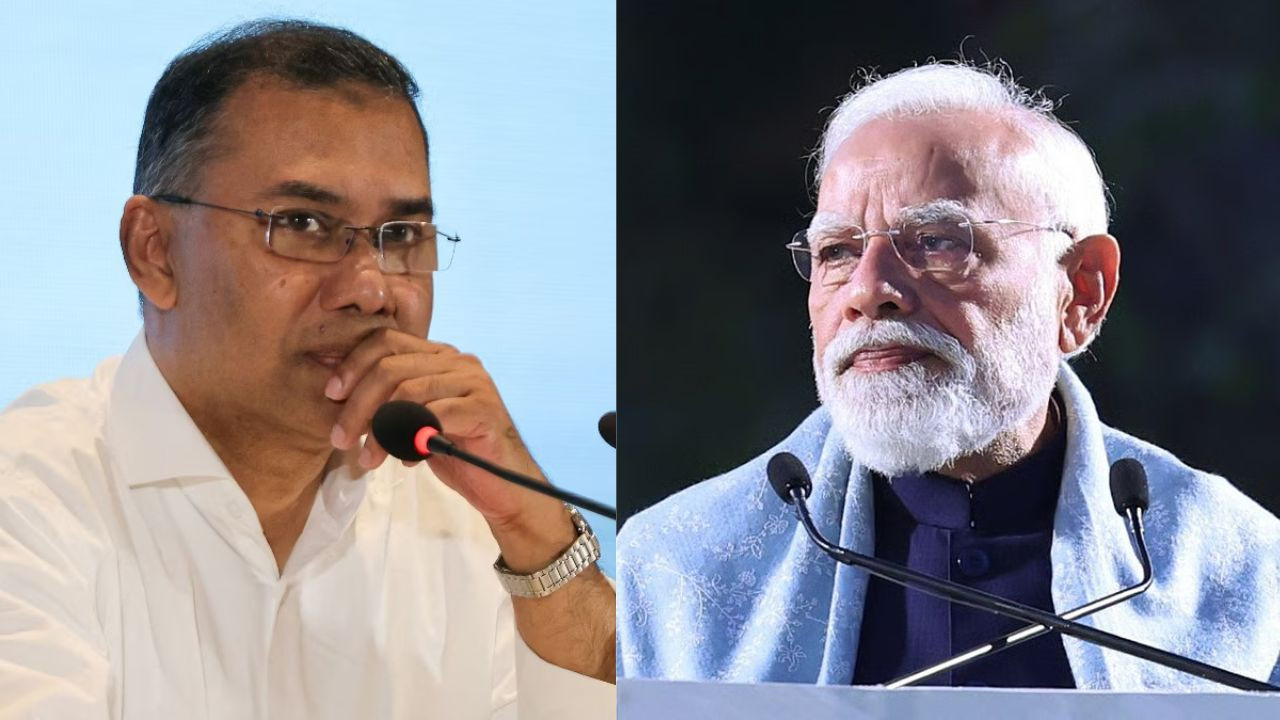
From Ganga Water Treaty to communal issues, why did the statement of Tariq Rehman’s advisor increase political stir?

New Delhi: The political scenario is changing rapidly after the recent general elections in Bangladesh. Bangladesh Nationalist Party (BNP) has got a clear majority in the elections held on 12 February and Tariq Rahman is going to take oath as Prime Minister on 17 February. Even before the formation of the new government, the rhetoric regarding India-Bangladesh relations has given a new direction to the diplomatic discussions between the two countries.
In this sequence, Tariq Rehman’s foreign affairs advisor Humayun Kabir has intensified the political stir by commenting on the Ganga Water Treaty and the internal situation of India. His statement is being seen as an indication of the possible foreign policy of the new government.
What did Humayun Kabir say on Ganga Water Treaty?
Regarding the renewal of the Ganga Water Treaty signed in 1996, Humayun Kabir made it clear that Bangladesh will take its decision on this issue on the basis of ‘national interest’. This treaty is to be renewed by December this year and it is believed that after the formation of the new government, this will be an important issue in bilateral talks.
Kabir said that till now Bangladesh has often been told about the interests of those Indian states which are linked to river water agreements. Clarifying the stance of the new government, he said,
“We will proceed in a manner that serves our national interest.”
Expressed concern about India
Bangladesh saw an increase in communal incidents after Sheikh Hasina was removed from power in August 2024. The news of attacks on the Hindu community and their religious places became a topic of discussion at the international level. The incident of lynching of Hindu youth Dipu Das had created concern at the global level.
However, instead of commenting on these incidents in detail, Humayun Kabir expressed concern about the situation in India. In an interview given to ‘The Hindu’ he said,"Communal violence in India is a matter of concern. The people of Bangladesh feel that India is becoming an intolerant society and elections are being won there with the help of fundamentalist rhetoric, which is worrying."
Comment on border and BSF also
Bangladesh has often accused the Border Security Force (BSF) of killing civilians. India says that such incidents happen during illegal infiltration attempts. In this context, Kabir said that such incidents affect the relations between the two countries.
Statement on Sheikh Hasina and Awami League
Humayun Kabir also said that India should accept the current political reality of Bangladesh. According to him, former Prime Minister Sheikh Hasina and her party Awami League are no longer present in the active politics of the country.
These statements given before the swearing-in of the new government are being seen as a sign of possible change in India-Bangladesh relations.

Comments are closed.