
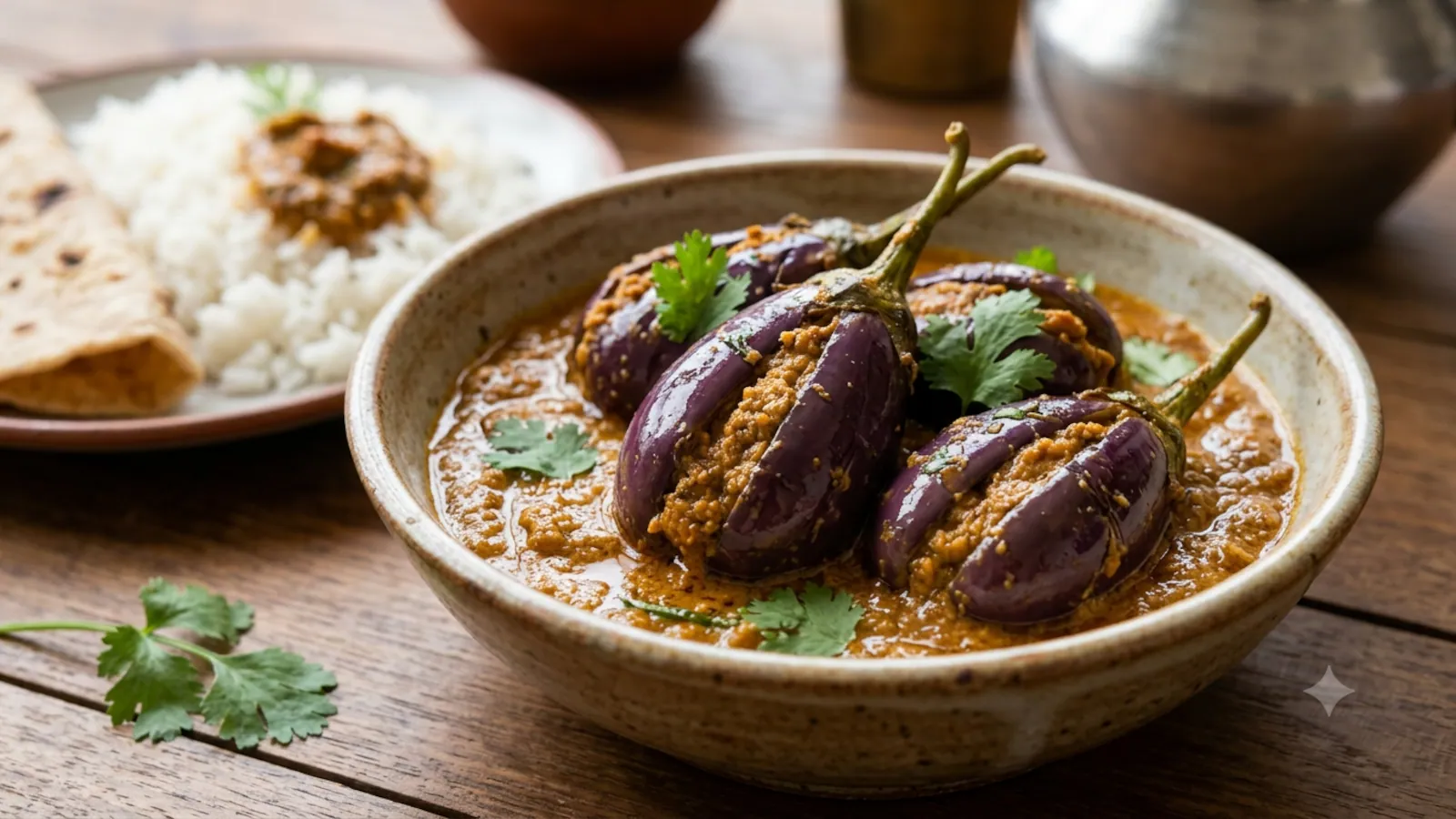

Most people usually put Telangana and Andhra cuisines in the same basket. While there are many similarities, there are also subtle differences. It was these nuances that I experienced during my first visit to Adi at The Leela Hyderabad, a fine restaurant and platform for time-tested flavors from Hyderabad, Telangana and Andhra. The recipes are authentic, and the cooking methods remain rooted in tradition, without relying on modern techniques or kitchen appliances.
What we know as Andhra Pradesh today (after the bifurcation), with the Rayalaseema and Coastal Andhra regions, used to be part of the Madras Presidency. Modern Telangana was essentially the hub of what was once Hyderabad State – the largest princely state in British India, encompassing parts of present-day Maharashtra (Aurangabad) and Karnataka (Gulbarga). The Telangana region has always been more arid compared to coastal Andhra Pradesh, which is one reason why meat (mainly lamb and chicken) remains a mainstay of the cuisine.
Also Read: Nadoo Is Delhi’s New Address For Serious South Indian Food
Guthi Vankaya Masala
Recipe courtesy – Adi, The Leela Hyderabad
Ingredients
For the curry
- Peanut oil – 100 gm
- Cumin seeds – 1 tsp
- Mustard seeds – 1 tsp
- Fenugreek seeds – 1 tsp
- Dry red chillies – 3
- Coriander powder – 1 tsp
- Cumin powder – 1 tsp
- Turmeric powder – 1/2 tsp
- Ginger-garlic paste – 100 gm
- Salt – to taste
- Kashmiri chilli powder – to taste
- Onions – 250 gm, finely chopped
- Tomatoes – 250 gm, finely chopped
- Curry leaves – a few sprigs
- Coriander leaves – a few sprigs
- Jaggery – 1 tbsp
- Thick tamarind pulp – 2 tbsp
- Ghee – to taste
- Small purple brinjals (vankaya) – 5-6, slit
For the masala
- Oil – 50 ml
- Cumin seeds – 1 tsp
- Sesame seeds – 2 tsp
- Fenugreek seeds – 1 tsp
- Dry red chillies – to taste
- Coriander seeds – 1 tsp
- Curry leaves – a few sprigs
- Roasted peanuts – 100 gm
- Chana dal – 1 tsp
- Urad dal – 1 tsp
- Fresh coconut – 200 gm
- Turmeric powder – 1 tsp
- Garlic – 2 pods
- Asafoetida – a pinch
Method
- Heat oil and temper with fenugreek seeds. Add chana dal, urad dal, cumin seeds, dry red chillies, curry leaves, coriander seeds, garlic and roasted peanuts. Sauté well.
- Add fresh coconut, asafoetida and turmeric powder. Allow the mixture to cool, then grind it into a coarse paste.
- Wash the brinjals and slit them diagonally. Soak them in salted water and then stuff them with the prepared masala.
- Heat some peanut oil and fry the mustard seeds, cumin seeds, fenugreek seeds and dry red chillies. Add onions, slit green chillies and curry leaves.
- Once the onions turn golden brown, add the ginger-garlic paste and cook until the raw aroma disappears.
- Add tomatoes and cook until completely soft and mashed. Stir in turmeric powder, Kashmiri chilli powder, cumin powder, coriander powder and salt.
- Add the stuffed brinjals and sauté gently. Add a little water and cook until the gravy thickens and the brinjals are tender.
- Finish with tamarind pulp, jaggery, ghee and coriander leaves.
- Serve hot with rice, roti or ragi balls.
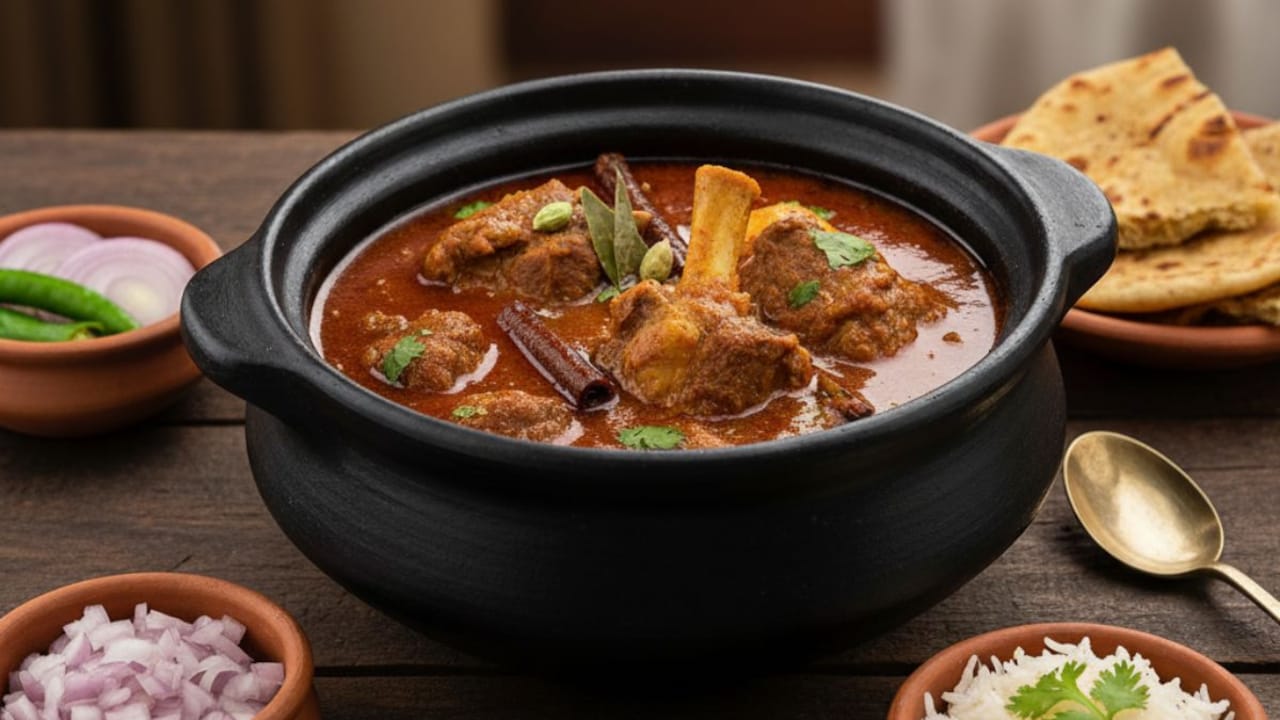
Talakaya Kura
Recipe courtesy – Bhojanam Thali, Hyderabad
Bhojanam Thali is a large restaurant in Hyderabad’s Jubilee Hills neighborhood that celebrates the rich culinary traditions of Telangana and Andhra Pradesh through authentic regional thalis.
Ingredients
- Mutton (cleaned and cut into pieces) – 1 kg
- Oil – 100 ml
- Onions, finely chopped – 500 gm
- Ginger-garlic paste – 75 gm
- Red chilli powder – to taste
- Turmeric powder – 1/2 tsp
- Garam masala powder – 1 tsp
- Coriander powder – 1 tsp
- Coconut powder or paste – 100 gm
- Whole spices (cloves, cardamom, cinnamon and shahjeera) – a handful
- Salt – to taste
- Water – as required
- Coriander leaves – for garnish
Method
- Clean the mutton and sauté briefly with turmeric powder, salt and ginger-garlic paste to remove the raw smell.
- Heat oil in a pan. Add the whole spices and onions, and cook until the onions turn golden brown.
- Add the mutton along with the red chilli powder, coriander powder and other spice powders. Sauté well.
- Add water, cover and pressure cook until the meat becomes tender.
- Open the cooker, add the coconut paste and garam masala powder, and simmer until the gravy thickens.
- Garnish with coriander leaves and serve hot.
Also Read: : A Simple Way To Make Perfect South Indian Coconut Chicken Curry
Kodi Kura
Recipe courtesy – Adi, The Leela Hyderabad
Ingredients
For the curry
- Chicken – 1 kg
- Onion – 400 gm
- Tomato – 350 gm
- Ginger-garlic paste – 100 gm
- Sunflower oil – 100 ml
- Green chillies – 4 to 5
- Kashmiri red chilli powder – to taste
- Coriander powder – 1 tbsp
- Turmeric powder -1/2 tsp
- Whole spices (cloves, cardamom and cinnamon) – a handful
- Salt – to taste
- Cumin powder – 1 tsp
- Garam masala powder – 1 tsp
- Ghee – 100 gm
- Curry leaves – a few sprigs
- Coriander leaves – for garnish
- Lime juice (optional)
For the paste
- Cashew nuts – 50 gm
- Poppy seeds – 40 gm
- Whole spices – a handful
- Cumin seeds – 1 tsp
- Fresh coconut – 100 gm
Also Read: A Simple Way To Make Perfect South Indian Coconut Chicken Curry
Method
- Wash and clean the chicken thoroughly, then drain well.
- Marinate the chicken with Kashmiri red chilli powder, turmeric powder, salt and ginger-garlic paste for about 20 minutes.
- Grind the cashew nuts, poppy seeds, whole spices, cumin seeds and coconut into a smooth paste.
- Heat some oil and temper it with the whole spices. Add onions, slit green chillies and curry leaves. Sauté until the onions turn golden brown.
- Add the ginger-garlic paste and cook until the raw aroma disappears. Add the tomatoes and cook until soft and well mashed.
- Add the red chilli powder, cumin powder, turmeric powder, coriander powder and salt. Cook for a few minutes.
- Stir in the prepared coconut paste and a little water. Cook briefly before adding the marinated chicken.
- Cover and cook on a low flame until the chicken is tender and fully cooked.
- Finish with garam masala powder, fresh curry leaves, coriander leaves and lime juice, if using.
- Serve hot with rice or ragi balls (sangati).
About Ashwin RajagopalanI am the proverbial slashie – a content architect, writer, speaker and cultural intelligence coach. School lunch boxes are usually the beginning of our culinary discoveries.That curiosity hasn’t waned. It’s only got stronger as I’ve explored culinary cultures, street food and fine dining restaurants across the world. I’ve discovered cultures and destinations through culinary motifs. I am equally passionate about writing on consumer tech and travel.

Comments are closed.