
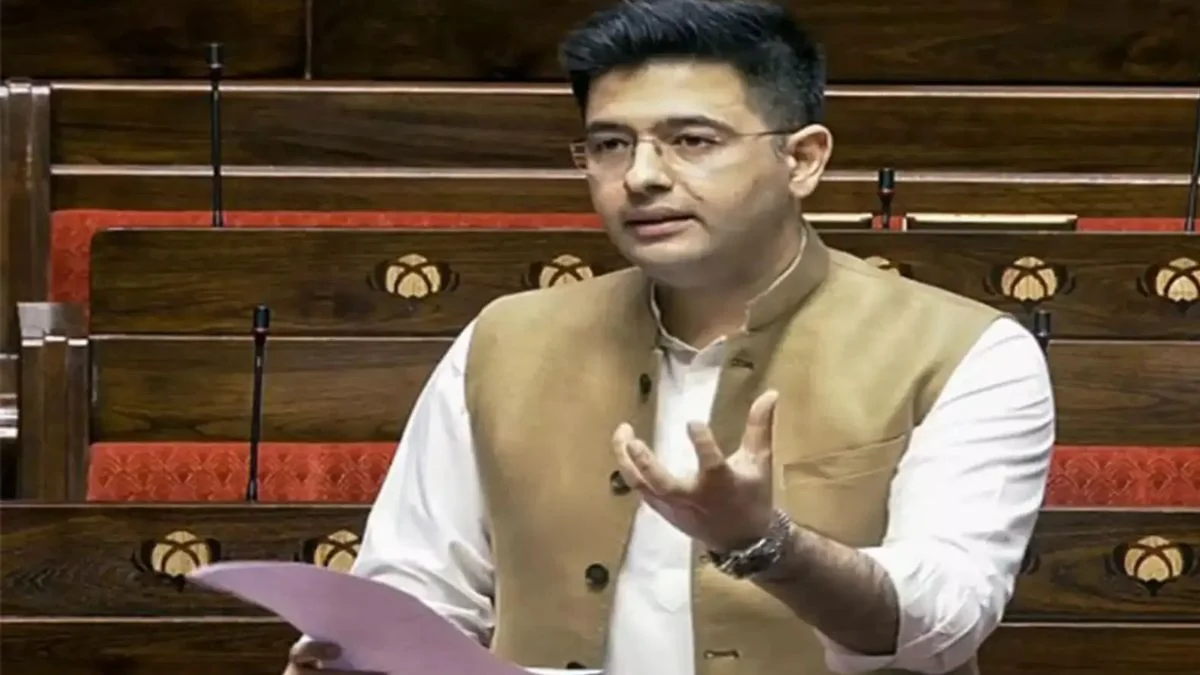

Raghav Chadha is attempting to reshape political messaging with a focus on everyday concerns, listing what he calls his “top 10” issues ranging from air travel and food prices to digital delivery platforms and telecom services.
The remarks, widely circulated across social media platforms, present a distinct political approach that shifts attention from traditional ideological debates to the daily challenges faced by urban and aspirational India. Chadha’s framing signals a conscious effort to connect with middle-class and younger voters by addressing practical, service-related concerns.
Everyday issues take centre stage
At the top of Chadha’s list are air travel and food-related concerns two areas that directly affect household budgets and consumer experience. He highlighted rising airfares, frequent delays, baggage rules, and high airport food prices as issues that impact ordinary citizens more than abstract policy discussions.
Food inflation also featured prominently in his remarks, with Chadha pointing to the disconnect between official economic data and real-life expenses faced by households. His messaging underscores how cost-of-living pressures are shaping voter sentiment.
Blinkit and the digital lifestyle debate
Chadha’s inclusion of Blinkit and similar platforms reflects the growing importance of digital consumption in everyday life. Rather than treating these as purely business or startup issues, he framed them through a consumer lens raising questions around pricing practices, service quality, and working conditions in the gig economy.
This approach positions quick-commerce platforms as symbols of a larger transformation in urban living, where convenience, speed, and digital dependency are becoming central to voter concerns.
Telecom and connectivity as core political issues
Another key pillar in Chadha’s “top 10” list is telecom, where he addressed concerns ranging from tariffs and call drops to 5G rollout and data privacy. By linking connectivity issues with daily life students attending online classes, gig workers relying on apps, and small businesses operating digitally he expanded the conversation beyond infrastructure to digital rights and accessibility.
Analysts describe this blend of topics as “micropolitics within macropolitics,” where national governance is evaluated through the lens of everyday services and user experience.
While Chadha’s approach helps him carve out a modern, youth-oriented political identity within the Aam Aadmi Partyit has also sparked internal debate. Critics within the party argue that focusing on such issues risks diluting attention from core political battles and accountability narratives.
However, supporters see this as an evolution in political communication one that reflects changing voter expectations in an increasingly digital and service-driven economy. Chadha’s “top 10” framework signals a broader shift in Indian politics, where everyday experiences flight delays, grocery costs, app deliveries, and internet access are becoming central to political discourse.
As debates intensify within the party, the larger question remains whether this model of issue-based, consumer-focused politics will redefine engagement or remain a supplementary narrative in India’s electoral landscape.

Comments are closed.