
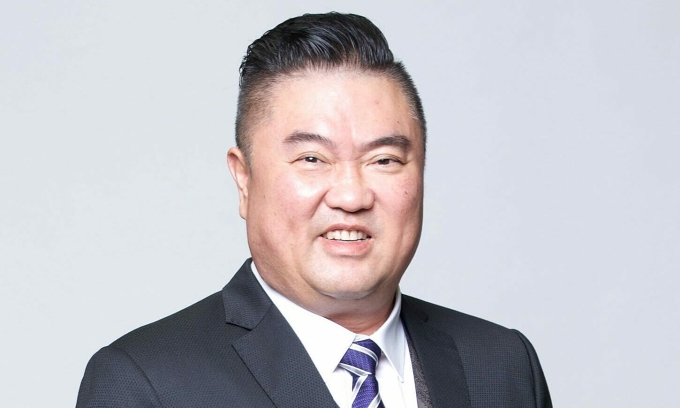

Ching recently made the news as Australia’s Supreme Court of Victoria earlier in April began hearing a case over the 2015 collapse of NewSat, an Australian satellite company in which he invested $100 million.
The case focuses on allegations that several lenders did not fulfill their financing commitments to NewSat, leaving the company short of funds needed to pay contractors responsible for building and launching what would have been Australia’s first privately owned satellite.
Ching, who is involved in the case, argues that the setback wiped out the firm’s opportunity to launch the satellite and caused a loss of potential earnings. He estimates the losses could reach around US$1 billion.
The 60-year-old tycoon is best known as the executive chairman and CEO of Oxley Holdings, a Singapore-listed property developer, where he directs the company’s strategy and overall performance.
He has over two decades of experience in the property sector and has a track record of identifying market trends and business opportunities, according to his firm’s website.
He is connected to a broad range of companies through his many roles. Corporate filings in Singapore show he holds over 60 active directorships and appointments across property, investment and other related fields, including numerous firms tied to Oxley as well as businesses in finance, healthcare and technology, The Straits Times reported.
But his success and the confident, jovial demeanor he often projects in media interviews stand in contrast to his modest beginnings.
Ching Chiat Kwong, executive chairman and CEO of Oxley Holdings. Photo from the company’s website |
He grew up in a family of seven that lived in a three-room public flat in the city-state. His father, a seaman, was home only once or twice a year.
He recalled creditors turning up at their door whenever his father failed to send money home.
“It was quite scary,” he told Forbes in a 2018 interview, adding that he once took on multiple jobs to get by, including selling Christmas cards, hawking snacks and jeans and working as a hotel waiter.
He enrolled at the National University of Singapore, studying sociology under a bonded police scholarship, and went on to join the force as a junior officer, where he worked his way up to become an investigator.
Struggling to get by on a monthly salary of about $1,300 in the mid-1990s, he left at 28 and tried his hand at small ventures such as car washing and grass-turfing before moving into construction following a chance meeting with a Taiwanese businessman who was planning to build a row of shophouses.
Encouraged by an architect friend who came on board as his subcontractor, Ching set up Oxley Construction and took on the shophouse project. Not long after, he began securing work building show flats for developers in Singapore.
Seeing an opening in the market, Ching bet on the idea that the city-state’s growing young affluent class would opt for smaller, more affordable one-room units measuring around 30-45 square meters, or the so-called “shoebox” apartments.
He raised $735,000, partly by mortgaging his home, to acquire a small plot for what became his first “shoebox” development, the 48-unit Tyrwhitt 139, which sold out within three hours of its launch.
“Those three hours changed my life,” he recalled. Before the launch, the risk of losing everything if that project flopped had woken him up in the middle of the night and caused him to vomit, according to The Business Times.
He went on to roll out a series of successful developments before founding Oxley Holdings in 2010, the same year the company was listed in Singapore. He led the company’s later move into commercial and industrial developments and turned to overseas expansion after the local market slowed in 2013.
Ching was last featured on Forbes‘ Singapore 50 Richest list in 2018, when his net worth was estimated at $545 million.
As a businessman, Ching is known to focus on commercial outcomes, which can be seen in the NewSat case.
The satellite firm came under scrutiny in 2015 following media reports that raised concerns about its governance, particularly its founder Adrian Ballintine’s use of company funds on travel, lavish meals and a yacht business in which he had a stake.
Ching, who sat on NewSat’s board at the time, has dismissed these concerns as overblown, telling Bloomberg in a recent interview: “What is a couple of thousand dollars or first class ticket or private jet to sell what you have and get in hundreds of million dollars of sales?”
Earlier this year, Ching told Australian media that he was eager for the truth about the case, including the reasons behind the lenders’ decision, to emerge through the lawsuit.
“This is one legacy that I want to leave – that I fought for, my friends, my partners, shareholders, all the shareholders in Australia, so that they actually know what went wrong,” he said, as quoted by the Sydney Morning Herald.
On his leadership style, Ching told PropertyGuru in an interview in 2017, when he was named Real Estate Personality of the Year, that he does not let fear of failure hold him back.
“I have never restrained myself from venturing into unfamiliar territory because of our fear of failure. This is why we endeavour to go into untapped markets and be the pioneer among Singapore developers to explore such places.”

Comments are closed.