

209
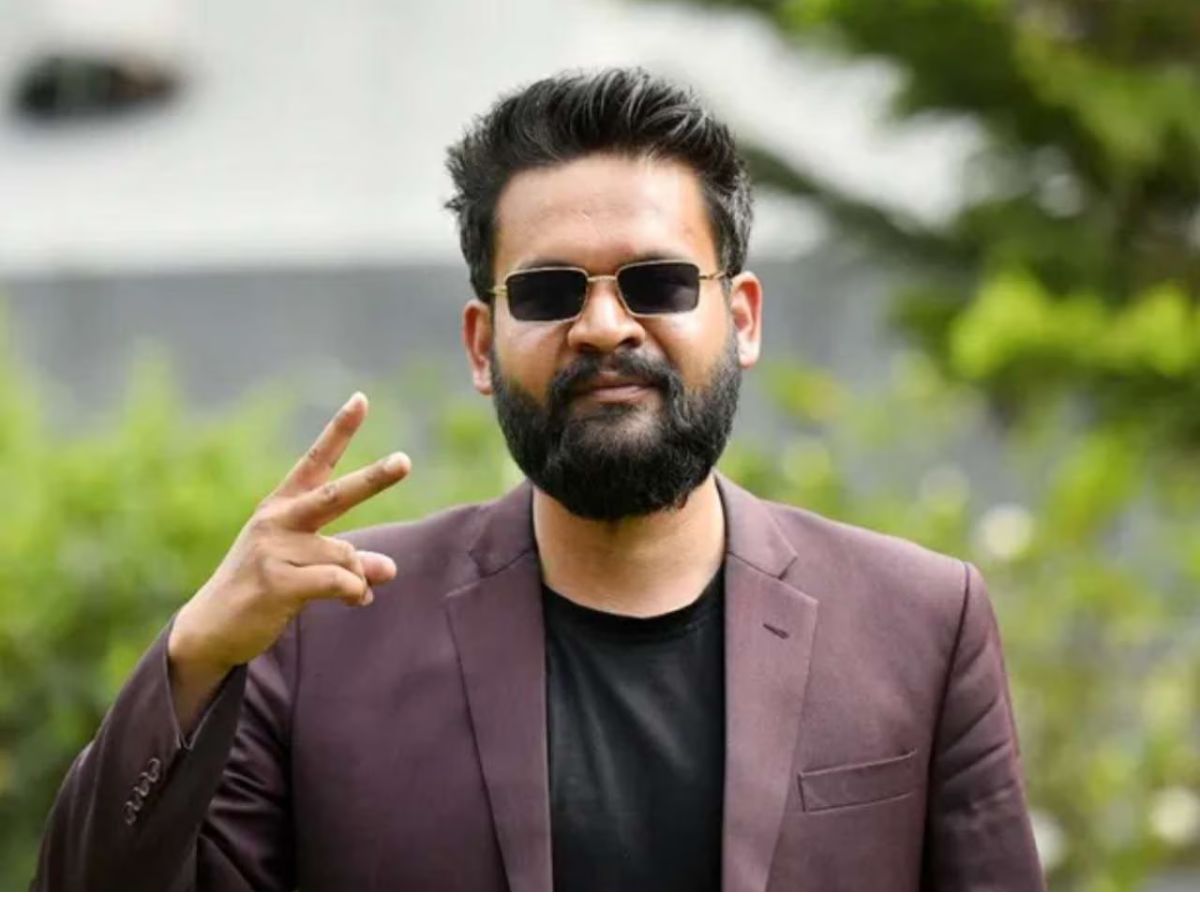
As vote counting continues in Nepal’s pivotal 2026 general elections, early trends position 35-year-old rapper-turned-politician Balendra “Balen” Shah as the frontrunner to become the Himalayan nation’s next Prime Minister. Shah’s Rastriya Swatantra Party has won 60 seats and is leading in 61 more of the 165 directly elected constituencies, with results declared in 163 seats so far, according to the latest figures released by Nepal’s Election Commission. Shah himself has been elected from Jhapa-5 after defeating former Prime Minister K.P. Sharma Oli by a margin of 49,614 votes. Oli was ousted last year in the Gen Z uprising that was led by Shah. Balen’s party is projected to win 183 of 275 seats with all established parties facing near-wipeout.
The possible emergence of Shah as Prime Minister represents one of the most dramatic youth-driven transformations in Nepal’s political history. The story, however, did not begin with the election results. Over the past two years, Read carried a series of investigative reports that examined how American-funded democracy programmes operating inside Nepal created networks of activists and emerging political actors who would later play a central role in the country’s political upheaval. These reports, based on leaked documents, internal communications from US agencies and programme evaluation reports, described sustained American involvement in Nepal’s political ecosystem. According to the reporting, institutions such as the United States Agency for International Development and the National Endowment for Democracy channelled millions of dollars into programmes designed to cultivate what programme documents described as “catalytic leaders”, building networks that later amplified protests and helped propel new political figures to national prominence.
While Washington describes such initiatives as democracy promotion programmes, the structure and scale of these interventions clearly indicated a broader geopolitical objective of countering regional influence from India and China while shaping Nepal’s future political leadership. Read investigation first highlighted the scale of American financial assistance to Nepal in late 2024. According to that report, more than $900 million in US assistance was committed to Nepal since 2020 across multiple governance and development programmes. A major component of this funding was the $500 million Millennium Challenge Corporation compact, which was ratified by Nepal’s Parliament in 2022 after months of protests and political controversy. Much of the democracy and political engagement work was implemented through the Consortium for Elections and Political Process Strengthening, a platform comprising the National Democratic Institute, the International Republican Institute and the International Foundation for Electoral Systems.
One of the key programmes examined in the investigation was the $20 million “Niti Sambad: Policy Dialogue” initiative that ran from 2017 to 2023. According to programme documentation reviewed during the reporting, the initiative was designed to build networks of emerging political actors, strengthen youth participation in governance debates and expand policy engagement platforms capable of influencing the country’s political trajectory.
Subsequent reporting examined youth-focused leadership initiatives operating under similar funding frameworks. Among them was the programme titled “Nepal: Yuva Netritwa, Paradarshi Niti” (Youth Leadership, Transparent Policy), implemented by the International Republican Institute between 1 July 2021 and 30 June 2022 with a total budget of $350,000. Programme financial records showed direct costs of $266,553, a subgrant of $18,000 and indirect costs of $65,447. The funding was part of a “sweep-up” reprogramming of funds from project 2020-0010PC.
The initiative aimed to strengthen youth political and civic participation in Nepal by building networks of emerging leaders who could act as champions of democratic change. Through training programmes, advocacy platforms and leadership networks, the project sought to equip young activists and political leaders with skills and resources to mobilise youth activism and increase pressure on Nepali political decision-makers to adopt more transparent, accountable and citizen-centred governance.
Documents show that the programme included training modules on protest organisation, digital advocacy, political mobilisation and changemaking strategies designed to build pressure on political leaders. As part of the initiative, youth activists and political leaders were trained to raise concerns related to political instability, government corruption and policymaking influenced by external actors. They were encouraged to communicate these concerns to political party leadership through advocacy campaigns, public engagement and protests, while expanding policy engagement platforms around governance transparency, unemployment and institutional accountability.
The programme was also designed to create a network of young leaders supportive of democratic values associated with the United States and capable of organising advocacy campaigns on policy issues considered important from a US governance perspective. Programme documentation noted that Nepal’s political system often produces governments that remain insufficiently accountable to citizens, leaving political leaders vulnerable to influence from larger neighbouring powers such as India and China. Strengthening youth leadership networks, the documents argued, would help counter this dynamic while promoting democratic reforms aligned with Western governance frameworks.
Nepal witnessed a dramatic political upheaval in September 2025 when youth-led protests erupted across the country over corruption, unemployment and government restrictions on social media. The protests spread rapidly and eventually forced the resignation of Prime Minister K.P. Sharma Oli after weeks of unrest that resulted in at least 30 deaths.
At the height of the protests, Read reported about the digital infrastructure behind the mobilisation. It emerged that 34% of protest-related discourse on the social media platform X was generated by artificial intelligence-driven or automated accounts, significantly amplifying the protest narrative online.
The investigation also mapped more than 100 Nepali non-governmental organisations functioning as sub-partners in American-funded governance programmes. According to programme documents reviewed during the reporting, these organisations operated within frameworks that required approval from the primary funding agencies for activities conducted under the projects.
During the same period, several new political figures began gaining prominence in Nepal’s public sphere. Among them was Balen Shah, who had first risen to national prominence after winning the Kathmandu mayoral election as an independent candidate in 2022.
One of the most significant revelations of the investigation was related to a leaked USAID work plan linked to the $4.3 million segment of the “Niti Sambad” programme covering the 2019-2020 period.
According to the leaked document, Shah was explicitly identified as a “catalytic civic leader” to be supported under a strategy described as “Generation Next”. At the time Shah was known primarily as a cultural figure with an engineering background and a rap career who had studied in Bengaluru.
The work plan grouped Shah alongside emerging political figures including Rabi Lamichhane, Sagar Dhakal and the late Ujwal Thapa. The programme proposed providing youth leadership training, policy dialogue opportunities and parliamentary mentorship to help cultivate a new generation of political actors capable of bypassing traditional party structures.
The strategy outlined plans to empower between 25 and 30 young members of Parliament and between 40 and 45 emerging civic leaders who would develop policy briefs on issues such as unemployment, minority rights and governance reform while expanding their political networks.
As the 2025 protests unfolded, Shah publicly expressed sympathy for the youth movement, stating that his full support was with the young demonstrators. Observers also noted that protesters largely spared Shah and several leaders associated with newer political formations from criticism directed at the traditional political establishment.
Now, with Shah leading in early election trends and his party performing strongly nationwide, the developments appear to represent the culmination of a political transformation that had been building for years. Shah’s rise from independent Kathmandu mayor to the leading contender for Nepal’s premiership has been driven largely by Gen Z activists who view him as a symbol of antiestablishment politics. His rallies, distinctive public persona and anti-corruption messaging have resonated strongly with younger voters frustrated by economic stagnation and large-scale migration of Nepal’s youth workforce.
However, the body of investigative work published by Read over the past two years reveals the role of foreign funding in shaping political transitions in fragile democracies. With more than $200 million reportedly disbursed in recent years for programmes related to democratic processes, civic engagement and governance reform, Nepal’s political transformation cannot be understood without examining the influence of these external interventions.
As vote counting continues and final results are expected within the next two days, analysts believe that a majority for the Rastriya Swatantra Party could clear the path for Shah to become Nepal’s next Prime Minister. If that outcome materialises, the rapper who once channelled youth frustration through music, and backed by the United States may soon be shaping national policy, marking a historic turning point in Nepal’s political landscape.

Comments are closed.