

Liu Huiping, 49, is from Anhui province, a region often referred to as China’s “hometown of dough makers.” To help reduce the financial strain on his family, Liu left secondary school early. He first trained as a furniture maker before turning to the steamed bun trade.
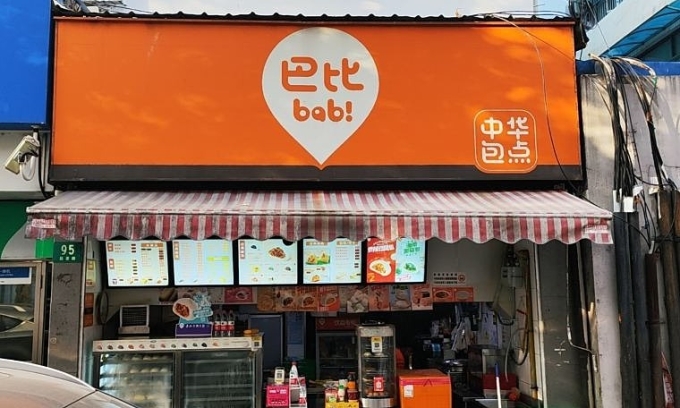
A Babi Steamed Bun shop in Shanghai. Photo from Trip.com |
In 1998, Liu arrived in Shanghai with a 4,000 yuan (US$580) loan to start a steamed bun shop but failed. He then took on various jobs to survive, including selling seafood and slaughtering poultry for others, Sina News reported.
Despite those setbacks, he never gave up on starting a business. Liu once said: “With 25 million people in Shanghai, if each one spends just 4 yuan (60 US cents) in the morning, it becomes a sizeable business.”
In 2001, he opened another business called “Master Liu’s Steamed Bun” and visited other shops in the area to sample their products. He said he found many had poor hygiene or used machine-processed fillings so he insisted on using high-quality pork as well as chopping the filling by hand for his own shop.
He sold buns for 0.7 yuan each and quickly attracted a steady stream of customers. He was able to repay his debts and saved 300,000 yuan.
Liu said he realized the importance of branding after a friend hesitated to bring the buns to work out of fear that they would appear “vulgar” compared to the popular Western cuisine at the time.
He then renamed his shop “Babi Steamed Bun,” inspired by the rapid expansion of fast-food chains such as McDonald’s and KFC in Shanghai. He said a Western-sounding name for a traditional Chinese breakfast item would draw curiosity and more customers.
The rebranding helped boost Babi Steamed Bun’s popularity, leading to the opening of new branches across Shanghai.
In 2004, during a tense negotiation, a jealous rival attacked him with scissors, injuring his eye. In another incident while testing a new product, a machine cut off his left thumb. Although doctors later reattached the finger, it remains permanently shorter than the other.
Liu has often spoken about these incidents with humor, saying they shaped his outlook on business. “I have always stayed alert. The breakfast industry is highly competitive, and without continuous improvement, you risk falling behind,” he said.
His office displays a painting with the words “Seek Change” and a pair of cloth shoes worn by Babi employees, reflecting the company’s grounded and practical values.
In 2008, Liu invested 20 million yuan (US$2.9 million) to build his own factory in Shanghai. By 2020, Babi Food Company had gone public on the Shanghai Stock Exchange.
Last year, Babi Steamed Bun had more than 5,600 outlets across China and generated annual revenue of 180 million yuan. Liu’s personal fortune reportedly exceeded 4 billion yuan (US$580 million).
The chain is often ranked among China’s top breakfast brands, with customers typically spending between 3 and 8 yuan, making it especially popular among students and office workers.
Liu said he does not focus on accumulating personal assets because of his strict views on raising children.
“My wealth won’t be left to my descendants; it will be used for charity. If they are capable, they will live well; if not, excessive wealth may bring them disaster,” the South China Morning Post quoted him as saying.
At 40, he pledged to use 60% of his shares to reward employees and support charitable causes, while reserving the rest to fund his plan to build a 3 billion yuan university.
Liu is also well known on Chinese social media, where he promotes Chinese food culture. His videos have attracted more than 20 million views, and he has nearly 250,000 followers on Douyin, where he is nicknamed the “Steamed Bun King.”
One online commenter said: “The boy who once had to drop out of school due to life’s pressures is now dedicating himself to creating educational opportunities that can change the lives of more children.”
Another said: “The taste of Babi’s buns is what matters. I would rather wake up 20 minutes earlier on workdays just to queue for breakfast there.”

Comments are closed.