
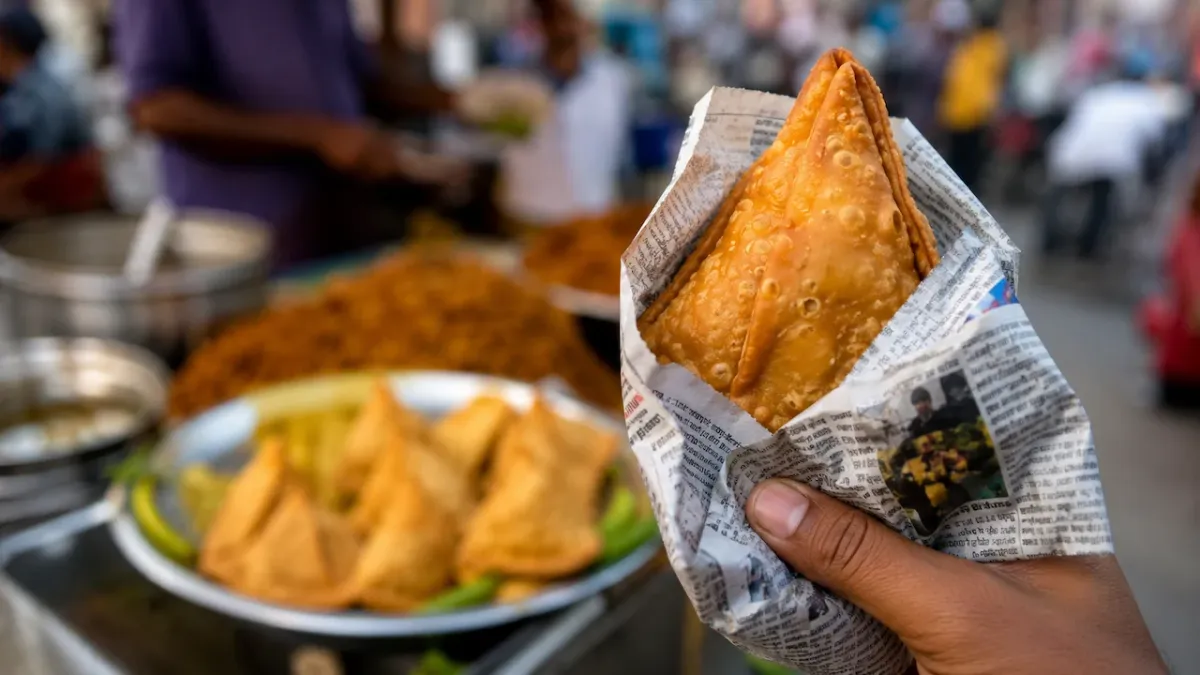

FSSAI newspaper food warning: In India, many food items like Vada Pav, Samosa, Pakodas or Parathas are still served wrapped in newspaper or kept on it. People find this method normal, but now the Food Safety and Standards Authority of India (FSSAI) has issued a strict warning regarding this. The organization has asked all food business operators to immediately stop using newspaper to pack, wrap or serve food, as it can have a serious impact on people’s health.
Warning issued after Mumbai incident
This advice has come to light after a recent incident in Mumbai. A famous vada pav vendor was found serving food in the newspaper. After this, the team of FSSAI Western Region and Mumbai Municipal Corporation (MCGM) took joint action. Now the authority wants that such practice should be stopped in other cities and towns also and safe food should reach the people.
After all, why is it dangerous to keep food in newspaper?
According to FSSAI, the ink used to print newspapers contains many types of chemicals, pigments and binders. These may also contain other heavy metals including lead. When hot or oily food comes in direct contact with newspaper, these chemicals can leach into the food. Consuming such contaminated food for a long time can have negative effects on the body and increase the risk of many health problems in the future.
Not only ink, dirt can also be the reason
The danger is not limited to printing ink only. Newspaper comes in contact with dust, dirt and many people during printing, transportation and distribution. In such a situation, bacteria and other microorganisms present on its surface can contaminate the food. This also increases the risk of food-borne diseases.
There are already restrictions in the rules
FSSAI has reminded that the use of newspaper or any printed paper to store, wrap or serve food is prohibited under the Food Safety and Standards (Packaging) Regulations, 2018. The organization has already conducted awareness campaigns on this topic several times. The directive is not limited to big restaurants but applies to all food businesses including street food vendors, cloud kitchens, caterers, quick service restaurants (QSR), food stalls, small shopkeepers, mobile food vendors and hawkers.
Customers also need to be cautious
FSSAI has appealed to food traders to adopt food-grade packaging material. Consumers have also been advised to avoid any shop or stall that is packing or serving food in newspaper. Small carelessness can become a big health problem in future. Therefore, it is important for everyone to adopt the habit of safe packaging and clean food.
FAQ
Which disease is caused by packing food in newspaper?
Due to the lead and chemicals present in newspaper ink, it can cause fatal diseases like digestive system problems, stomach infection, kidney disease and in the long run, cancer.
Can cold things be kept in newspaper?
No, as per FSSAI rules, keeping any kind of food (be it cold or hot) in newspaper or printed paper is completely prohibited, as bacteria can be transferred even in dry food.
What is safe packaging as per FSSAI?
FSSAI recommends using only food-grade packaging material, butter paper, banana leaves or un-printed aluminum foil for food.
What to do if a street vendor offers food in newspaper?
You refuse to do so and ask for a food-grade plate. You can also lodge a complaint on FSSAI’s National Consumer Helpline.
Is butter paper better than newspaper?
Yes, unprinted butter paper and good quality tissue paper are considered completely safe for consumption as they do not contain any chemical ink.
Read More: World Food Safety Day 2026: 10 kitchen mistakes, which can serve disease on the plate

Comments are closed.