


Highlights
- Gaming supports stress relief, cognitive growth, and emotional resilience when used mindfully.
- Therapeutic games and VR tools show promise in managing anxiety, depression, and rehabilitation.
- Risks like addiction and burnout arise from compulsive use, personal context, and game design mechanics.
- Media oversimplifies gaming’s effects; research shows impact varies by motives, balance, and game type.
The linkage between gaming and mental health is a tangled matter in today’s public discussion. Games, on the one hand, are considered to be stress relievers, brain stimulators, socialisers, and even psychotherapists. On the other hand, pitfalls of addiction, escapism, and burnout keep coming up, often based on oversimplifications that do not acknowledge the wide range of gaming activities.
The past ten years have witnessed an increasing number of studies on this paradox; thus, the duality of the relationship between gameplay and psychological well-being has been revealed in a much more comprehensive way than through the classic narratives. Understanding the complex nature of digital play is of great importance for determining emotional health, which is very much dependent on games being both mainstream entertainment and therapeutic tools at the same time.
Games as a Mechanism for Stress Relief
One of the main reasons for the popularity of video games as a source of fun is their ability to relieve stress. A lot of people find gaming a relaxing and effective way to use and engage with interactivity to cool down after being under pressure from work or studying. Along with that comes empowerment and the ability to control time-outs from daily distractions, leading to an even better emotional change than before.
The studies into the psychological impact of light gaming habits are almost universally pointing to the same conclusion: players’ stress levels go down. However, the choice of the game plays an important role here. The feeling of being in control, gradual and rewarded progression, and a right level of challenge are all aspects that contribute to stress reduction.
Cognitive Benefits and the Development of Mental Flexibility
Gaming has gradually surrounded the area of stress relief and has been associated more often with cognitive enhancement. Some researchers have studied the mental effects of action and strategy games and reported improvements in problem-solving ability, spatial reasoning, sustained attention, and task-switching. The major source of those cognitive gains is the various demands placed on players by games: rapid pattern recognition, real-time decision-making, and maintenance of multiple information streams. Continuous mental workout over an extended period can eventually lead to the development of executive function neural pathways.
Especially, puzzle and strategy games might challenge and train the players in planning, adaptability, and creative thinking. The players are to predict outcomes, weigh the pros and cons, and adapt their approach when circumstances change. Such forms of mental flexibility are not limited to gaming scenarios and can be particularly useful in academic and professional settings that necessitate constant adaptation. What is more, the whole issue of benefits is based on active participation rather than passive consumption, which distinguishes games from other media with no similar cognitive stimulation, which provide only entertainment.

Therapeutic Applications and Emerging Clinical Uses
The reception of the therapeutic value of the games has become more positive among clinicians and researchers. Games designed for mental health treatment are being applied more and more in practice areas such as anxiety, depression, cognitive rehabilitation, and post-traumatic stress disorder. The games for therapy use techniques that allow gradual exposure, emotion regulation, or cognitive alternation, thus providing patients with an engaging way to participate in the entire treatment process.

Clinicians are using virtual reality platforms, often enhanced with game-based elements, to create environments for exposure therapy or relaxation training, which are then strictly monitored. Simulation games have been used to help those with executive function issues, whereas narrative games are seen as tools for emotional processing and empathy building. The attractiveness of therapeutic games lies in their easy access and support for engagement, particularly among kids and youth who often do not want to attend regular therapy sessions.
Nonetheless, these advancements do not mean that games take over the role of clinical treatment, but rather reveal a trend toward the merging of interactive components in the therapeutic domain. As these methods continue to be validated through research, the distinction between entertainment and health-oriented design is likely to become even more blurred.
The Problematic Side: Addiction, Compulsion, and Burnout
The fact that games have real advantages does not mean that the associated problems of excessive play and addiction can be ignored. Gaming disorder, which the World Health Organisation has recognised, is characterised by the performance of playing games that leads to a significant loss of functioning in one or several areas, such as personal relations, social interactions, and education. Those who are addicted to gaming often exhibit the following behaviours: they are drawn to play excessively, have no control over the time they spend playing, and keep on gaming even when there are clear negative consequences for them.
It is important to recognise that such patterns do not arise solely from game design. In addition, there are game design features such as infinite progression loops, randomised rewards, and highly competitive ranking systems that might push players to keep playing even longer than is healthy. But these mechanics do not have a uniform effect on every player, and the negative impacts of these mechanics should not be overgeneralised, as they are part of a complex behavioural dynamic.

Onur Binay/Unsplash
Understanding Misconceptions and Media Narratives
The public discourse surrounding gaming and mental health is often encased in sensationalised narratives that portray gaming as either being entirely harmful or entirely beneficial. However, the truth is that gaming is neither a universal therapy nor a universal poison. The effect of gaming depends on the situation: the genres of games played, the reasons for playing, the gamer’s psychological profile, and the ability to balance gaming with other duties.
One of the most persistent myths is that the time spent playing is a good indicator of risk. A growing body of research suggests that quantity is less crucial than the quality and the motives behind play. A very involved player might be gaming for hours and not getting any negative effects, while another person may demonstrate problematic behaviour even with shorter gaming sessions if gaming is the main way to release stress or emotional suffering. Moving the discourse from simple metrics to the actual causes of people’s gaming makes it much easier to determine whether it is a healthy engagement.
Conclusion: A Relationship Defined by Balance
The connection between gaming and mental health cannot be categorised as positive or negative. It is a complex interaction that depends on individual requirements, the game itself, and the broader social context. Games can provide relaxation, boost cognitive abilities, support psychotherapeutic processes, and foster high-quality social ties. On the flip side, they have the potential to lead to addiction or emotional burnout given the right circumstances.
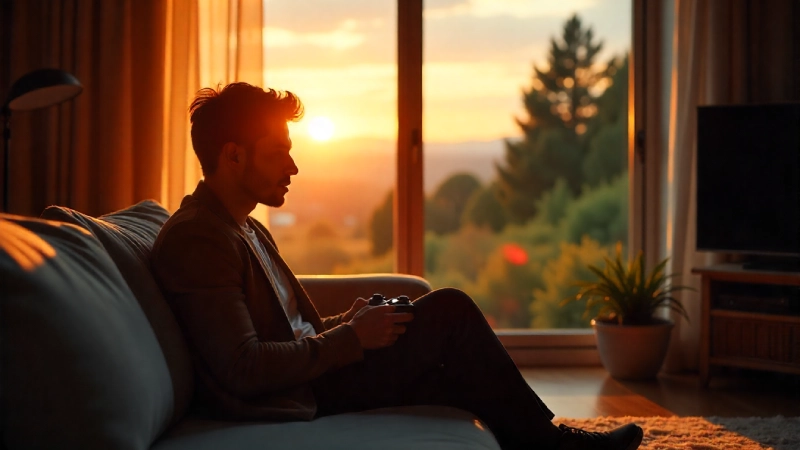
And so the challenge is not to classify gaming but to comprehend it. When the gaming experience is enjoyed with consciousness and balance, it can become an excellent source of enrichment, resilience, and connection. The society that has come to know and accept both the benefits and the risks associated with gaming will no longer be plagued by misconceptions and will be able to participate in a digitally playful relationship that is healthier and more enlightened.

Comments are closed.