
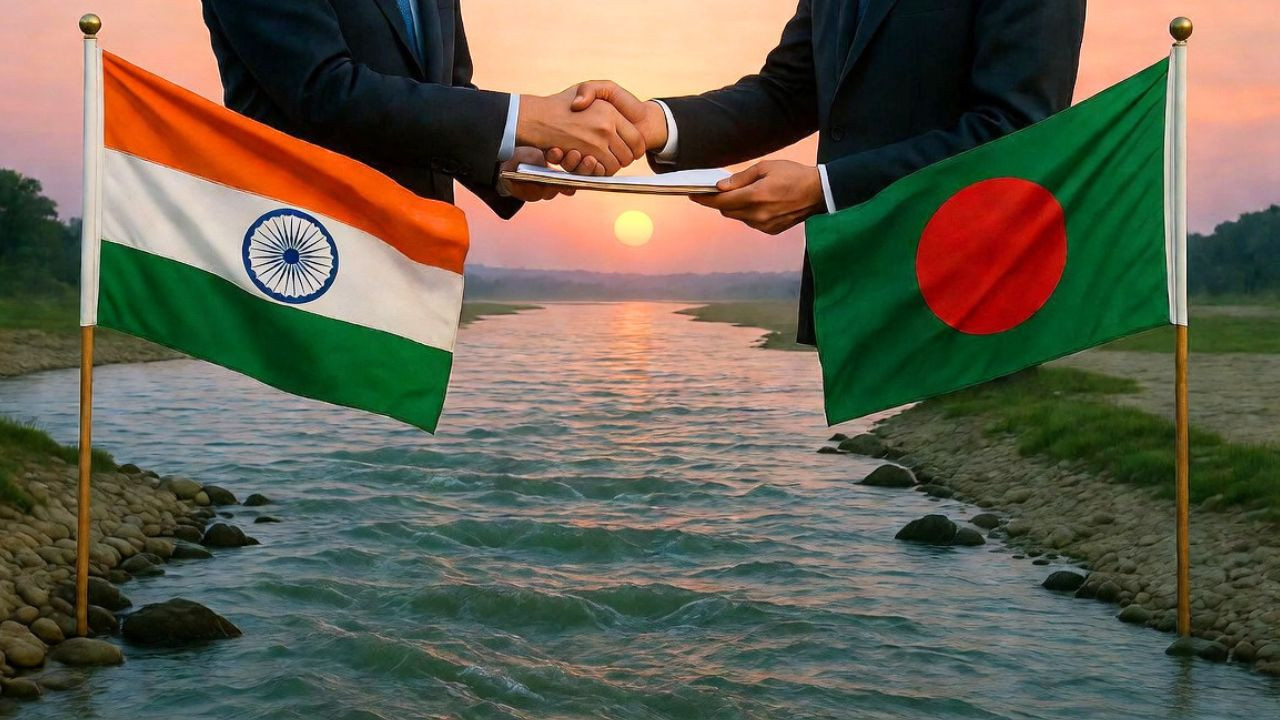
Ganga water treaty ending in December, sharp differences between India and Bangladesh! What will happen next now?

New Delhi: The 30-year agreement between India and Bangladesh on sharing of Ganga water is ending in December this year. Till now no new agreement has been reached between the two countries. The technical teams of both the countries are making initial preparations. But there is a problem regarding the new formula. India is informally proposing a new formula which Bangladesh’s water experts are calling irrational. He says that due to India’s new statements it may be difficult to renew the agreement.
Bangladesh demanded early talks
According to media reports, Bangladesh’s ruling BNP said on Saturday (16 May 2026) that relations with India will depend on the new Ganga water sharing treaty. The party has demanded immediate talks with New Delhi.
BNP General Secretary Mirza Fakhrul Islam Alamgir said that there is a clear message to the Indian government that the new Ganga Treaty should be implemented immediately as per the needs and expectations of Bangladesh. Local Government Minister Alamgir said good relations with India would depend on the signing of the Ganga water sharing treaty or the Farakka Agreement.
Technical committees started preparations
Bangladesh’s Water Resources Minister Shahid Uddin Chaudhary Ani told BBC Bangla that the government has formed an expert committee on this matter. It is expected that the expert committees of both the countries will find a solution through talks.
After this, the final decision will be taken in the meeting of Joint River Commission i.e. JRC. According to government departments, technical teams from both the countries have started the preliminary work. An official statement may be issued after the details are finalized in the JRC. But differences regarding the conditions are coming out openly.
The first agreement was signed in 1996
In fact, India and Bangladesh had signed a 30-year agreement in 1996, two decades after the Farakka Dam was commissioned. It was said in that agreement that the water received by both the countries would depend on the rainfall, water flow and speed in the river.
According to the condition, if there is 70,000 cusecs or less water in the river, then both the countries will divide it equally. If there is water between 70,000 to 75,000 cusecs, Bangladesh will get 40,000 cusecs and the rest will go to India. On flows above 75,000 cusecs, India will get 40,000 cusecs and the remaining water will go to Bangladesh.
Discussion continues on new proposal
Now with the term of the agreement coming to an end, new proposals for renewal or a new agreement have been under discussion for several years. Bangladesh wants the new treaty to be according to its needs. Whereas India’s stand is said to be different. Experts believe that if an agreement is not reached soon, the relations between the two countries may be affected.

Comments are closed.