
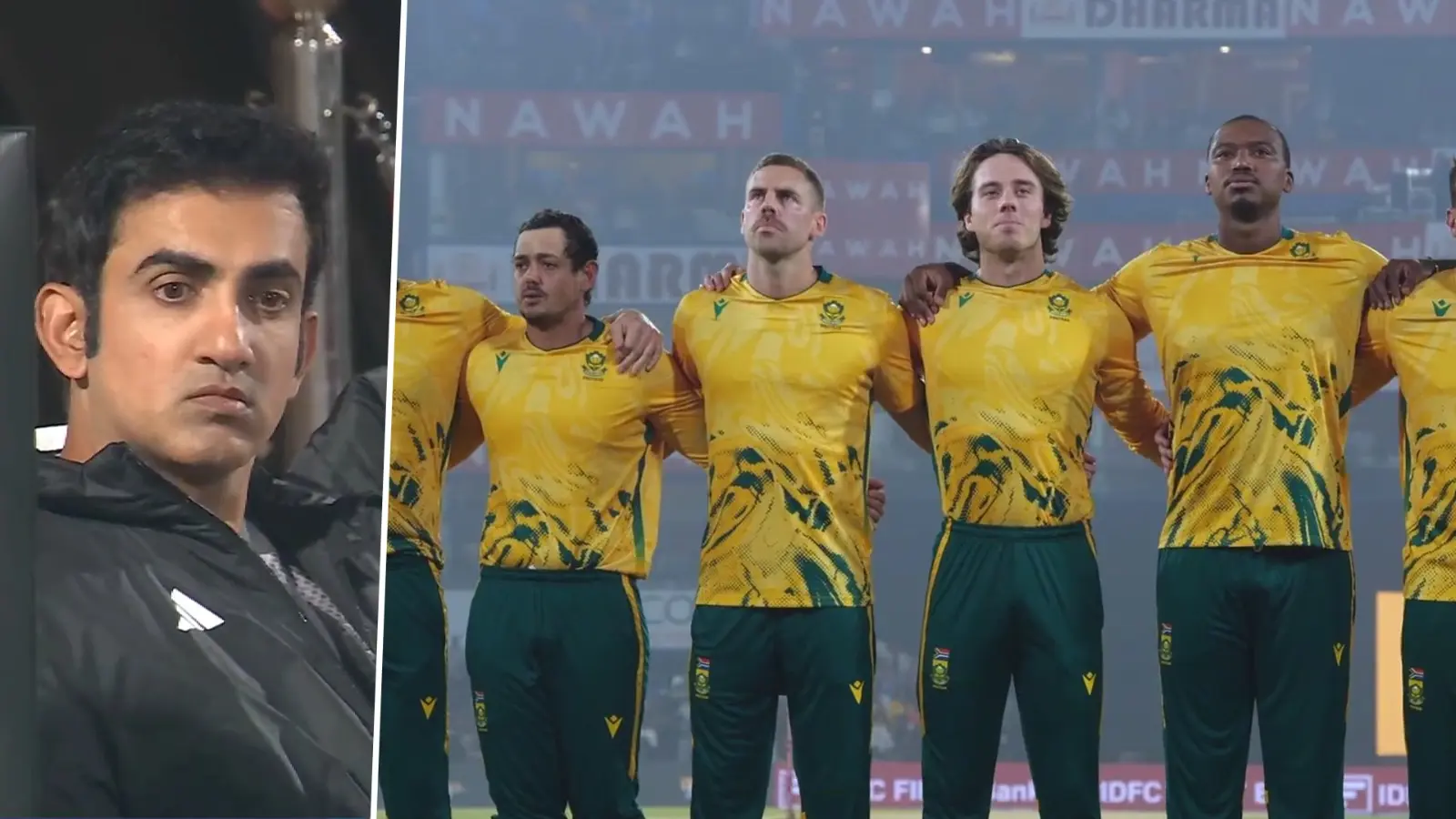

Gautam Gambhir’s Indian cricket team coaching period has been a ‘twofold’ since he took over in July 2024. He was the coach when India clinched the 2025 Champions Trophy and the 2025 Asia Cup. Yet, simultaneously, India lost the Test series at home against New Zealand and South Africa, resulting in clean sweeps twice during Gambhir’s tenure. He is considered an aggressive person, a person who wants to control the team entirely. The eminent cricket commentator Harsha Bhogle had some tips for Gambhir’s way of operating.
“I hope Gautam Gambhir does not consider himself the CEO. He has to regard himself as the consultant. The captain is the CEO. I just hope he does not see it like this: ‘I am the one in charge of the team.’ Alright, you (referring to Shaun Pollock) were the captain, and now you will be the coach. Who runs the team?” Bhogle commented on Cricbuzz.
“That will have to be the captain,” Pollock replied.
“In the case of T20, is that distinction fading a little?” Bhogle inquired.
“I think it is. I think it is more in franchise cricket since there are players from various countries, and they do not actually stay with the teams the whole time. Sometimes they come in just before the match. This means the leadership is on the coaches during those days. However, in national teams, the captain has a longer time to guard it. I mean you can help him with as many ideas, try and build his confidence. But at the end of the day, when he is out there, he has to make those calls,” Pollock detailed.
“Who is changing the batting order, when the captain is still in the dugout?” Bhogle posed the question.
“If the captain is involved, it should come from him,” Pollock answered.
Recently, Gautam Gambhir defended his tactic of having a floating batting order in ODI cricket, where the positions are not fixed, particularly in the middle order.
AB de Villiers, whose name is often mentioned among the all-time greats of the game, does not fully oppose Gambhir’s methodology but has nevertheless warned him not to go over the “fine line.”
“I do agree with him very partly. I have always preferred to see a floating batting order in ODIs. But it is a fine line because one cannot really play with the players’ positions too much. The top three, then four to six, and lastly your tailenders who can hold the bat. It is almost like three parts, and with that one can really be imaginative. Use right and left-hand combinations along with the different situations of the game,” De Villiers commented on Gambhir’s statement during his YouTube session.

Comments are closed.