
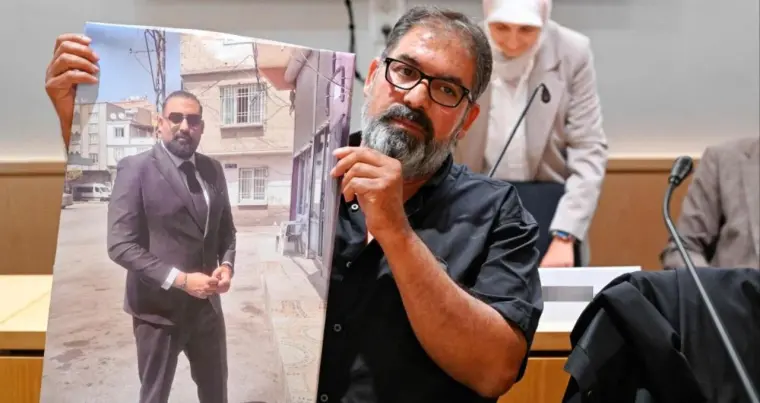

A German court has sentenced a 26-year-old man to 10 years in prison for fatally attacking a train conductor during a ticket check. After this incident, a new debate has started in the country regarding the safety of railway employees.
Berlin: A German court has sentenced a 26-year-old accused to 10 years of imprisonment for the fatal attack on a train conductor. The incident came to light in the Rhineland-Palatinate state of western Germany, where a dispute during ticket checking turned violent and the conductor later died. This decision has come at a time when there is a serious debate going on in Germany regarding the safety of public transport workers.
Controversy over traveling without ticket
As per the facts presented in the court, the accused was traveling in the train without a valid ticket. During ticket inspection, when the conductor asked him to show his ticket and identify himself, he refused to cooperate. The situation worsened when the conductor asked him to get off the train. During this time the accused attacked him.
Attack with fists took life
According to the prosecution, the accused delivered several sharp punches to the conductor, including severe blows to the face, chin, head and chest. After the attack, conductor Serkan Kalar (36 years) fell unconscious in the train itself. He was immediately rushed to the hospital, but died two days later due to severe bleeding in the brain (brain hemorrhage).
What crime did the court convict him of?
The court in Zweibrucken, Germany found the accused guilty of “bodily harm resulting in death”. The court sentenced him to 10 years in jail. However, this decision is not final and can be appealed against.
The family expressed disagreement with the decision
The family of the deceased conductor had sought a conviction in the court under more serious charges, such as manslaughter or murder. The family’s lawyer said after the court’s decision that they would appeal both the conviction and sentence. The family members believe that considering the violent behavior of the accused, he would have been charged with a more serious crime.
The accused admitted the attack
During the hearing the accused, who is a Greek citizen and lives in Luxembourg, admitted that he had attacked the conductor. However, he told the court that he had no intention of killing. He also apologized to the family of the deceased, but the family’s legal representative rejected this, saying that the statement was not honest.
CCTV footage became important evidence
Recordings of security cameras installed inside the train were also presented in the court. In the video, the accused was seen throwing several sharp punches at the conductor. Although the footage had no sound, the visual evidence made clear the seriousness of the incident. The video remained important evidence during the trial.
Arrested as soon as he reached the next station
Soon after the attack, the train reached the next station, Homburg (Saar), where the police arrested the accused. Meanwhile, medical aid was given to the injured conductor, but his life could not be saved due to serious injuries.
New debate on railway safety
This incident sparked a national discussion about the safety of railway workers in Germany. Following the incident, Germany’s national railway company Deutsche Bahn announced it would provide body cameras to train conductors and onboard restaurant staff. The company aims to increase employee safety and prevent violent incidents.
The deceased left behind two children
The deceased conductor Serkan Klaar was a resident of Ludwigshafen and a single father. He has two minor sons in his family, whose care has now fallen on other family members. His death caused deep grief and concern even among the railway employees.
Increasing violence in public transport is a matter of concern
Experts believe that incidents of violence against public transport employees are becoming a matter of concern in many countries. Attacks on employees are increasing during ticket checking, enforcing rules or during disputes with passengers. In such cases, the need for security measures, technical monitoring and strict legal provisions is being felt.

Comments are closed.