


Pro. HC Purohit, Doon University
The United Arab Emirates (UAE) officially ended its nearly 59-year-old membership of OPEC and OPEC Plus. Discussions of this separation of UAE have created a stir in the international market, as this decision will clearly have a wide impact on oil prices, supply-system and global economic balance. The UAE has a stake of about 12 percent in OPEC and is about the third largest producer in the group.
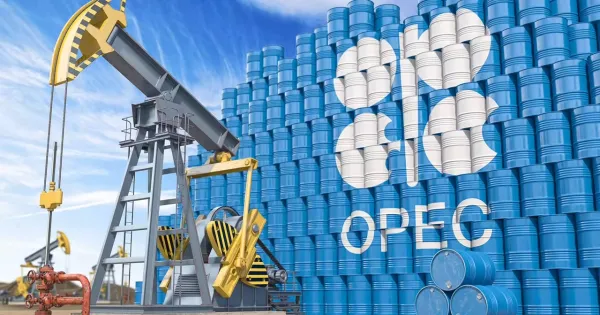
OPEC was established in September 1960. It is acting as a coordinating body among oil producing countries. OPEC’s job is to maintain price stability by controlling oil production. The withdrawal of an important partner like the UAE from this organization will directly affect the solidarity of OPEC and may also change the balance in the global energy market.
This decision of UAE can have a direct impact on oil prices. OPEC’s strength lies in its collective ability to control production among its member countries. If the UAE comes out of this system and increases production independently, then the supply of oil in the global market may increase, which may lead to a fall in prices, although this fall will not be permanent, but it will prove to be decisive in destabilizing the global market to a great extent. In the long run, as coordination within OPEC weakens, market volatility may increase, leading to sudden fluctuations in oil prices.
The separation of UAE clearly shows that differences within OPEC are increasing. This may also inspire other member countries, like Saudi Arabia, Kuwait, Iraq, Libya, Indonesia etc. to adopt independent policies as per their national interests. Thus, the tendency for fragmentation in global energy governance will increase, which may even raise questions on the existence of OPEC.
The UAE’s decision is important from the point of view of global economic stability, because if prices fall, transportation and production costs will reduce, which will make it possible to control inflation. Conversely, if price volatility increases, it could impact the supply chain, leading to inflation. Due to cheap oil, the pace of investment in renewable energy, solar and wind energy may also slow down, which will affect the direction of ‘green transition’ and the goal of net zero in the long run.
Its impact on India will be multidimensional, as India is the third largest oil importer in the world. We import about 85 percent of our energy requirements. In such a situation, any change in oil prices directly affects the Indian economy. Due to increase in oil production by UAE, it is natural for oil prices to fall and this situation will emerge as a profitable opportunity for India. India can take advantage of cheap oil to increase its strategic petroleum reserves, which will reduce dependence on any one region.
This step of UAE can boost trade in local currency. India and UAE paying for oil in rupees and dirhams will reduce dependence on the US dollar. Experts believe that UAE’s exit from OPEC Plus is good news for India, because India and UAE are strategic partners.
In such a situation, India will benefit from bilateral trade relations. If UAE increases oil production, it will reduce oil prices, seeing which other countries may also follow UAE’s footsteps. India should increase investment in renewable energy amid this uncertainty, so as to ensure energy security in the long run. (These are also the author’s personal views)

Comments are closed.