

Critical minerals increasingly viewed as strategic assets
A global race to secure critical minerals is underway, according to CNBC. Governments in the United States, Europe, and Asia are accelerating plans to build strategic reserves of key metals such as lithium, nickel, rare earths, and tungsten.
Washington has proposed a US$12 billion strategic reserve initiative under the Project Vault program, while countries across Asia and the European Union are expanding their own stockpiles.
The trend reflects a shift in policy thinking. Minerals once treated primarily as industrial inputs are now increasingly viewed as strategic assets linked to national security.
As the energy transition and digital transformation accelerate, metals used in batteries, semiconductors, artificial intelligence, and defense technologies have become essential to long-term economic competitiveness.
Strategic reserves can serve multiple purposes, including buffering supply disruptions, stabilizing markets, and strengthening geopolitical leverage. When a country controls a large share of production or downstream processing, the risk of trade restrictions or supply pressure becomes more significant.
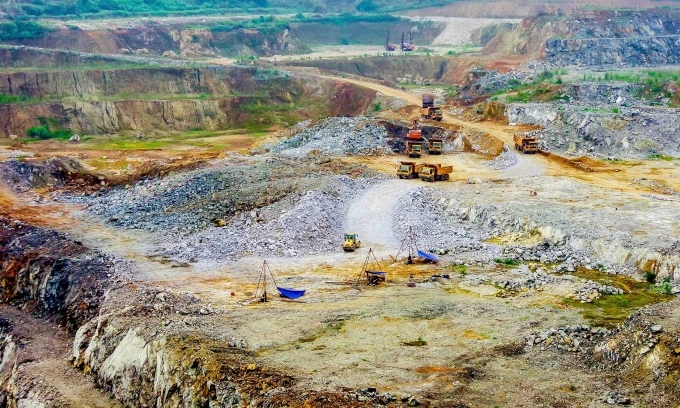
The processing plant at the Nui Phao polymetallic mine. Photo courtesy of MHT |
Supply chains restructure alongside stockpiling
The stockpiling trend is occurring alongside broader changes in global supply chains. Manufacturers and technology companies are increasingly shifting toward “friend-shoring” and regional supply networks.
Industrial groups are prioritizing suppliers in politically stable countries that commit to transparency and follow environmental, social, and governance (ESG) standards.
As a result, competitive advantage is no longer determined solely by the size of mineral reserves. Countries able to ensure reliable supply, traceability, and sustainable mining practices are gaining importance.
While pricing remains a key factor, supply reliability and compliance with international standards are becoming increasingly decisive elements in long-term contracts.
These changes are gradually reshaping the global supply–demand structure. Processing hubs dependent on imported raw materials are diversifying suppliers. At the same time, resource-rich countries that fail to upgrade technology and governance risk remaining reliant on low-value raw material exports with limited margins and high price volatility.
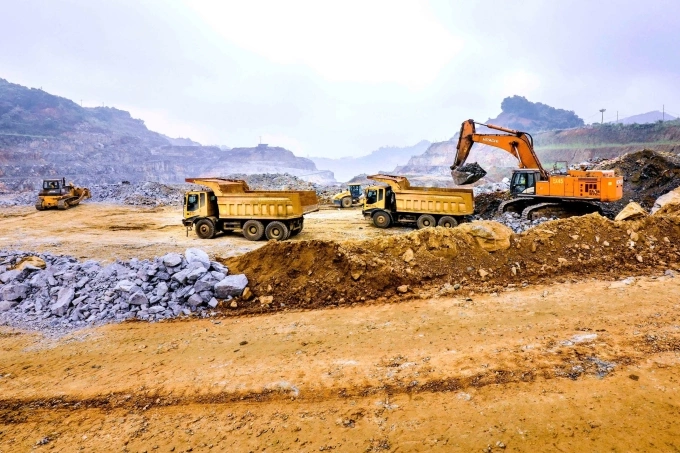 |
Masan High-Tech Materials has the advantage of a stable supply from the Nui Phao polymetallic mine. Photo courtesy of MHT |
Vietnam positioned within shifting value chains
Vietnam is increasingly viewed as a potential partner as supply chains adjust. Strategic partnerships, participation in multiple free trade agreements, and a relatively stable business environment have helped the country integrate further into global production networks.
In Thai Nguyen Province, the Nui Phao polymetallic tungsten mine is considered the largest tungsten deposit outside China and ranks fifth globally in fluorspar production, according to the U.S. Geological Survey.
The mine, owned by Masan High-Tech Materials (MSR), also contains associated minerals including bismuth and copper.
Four of the company’s core products fall within the category of critical minerals used in high-technology industries such as electronics, aerospace, defense, clean energy, and artificial intelligence infrastructure.
Masan High-Tech Materials operates an integrated model covering both mining and downstream processing. The company has invested in deep processing technologies, research and development, and advanced materials production as part of efforts to move further up the value chain.
Currently, about 24.39% of its output is supplied to major markets including the United States, Canada, and Japan.
Operating under international standards and ESG principles, the company participates in global high-tech materials supply chains that increasingly require strict technical and compliance requirements.
A proposed 28-million-ton mining project, expected to receive approval in 2026, could expand reserves, extend the life of the mine, and increase supply capacity.
If developed, the project could further strengthen Vietnam’s role as a supplier of critical minerals as global demand continues to grow.

Comments are closed.