


At this week’s Google I/O event, Google rolled out multiple significant changes/enhancements to Google Maps. The Google Maps AI update primarily aims to provide users with improved route comprehension and insight into what to expect while traveling, whether before leaving your home or while navigating through cities confidently.
Google’s objectives are to create a more robust, intuitive, performance-based experience by using AI algorithms and machine vision techniques, combined with billions of Street View and Aerial images, to make Maps a more interactive and predictive travel companion.
Immersive View-for-Routes:
One of Google Maps’ most exciting new features, Immersive View for Routes, lets you previsualize your entire journey before starting navigation. This new capability enables users to virtually view the entire journey as if they were actually taking it, rather than relying on traditional 2D static images to get a sense of what things will be like along their routes.
The technology uses AI techniques to combine billions of Street View and Aerial images to generate a highly detailed digital world (defined by geospatial data). Thus, Google Maps will offer a more 3D-representative view of the major cities you wish to visit, providing accurate information about buildings, streets, intersections, and surroundings – offering the most complete picture available of what awaits during your upcoming travels!
The new feature will provide useful contextual information, such as weather patterns, traffic conditions, and crowd density at specific times of day. By previewing the route visually, users will be better prepared for complex turns or unfamiliar areas before their trip.
According to Google, this feature will become available in major metropolitan areas such as London, New York City, Tokyo, San Francisco, Los Angeles, Miami, Paris, and Amsterdam, with additional cities added later.
Enhancing Navigation for Drivers
Another key goal of this Google Maps release is to make navigation easier and more intuitive for drivers. Google Maps is also improving the turn-by-turn navigation experience by introducing features that help users understand complex roadways and intersections when driving.
Such enhancements include better lane guidance, more detailed map information, clearer route display, and better highlighting of upcoming turns, exits, or lane changes. Google is making these improvements so that drivers can receive the necessary information sooner, thereby allowing them to prepare for upcoming driving opportunities without having to perform sudden, unexpected, or abrupt driving actions.
Reportedly, the foregoing improvements to navigation functionality will be especially beneficial in high-density urban settings, where multiple-lane roadways and complex intersections can make driving difficult due to the number of potential distractions on the roadway. These enhancements to navigation will assist drivers by providing greater context about their route, so they can focus on the roadway without constantly checking the navigation application for map updates.
AI-Assisted Exploration and Identification
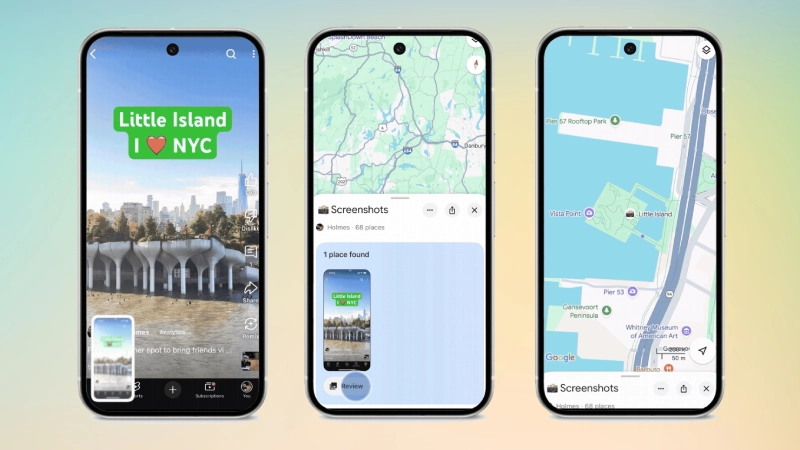
Additionally, the new features allow Google Maps AI to assist in finding locations. Google Maps incorporates features like 3D views and references to cities, businesses, and Places before visiting, known as an “Immersive Experience.”
This Immersive Experience uses AI and Computer Vision to combine images from multiple sources to create a 3D rendering of an area. Users will be able to move around and view buildings from different angles, as well as view a building under various lighting and weather conditions at different times.
The purpose of this experience is to provide a more natural and immersive way to plan a trip by giving users a clearer idea of the location to be visited before arriving.
Lens in Maps for Real World Navigation
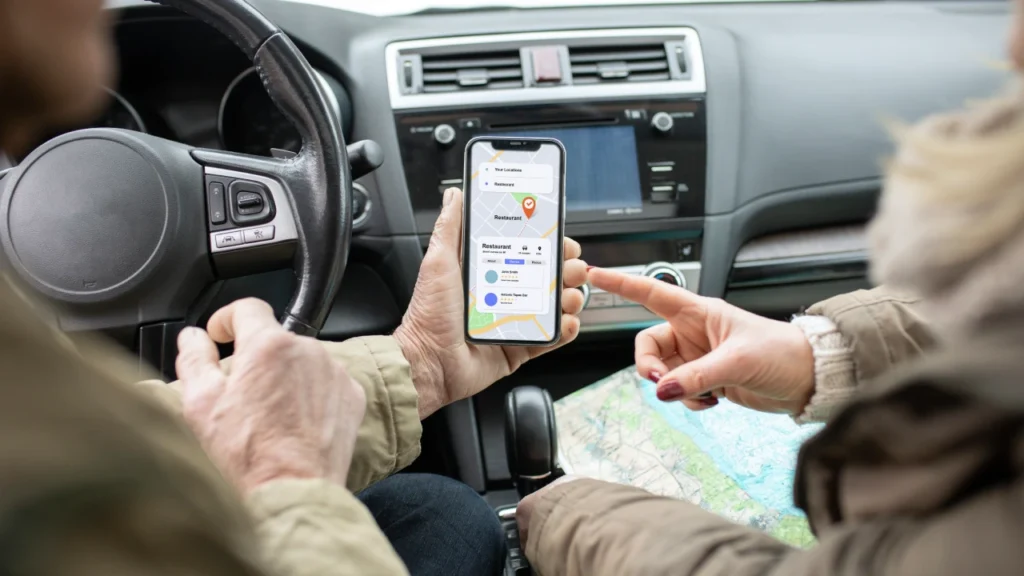
The next AI feature, Lens in Maps, provides augmented-reality assistance by using augmented reality to help users find and understand their surroundings as they travel.
Once an individual points their camera at a road or building, Lens in Maps will display overlay data about nearby businesses, landmarks, and directions, allowing the user to find where they need to go when exiting public transportation or navigating an unfamiliar area.
The feature provides quick reference points for users to get their bearings and find nearby places without having to enter text-based searches, combining the camera function with Google Maps data.
Innovative Changes: Maps Transitioning Toward Being More Three-Dimensional
The new updates announced at Google’s I/O event are indicative of a larger trend in mapping technology to develop the system into not only a means of providing users with directions between two places but also a means of providing users with intuitive tools for creating a trip itinerary, finding out what to see or do somewhere, and navigating their local area in the real world.
By combining artificial intelligence, Street View imagery, and enhanced 3D models, Google aims to provide users with a realistic representation of the world. One example of this is the Immersive View feature that allows users to see where they will be going from above.
Along the same lines, other enhancements to help discover new restaurants or shops, and to offer more straightforward navigation to ease the stress of traveling from place A to place B, and for everyday travel.
New Features for Users
Daily Maps use will be very helpful because of these new updates and changes. Commuters can learn about their new surroundings with immersive route previews, and using AI to find nearby points of interest will help them discover new, interesting places in their area.
With the addition of visual previews (virtual route viewing), augmented reality (AR) navigation, and better route directions, digital maps of the future will offer much more interactivity than standard navigation maps.
In addition to developing these functions for more cities worldwide, the intention is for Maps to be a digital travel companion, thereby greatly increasing user confidence in exploring and navigating their surroundings through AI.

Comments are closed.